- The Power of Siberia 2 pipeline aims to transport 50 billion cubic meters of natural gas annually from Siberia to northern China.
- The $60 billion project has been delayed since 2014 due to pricing disagreements and geopolitical tensions.
- Recent instability in the Persian Gulf has increased the urgency of finalizing the pipeline’s terms.
- The project would stretch over 2,600 kilometers from Krasnoyarsk to China’s Heilongjiang province.
- Putin and Xi are expected to prioritize finalizing the pipeline’s terms during their bilateral summit.
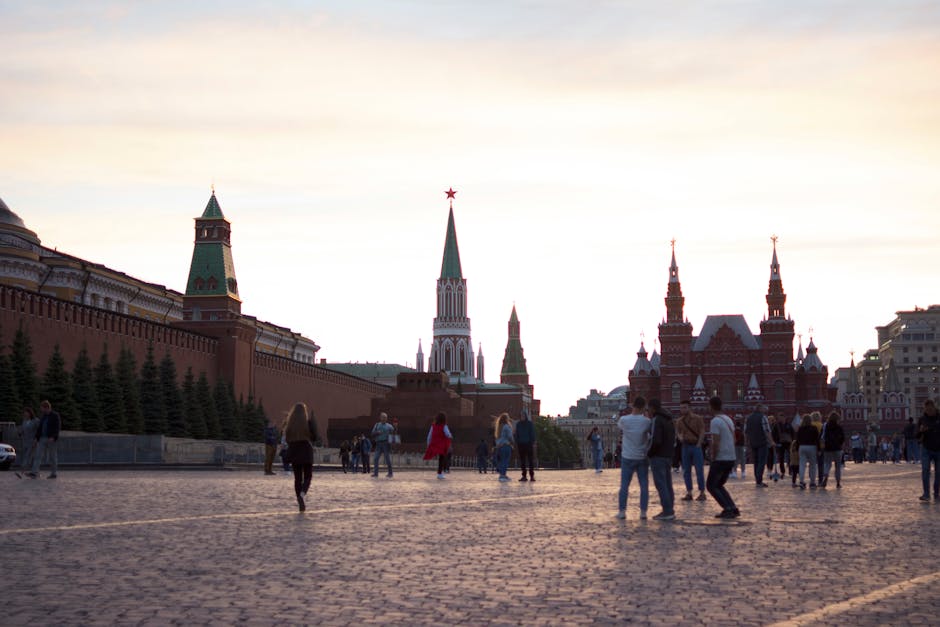
On the tree-lined embankments of Moscow’s Luzhniki Park, where autumn leaves swirl in the wind, diplomats and energy envoys arrive under a shroud of quiet urgency. Inside the Kremlin’s gilded State Hall, Vladimir Putin prepares for a meeting that could shift the tectonics of global energy. Across the border, in the Zhongnanhai compound in Beijing, Xi Jinping reviews briefing papers marked with red seals of confidentiality. The world watches Iran, where war fears mount and oil tankers skirt the Strait of Hormuz under naval escort. But beneath the surface, a quieter, more enduring battle is unfolding—one fought not with drones or sanctions, but with pipelines and pressure valves. The revival of the long-delayed Power of Siberia 2 project, a $60 billion natural gas artery meant to carry 50 billion cubic meters annually from Siberia to northern China, is once again at the center of great power negotiation.
Putin and Xi Reopen Pipeline Talks Amid Energy Uncertainty

During their bilateral summit on Wednesday, Putin and Xi are expected to prioritize finalizing terms for the Power of Siberia 2 pipeline, which has languished in negotiation since 2014. The project, which would stretch over 2,600 kilometers from the gas fields of Krasnoyarsk through Mongolia to China’s Heilongjiang province, has stalled due to pricing disagreements and geopolitical hesitations. But recent instability in the Persian Gulf—where attacks on energy infrastructure and rising Iranian missile tests have disrupted shipping lanes—has made alternative energy routes more attractive to Beijing. China, the world’s largest energy importer, is seeking to diversify supply chains away from volatile maritime routes. Russia, facing Western sanctions after its invasion of Ukraine, sees the pipeline as both an economic lifeline and a strategic lever. According to Reuters, Chinese officials now view the project as a critical hedge against potential oil and gas cutoffs from the Middle East, especially if hostilities involving Iran escalate into open conflict.
How Geopolitics Derailed a Decade-Long Energy Vision

The Power of Siberia 2 was first proposed in 2014, the same year Russia annexed Crimea and faced sweeping Western sanctions. Moscow envisioned the pipeline as the centerpiece of a broader pivot to Asia, reducing dependence on European markets. Initial agreements were signed, and route surveys completed, but progress stalled over pricing mechanisms—Russia wanted oil-linked contracts, while China insisted on hub-based pricing, similar to European models. Negotiations sputtered through the 2010s, further complicated by Mongolia’s demands for transit fees and environmental concerns along the route. The 2022 invasion of Ukraine briefly revitalized talks, as Russia rerouted energy exports eastward, but even then, Beijing held back, wary of overtly antagonizing Washington. Now, with Iran’s nuclear program advancing and U.S. naval presence growing in the Arabian Sea, the calculus is shifting. Energy security is trumping caution, and a project once seen as stalled may now be inevitable.
The Engineers, Diplomats, and Strategists Behind the Pipeline

The push for Power of Siberia 2 is being led by a tight network of state energy executives and foreign policy tacticians. On the Russian side, Alexey Miller, chairman of Gazprom, has been a persistent advocate, leveraging his close ties to Putin to keep the project alive. In China, Zhang Jianhua, head of the National Energy Administration, has quietly coordinated with foreign ministry officials to align energy needs with geopolitical strategy. But the real influence lies with Xi Jinping and Putin themselves, who have cultivated a ‘no-limits’ partnership since 2022. For Putin, the pipeline offers hard currency and diplomatic insulation from the West. For Xi, it’s about securing energy independence while weakening U.S. leverage over global supply chains. Even Mongolian leaders, once reluctant, are now reconsidering their stance, eyeing transit fees and potential infrastructure investments from both powers.
What the Pipeline Means for Global Energy and Climate Goals

If completed, Power of Siberia 2 could redirect up to 15% of Europe’s former Russian gas supply toward Asia, reshaping global energy flows. For China, it means cleaner-burning natural gas can replace coal in northern provinces, aiding air quality and carbon targets. Yet the project also risks locking in fossil fuel dependence for decades, complicating both nations’ climate commitments. Environmental groups, including those tracking Siberian permafrost degradation, warn that pipeline construction could accelerate methane leaks and disrupt fragile Arctic ecosystems. Meanwhile, European nations may face tighter gas markets if Russia permanently shifts export capacity eastward. The International Energy Agency has noted that such realignments could delay global decarbonization unless matched with aggressive renewable investments.
The Bigger Picture
This pipeline is more than an energy project—it’s a symbol of a reordering world. As U.S. influence wavers in parts of Eurasia, Russia and China are weaving a new infrastructure of interdependence. Pipelines, railways, and digital networks are becoming the sinews of a multipolar system, less reliant on dollar-dominated trade. Power of Siberia 2 fits into China’s Belt and Road Initiative and Russia’s vision of a ‘Greater Eurasian Partnership.’ In this new calculus, energy is not just a commodity, but a tool of statecraft.
What comes next may be a final agreement signed in the coming months, followed by construction starting as early as 2025. Financing mechanisms, likely involving Chinese state banks, are already under discussion. While challenges remain—from engineering hurdles in permafrost zones to Western sanctions on technology transfers—the momentum appears unstoppable. As Iran’s crisis deepens, the world may find that the most lasting consequences aren’t in the Gulf, but in the frozen steppes of Siberia, where steel pipes are quietly being laid for a new era of energy power.
Source: CNBC