- Emerging evidence suggests that certain sedative agents administered to young children in pediatric ICUs may have lasting effects on brain development.
- A new study found that children exposed to benzodiazepines like midazolam during critical illness exhibited memory, attention, and executive functioning deficits up to four years post-discharge.
- The study’s findings challenge the long-standing practice of prioritizing sedation efficacy over neurodevelopmental safety in pediatric ICUs.
- Children exposed to midazolam had significantly lower full-scale IQ scores compared to those who received dexmedetomidine or no benzodiazepines.
- Pediatric ICUs should reevaluate their protocols to prioritize neurodevelopmental safety alongside sedation efficacy.
Emerging evidence suggests that the sedative agents administered to young children in pediatric intensive care units (PICUs) may have enduring consequences on neurocognitive development. A new longitudinal study led by researchers at Penn Nursing and Children’s Hospital of Philadelphia indicates that children exposed to certain sedatives—particularly benzodiazepines like midazolam—during critical illness are more likely to exhibit deficits in memory, attention, and executive functioning up to four years post-discharge. These findings challenge the long-standing practice of prioritizing sedation efficacy over neurodevelopmental safety, urging a reevaluation of current ICU protocols for pediatric patients.
\n\n
Neurocognitive Deficits Documented Years After Critical Illness

\n
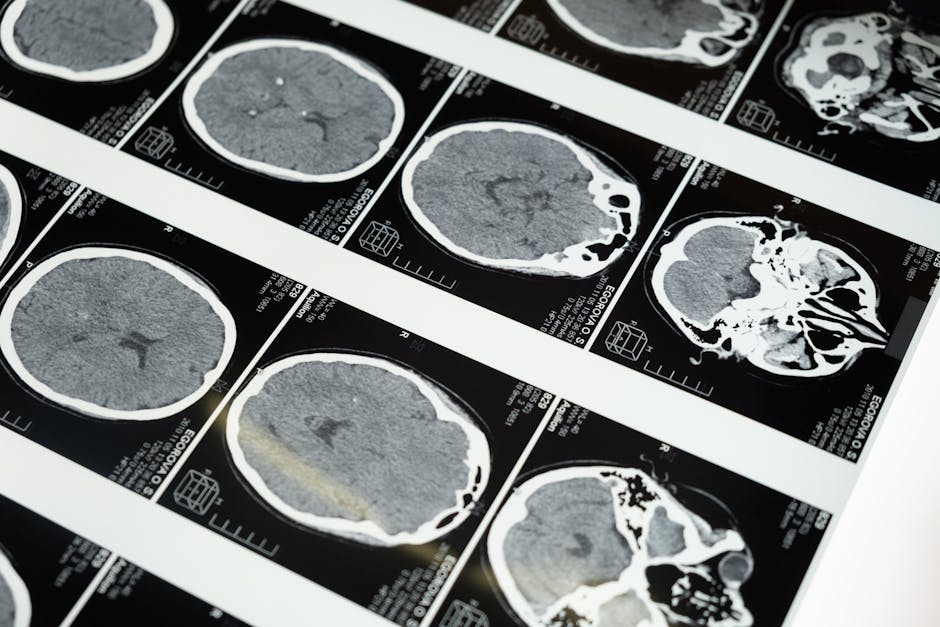
The study, published in The Lancet Child & Adolescent Health, followed 322 children aged 6 months to 7 years who required mechanical ventilation and sedation during PICU stays. Researchers assessed neurocognitive outcomes using standardized tools, including the Wechsler Intelligence Scale for Children and the Behavior Rating Inventory of Executive Function, at 12, 24, and 48 months after discharge. Children exposed to midazolam had, on average, 8.3-point lower full-scale IQ scores compared to those who received dexmedetomidine or no benzodiazepines. Additionally, 34% of midazolam-exposed children scored below the 10th percentile in attention and working memory, versus 19% in the dexmedetomidine group. Structural MRI scans in a subset of participants revealed reduced gray matter volume in prefrontal and hippocampal regions—areas critical for learning and emotional regulation—correlating with duration of benzodiazepine exposure. These results persisted after adjusting for illness severity, length of ventilation, and socioeconomic factors.
\n\n
Key Players Rethinking Pediatric Sedation Protocols

\n
Dr. Martha A.Q. Curley, the Ruth M. Colket Endowed Chair in Pediatric Nursing at Children’s Hospital of Philadelphia and Professor at Penn Nursing, co-led the study with Dr. R. Scott Watson of Seattle Children’s Hospital, both of whom have spent over two decades researching pediatric critical care outcomes. Their prior work, including the landmark RESTORE trial, established early mobility and family engagement as pillars of pediatric ICU recovery. This latest research builds on their focus on patient-centered outcomes beyond survival. Meanwhile, professional bodies such as the Society of Critical Care Medicine (SCCM) are revising sedation guidelines to reflect neuroprotective principles. Institutions like Boston Children’s Hospital and Cincinnati Children’s Medical Center are piloting sedation protocols that minimize benzodiazepines in favor of alternatives like dexmedetomidine, which has shown favorable safety profiles in this population. Pharmaceutical companies are also monitoring these shifts, with increased interest in developing pediatric-specific formulations that balance sedation depth with neurological preservation.
\n\n
Trade-Offs Between Immediate Stability and Long-Term Development

\n
While benzodiazepines remain effective for rapid sedation and seizure control, their impact on the developing brain presents a growing ethical and clinical dilemma. GABA-ergic agents like midazolam may disrupt synaptic pruning and neurogenesis during a critical window of brain maturation, particularly in children under age five. In contrast, dexmedetomidine, an alpha-2 agonist, provides sedation without respiratory depression and appears less disruptive to neural networks. However, it may not be suitable for all clinical scenarios, such as managing severe agitation or status epilepticus. The study also highlights disparities in access to alternative sedatives, with resource-limited settings continuing to rely on benzodiazepines due to cost and availability. Transitioning to neuroprotective sedation requires training, monitoring tools, and multidisciplinary coordination—challenges that may slow adoption despite strong evidence. Ultimately, the trade-off is between short-term physiological stability and long-term cognitive health, a calculus that must now include developmental outcomes as a core metric of ICU success.
\n\n
Why Now? Growing Recognition of Post-ICU Syndrome in Children

\n
The timing of these findings reflects a broader shift in critical care medicine toward recognizing pediatric post-intensive care syndrome (PICS-p), a constellation of physical, cognitive, and psychological impairments that persist after hospitalization. Unlike adult-focused research, which has long documented cognitive decline after ICU stays, pediatric studies have lagged due to challenges in measuring neurodevelopment over time. Advances in longitudinal assessment methods and increased survival rates of critically ill children have now made such research both feasible and urgent. With over 100,000 pediatric ICU admissions annually in the U.S. alone, even modest cognitive deficits can translate into significant public health burden, affecting educational attainment and lifelong productivity. Regulatory agencies, including the FDA, are beginning to evaluate pediatric labeling for sedatives, and this study provides the robust evidence base needed to inform policy changes.
\n\n
Where We Go From Here
\n
In the next 6 to 12 months, three scenarios are plausible. First, leading pediatric hospitals may adopt formal neuroprotective sedation guidelines, prioritizing dexmedetomidine and minimizing benzodiazepines except in emergencies. Second, multicenter trials could be launched to confirm causality and optimize dosing strategies. Third, if regulatory bodies act swiftly, sedative labels may begin including neurodevelopmental risk warnings for young children. Each path hinges on clinician awareness, institutional support, and funding for implementation science. The momentum is building toward a paradigm shift in pediatric critical care—one that measures recovery not just in survival or ventilator-free days, but in the quality of the child’s future mind.
\n\n
Bottom line — the choice of sedative in pediatric intensive care is no longer a short-term clinical decision but a determinant of lifelong cognitive health, demanding immediate reevaluation of standard practices.
Source: MedicalXpress