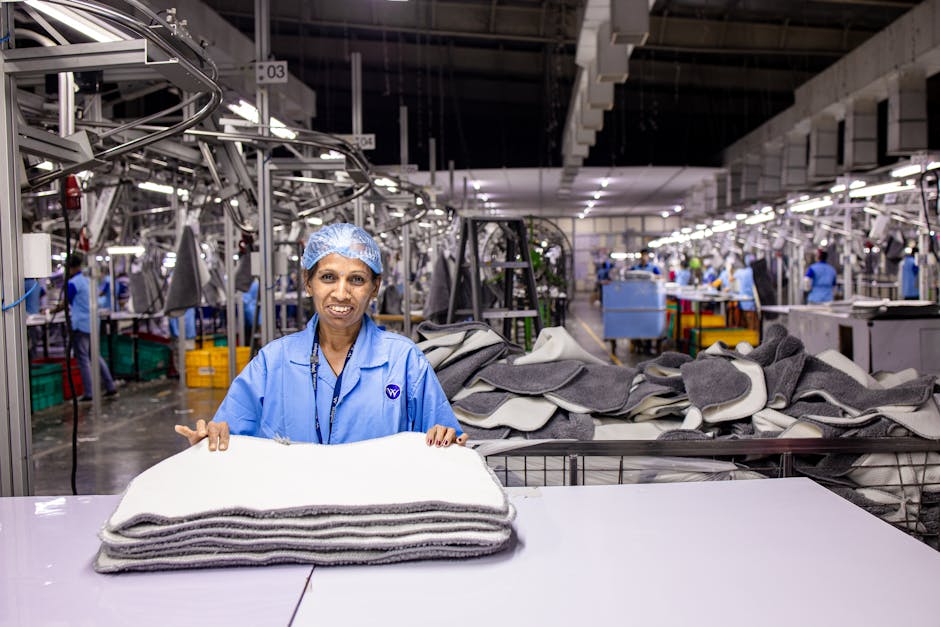
- Germany’s unemployment rate is high despite record job vacancies, with over 450,000 unfilled positions as of early 2024.
- Businesses are pulling back on recruitment and investment due to uncertainty, energy volatility, and weakening global demand.
- The country’s industries are struggling to find skilled workers, particularly in engineering, IT, and healthcare.
- A hiring freeze has been imposed by over 60% of manufacturing firms, according to the Ifo Institute’s business climate index.
- Germany’s economy, once a driving force in Europe, is now grappling with a profound shift and cautious mood among executives.
In a quiet industrial park on the edge of Stuttgart, the fluorescent lights of an automation startup hum over empty desks. The company, which develops robotic arms for precision manufacturing, has spent months advertising for software engineers and mechanical designers. Despite receiving hundreds of applications, few candidates meet the exacting standards required for high-precision engineering. Meanwhile, the CEO has just announced a hiring freeze. This paradox — needing workers but unable to hire — is now echoing across Germany. Once the engine of European economic might, the nation grapples with a profound shift: industries report record job vacancies, yet businesses are pulling back on recruitment, investment, and expansion. The mood in boardrooms and factory floors has turned cautious, as executives recalibrate for a future marked by uncertainty, energy volatility, and weakening global demand.
Germany’s Jobs Paradox in Full Swing

Germany currently faces a historic disconnect between labor supply and hiring behavior. As of early 2024, the Federal Employment Agency (BA) reported over 450,000 unfilled job openings, particularly in engineering, IT, healthcare, and skilled trades — a level near the record highs seen during the pre-pandemic boom. Yet, the Ifo Institute’s business climate index shows that more than 60% of manufacturing firms have imposed hiring freezes or plan to reduce headcount in the coming months. This contradiction underscores a deeper malaise: companies aren’t just struggling to find talent; they’re losing confidence in future demand. The country’s industrial output has declined for eight consecutive quarters, the longest slump since reunification. Even traditionally resilient sectors like automotive and machinery are scaling back, citing sluggish orders from China, reduced EU infrastructure spending, and high energy costs that have yet to fully recede despite government subsidies.
How Germany Got Here: A Decade in Decline

The roots of this crisis stretch back over a decade. Germany’s labor model — built on vocational training, engineering excellence, and export-led growth — thrived in a stable, globalized world. But cracks emerged after the 2008 financial crisis, deepened by the eurozone debt turmoil, and were further strained by the pandemic and the 2022 energy shock following Russia’s invasion of Ukraine. The abrupt end of cheap Russian gas dismantled the cost advantage that had long underpinned German industry. Companies faced energy prices three to four times higher than U.S. counterparts, making long-term investment risky. At the same time, demographic trends accelerated: an aging population and low birth rates have reduced the working-age cohort by nearly 1.2 million since 2015. While immigration helped offset some losses, bureaucratic hurdles, language barriers, and credential recognition issues have limited integration into high-skill roles. The result is a labor market increasingly mismatched — too few workers with the right skills, too many openings in regions with poor housing and infrastructure.
The Decision-Makers Shaping Germany’s Fate

At the heart of Germany’s economic hesitation are corporate leaders, policymakers, and labor unions, each navigating competing pressures. Factory owners like those in the Mittelstand — the backbone of small and medium-sized exporters — are reluctant to hire without firm order books. ‘We can’t staff up for phantom demand,’ said Klaus Weber, head of a precision tooling firm in Bavaria, in a recent Reuters interview. On the policy side, Chancellor Olaf Scholz’s coalition has pushed for faster skilled migration and expanded training programs, but implementation lags. Meanwhile, powerful unions like IG Metall resist wage cuts but also oppose flexible hiring models that could ease labor bottlenecks. Even the Bundesbank has warned that without structural reforms — from faster visa processing to modernized vocational education — Germany risks slipping into ‘low-growth stagnation.’ The inertia reflects a broader cultural aversion to rapid change, once a strength, now a liability in a volatile world economy.
Consequences for Workers, Industry, and Europe

The ripple effects are already visible. For workers, especially younger Germans and immigrants, the job market offers a confusing landscape: high demand in theory, but limited access in practice due to credential barriers and regional imbalances. Cities like Berlin and Munich face housing shortages that deter relocation, while rural areas lose talent to abroad. For industry, the inability to scale despite open positions threatens innovation and global competitiveness. Siemens and Bosch have both delayed new automation projects due to staffing uncertainty. At the European level, Germany’s stagnation undermines the bloc’s growth engine. With France also slowing and Italy burdened by debt, the EU risks entering a prolonged phase of subpar productivity. Investors are taking note: foreign direct investment into Germany fell 24% in 2023, the steepest drop in Europe, according to BBC News analysis.
The Bigger Picture
Germany’s predicament is not merely cyclical — it’s structural. It signals the end of an era defined by stable exports, cheap energy, and gradual demographic management. Other advanced economies face similar challenges, but Germany’s reliance on manufacturing magnifies the stakes. Without bold reforms, the country risks becoming a cautionary tale of how even the most robust economies can falter when institutions fail to adapt. The lesson extends beyond borders: in a world of climate disruption, geopolitical fragmentation, and technological acceleration, agility matters more than legacy strength.
What comes next may hinge on political will as much as economic policy. Proposals for a streamlined ‘talent visa,’ expanded dual-education partnerships with Eastern Europe, and AI-driven retraining programs are gaining traction. But time is short. The global economy won’t wait, and neither will Germany’s competitors. The empty desks in Stuttgart may soon symbolize not just a hiring freeze, but a nation at an inflection point — one that must choose between reinvention or decline.
Source: Financial Times