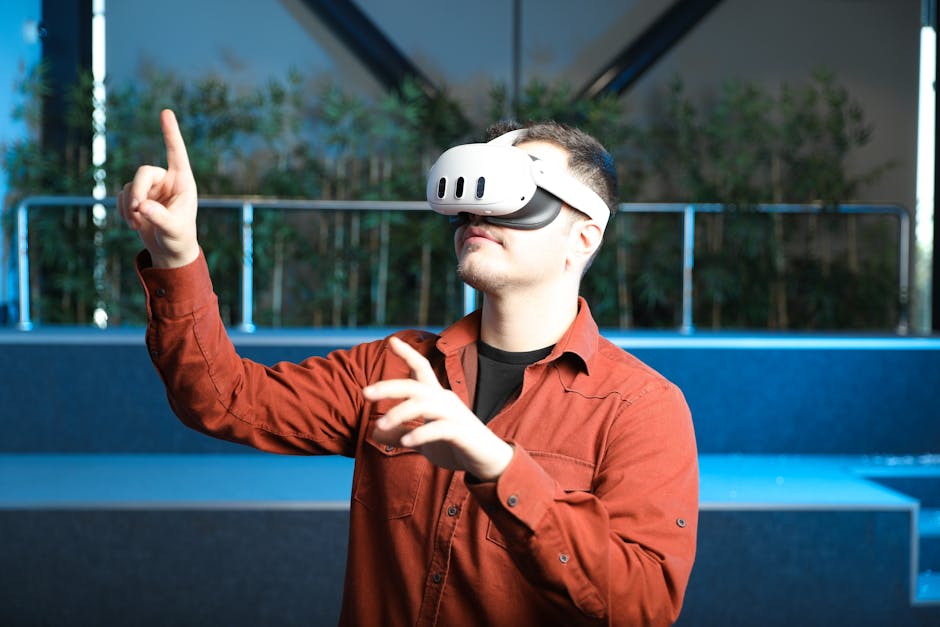
- Google has unveiled AI-powered smart glasses, marking its return to wearable tech since Google Glass in 2015.
- The new glasses feature stylish frames, embedded microphones, bone-conduction audio, and a dedicated Tensor chip for on-device AI processing.
- The glasses support real-time language translation, voice-activated search, and ambient computing features without a smartphone screen.
- The AI-powered smart glasses are set to launch in 2024, sparking a potential AI wearables race.
- The new glasses represent a major leap forward in wearable intelligence, integrating AI into everyday optics.
On a sun-dappled stage in Mountain View, California, where the air hummed with quiet anticipation and the scent of freshly poured coffee lingered, a Google engineer slipped on a pair of unassuming black glasses. No flashy lights, no robotic arms—just a casual nod and a whispered, “Hey Google, what’s that sign say?” Within seconds, a soft chime, then a crisp voice in the wearer’s ear translated the Spanish text on a nearby café menu. It was a quiet moment, but one charged with the weight of a decade’s ambition: Google had finally shown the world its next leap into wearable intelligence. These were not just audio glasses—they were the first tangible glimpse of Google’s full AI integration into everyday optics, a vision that had flickered since Google Glass but now, in 2024, felt startlingly real.
First Public Demo Sparks AI Wearables Race

At its annual I/O developer conference, Google unveiled a prototype of its new AI-powered smart glasses, marking the company’s most serious return to wearable tech since the discontinuation of Google Glass in 2015. Unlike their clunky predecessor, the new glasses resemble stylish, off-the-rack frames from brands like Ray-Ban, but with embedded microphones, bone-conduction audio, and a dedicated Tensor chip optimized for on-device AI processing. The glasses support real-time language translation, voice-activated search, calendar alerts, and ambient computing features—all without requiring a smartphone screen. According to product lead Charlene Xia, the device is designed to “disappear into your routine, not dominate it.” The glasses are expected to launch in the fall of 2024, with a starting price rumored to be around $250, positioning them as a mainstream alternative to luxury offerings like the Ray-Ban Meta collaboration. Initial models will focus on audio intelligence, with full visual AI features likely delayed until 2025 due to privacy and regulatory concerns.
From Google Glass to AI Maturity

The journey to these new glasses has been long and, at times, humiliating. Google Glass, launched in 2013 as a $1,500 Explorer Edition, was hailed as revolutionary but quickly became a cultural pariah—dubbed “Glassholes” by critics who decried its invasive recording capabilities and social awkwardness. Privacy advocates raised alarms, bar owners banned them, and the product was quietly shelved by 2015. Yet, internally, Google never abandoned the vision. It pivoted to enterprise with Google Glass Enterprise Edition, refining use cases in healthcare, logistics, and manufacturing. Over the next decade, advancements in AI, miniaturization, and natural language processing quietly matured. The launch of the Pixel Buds, with their real-time translation, proved that contextual audio assistance could work. Meanwhile, the development of Google’s custom Tensor chips allowed for powerful on-device processing, reducing reliance on cloud data and easing privacy risks. These incremental steps culminated in the 2024 smart glasses—an evolution born not of sudden inspiration, but of patient iteration and hard lessons learned.
The Team Behind the Lens

The new glasses are the brainchild of a cross-functional team at Google’s Advanced Technology and Projects (ATAP) group, led by veteran engineer Ivan Poupyrev and AI strategist Charlene Xia. Poupyrev, known for his work on Project Soli and touch-sensitive wearables, has long championed “invisible computing”—technology that integrates seamlessly into daily life. Xia, meanwhile, has driven Google’s ambient AI vision, emphasizing contextual awareness without intrusion. Together, they’ve balanced innovation with caution, opting for audio-first functionality to avoid the visual surveillance pitfalls that doomed the original Glass. Their design philosophy centers on minimalism: no camera on the consumer version, no screen, and strict user controls over data collection. The team also consulted with privacy advocates and disability groups, incorporating feedback on accessibility features, such as navigation cues for the visually impaired and real-time captioning for the deaf and hard of hearing.
Implications for Privacy, Competition, and Daily Life

The launch of Google’s AI glasses reignites urgent debates over data privacy, surveillance, and digital etiquette. While the company emphasizes on-device processing and user consent, the mere presence of always-on microphones in public spaces raises concerns. Regulators in the EU and California are already scrutinizing the product’s compliance with GDPR and CCPA. Meanwhile, competitors are racing to catch up: Meta continues refining its Ray-Ban smart glasses, while Amazon explores voice-first wearables through its Glow project. For consumers, the glasses promise unprecedented convenience—translating menus abroad, whispering meeting reminders, or reading incoming messages aloud during a commute. But they also risk deepening digital dependency and eroding face-to-face interaction. The success of the product may ultimately hinge not on technology, but on whether society is ready to trust AI so close to the ear—and the eye.
The Bigger Picture
Google’s smart glasses represent more than a new gadget—they signal a shift toward ambient, context-aware computing, where AI operates quietly in the background, augmenting human perception without demanding attention. This marks a departure from the screen-centric model that has dominated the digital age. If widely adopted, such devices could redefine how we access information, interact with languages, and navigate urban spaces. They also raise profound questions about the boundaries between assistance and surveillance, between augmentation and alienation. As AI becomes woven into the fabric of everyday objects, the challenge will not be building smarter devices, but ensuring they serve human values—not corporate or algorithmic ones.
What comes next may be a world where our glasses listen, translate, remind, and guide—but also one where we must constantly negotiate what we allow them to hear. Google’s 2024 launch is not the end of the story, but a cautious opening chapter in the next era of human-computer symbiosis. The real test will be whether this time, the technology fits not just our faces, but our societies.
Source: CNBC