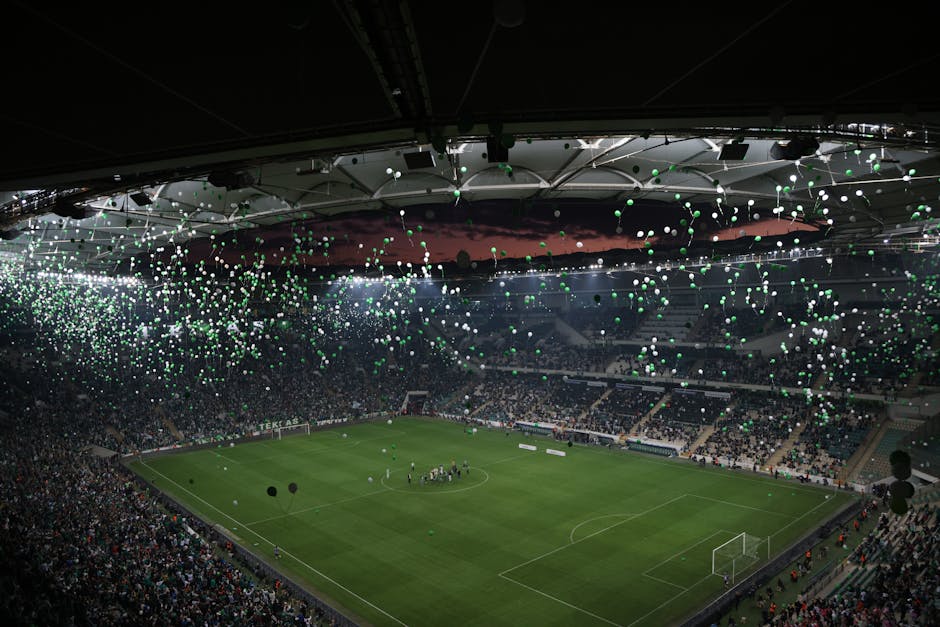
- Arsenal won their first Premier League title in 22 years after a 2-0 victory over Manchester United, coupled with Manchester City’s draw against West Ham.
- The title marked the first time Arsenal stood atop English football since their legendary ‘Invincibles’ season of 2003–04.
- Under Mikel Arteta’s guidance, the Gunners won 27 league matches, scored 87 goals, and demonstrated consistency and mental resilience.
- This triumph is a vindication of Arsenal’s long-term vision rooted in youth development, analytics, and strategic recruitment.
- The title represents emotional catharsis for Arsenal supporters, ending a period of transition and competitive decline.
In a season that will be remembered for its intensity, tactical innovation, and nerve-shredding finishes, Arsenal have ended a 22-year Premier League title drought by lifting the 2023–24 crown. The decisive moment came on the final day of the campaign, when a 2-0 victory over Manchester United at Old Trafford, coupled with Manchester City’s surprising 1-1 draw against West Ham United, sealed the title on goal difference. It marks the first time since the legendary ‘Invincibles’ season of 2003–04 that Arsenal have stood atop English football. Under the meticulous guidance of Mikel Arteta, the Gunners won 27 league matches, scored 87 goals, and demonstrated a consistency and mental resilience unseen in previous campaigns. This triumph is not just a victory for the club, but a vindication of a long-term vision rooted in youth development, analytics, and strategic recruitment.
The End of the Drought

For Arsenal supporters, this title represents far more than silverware—it is emotional catharsis. Since their last league triumph under Arsène Wenger, the club endured a period of transition, marked by Champions League near-misses, stadium financing struggles, and a gradual erosion of their competitive edge. Manchester City’s rise, bankrolled by Abu Dhabi ownership, and Liverpool’s resurgence under Jürgen Klopp had left Arsenal playing catch-up for over a decade. However, the appointment of Mikel Arteta in 2019 signaled a new era. Initially met with skepticism, Arteta’s commitment to a possession-based, high-pressing system slowly took root. The integration of young talents like Bukayo Saka, William Saliba, and Declan Rice—acquired in a club-record £105 million move from West Ham in 2023—gave the squad both spine and dynamism. This season, Arsenal led the table for 248 days, more than any other team, a testament to their consistency amid relentless pressure.
Key Moments That Sealed the Crown

Several pivotal moments defined Arsenal’s path to glory. First was the 3-1 victory over Manchester City at the Emirates in December, a match in which Martin Ødegaard’s brace exposed vulnerabilities in Pep Guardiola’s side. Then came the crucial 1-0 win at Anfield in February, where David Raya saved a stoppage-time penalty from Mohamed Salah—an outcome that shifted momentum irreversibly in Arsenal’s favor. In March, a 4-0 demolition of Chelsea showcased their attacking depth, with Gabriel Martinelli, Leandro Trossard, and Kai Havertz all on target. Perhaps most telling was their resilience after a rare three-match winless streak in April; instead of faltering, Arsenal responded with consecutive clean-sheet victories over Tottenham and Newcastle, maintaining pressure on City. The signing of Declan Rice proved transformative, as the England midfielder anchored the midfield with 148 tackles and 3,200 passes completed at 92% accuracy—a figure comparable to Rodri’s, his more celebrated counterpart at City.
Tactical Mastery and Team Cohesion

Analysts point to Arsenal’s evolution in set-piece execution and defensive organization as key differentiators. According to data from BBC Sport, Arsenal scored 17 goals from corners this season—the highest in the league—thanks to meticulous choreography and the aerial threat of William Saliba and Gabriel Magalhães. Their high defensive line, once a liability, became a strength through improved communication and offside traps. Mikel Arteta’s use of positional play, influenced by his time under Guardiola at Manchester City, allowed Arsenal to dominate midfield zones and isolate opponents in wide areas. This season, they averaged 58% possession, the highest in the league, while also recording the second-lowest number of shots conceded per game. As noted by The New York Times, Arteta has forged a team that blends English athleticism with continental tactical sophistication—a model increasingly emulated across Europe.
Implications for English Football

With this title, Arsenal reassert their status as a dominant force, disrupting the duopoly that City and Liverpool had established over the past six seasons. The financial rewards are substantial: Premier League champions earn an estimated £150 million in combined prize money, broadcasting, and commercial uplift. Beyond economics, the psychological impact on rivals is profound. Tottenham must now confront another season of Arsenal superiority in North London, while Chelsea and Manchester United face growing pressure to accelerate their own rebuilds. Moreover, this victory strengthens the argument that sustainable success can be achieved without sovereign wealth funding, offering a blueprint for clubs prioritizing long-term planning over short-term spending. For the Premier League, a more competitive landscape enhances global appeal and unpredictability.
Expert Perspectives
Opinions diverge on whether Arsenal can maintain this level of performance. Gary Neville, former Manchester United defender and Sky Sports pundit, praised Arteta’s “clear philosophy and brave decision-making,” calling the title “a triumph of culture and process.” In contrast, Jamie Carragher cautioned that “one title doesn’t redefine a club’s standing—City and Liverpool will adapt.” Data analysts at The Guardian note that Arsenal’s underlying metrics—expected goals, shot quality, and defensive actions—were consistently elite, suggesting their success is not a fluke. Still, the challenge of competing on multiple fronts next season, particularly in the UEFA Champions League, remains untested.
Looking ahead, the focus will be on retention and evolution. Can Arsenal keep their core squad intact amid inevitable transfer interest? Will Arteta continue to innovate tactically, or will opponents find ways to neutralize their strengths? With a young squad averaging just 25.3 years of age, the foundation is set for sustained contention. However, the Premier League’s relentless pace demands constant adaptation. As the celebrations in Islington continue, one question lingers: is this the beginning of a new Arsenal dynasty, or a glorious one-off in a golden era of English football?
Source: Sky Sports