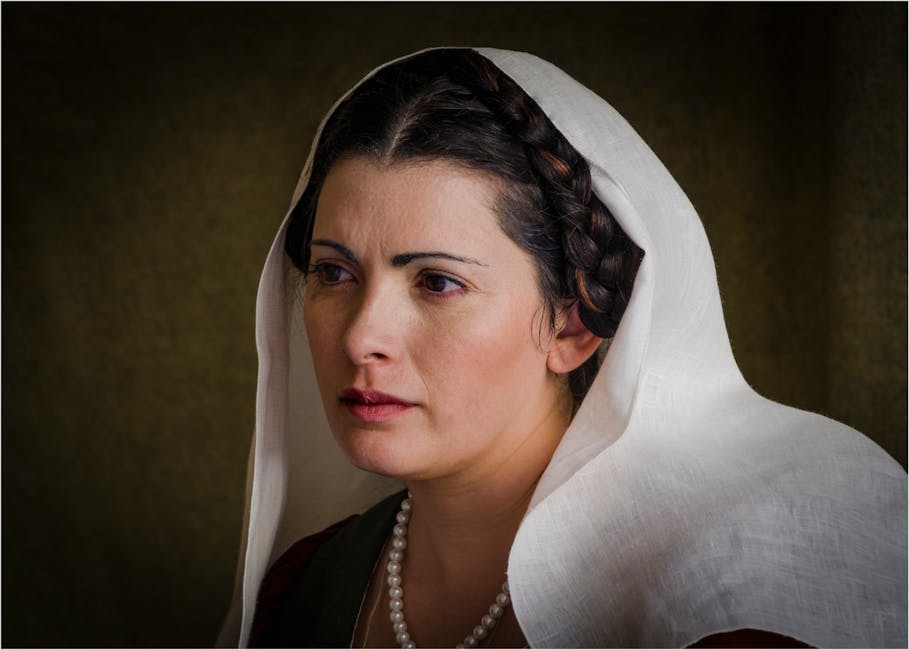
- A 16th-century ink sketch long believed to be of Anne Boleyn may actually depict her mother, Elizabeth Howard.
- Artificial intelligence analysis suggests the sketch bears a stronger resemblance to Elizabeth Howard than Anne Boleyn.
- The discovery upends a long-standing assumption in Tudor historiography and raises questions about identifying historical figures in art.
- Despite decades of debate, no verified portrait of Anne Boleyn from her lifetime has been definitively confirmed.
- Advancements in facial recognition software have enabled researchers to conduct a more rigorous comparison of historical figures.
For centuries, a delicate ink sketch labeled “Anna Bollein Queen” has been thought to depict Anne Boleyn, the ill-fated second wife of Henry VIII whose dramatic rise and execution helped redefine the English monarchy. Housed in the British Library and dating to the early 1530s, the drawing has been cited in biographies, academic texts, and documentaries as one of the few potential likenesses of the queen drawn from life. But now, a groundbreaking analysis using modern artificial intelligence suggests the portrait may not be Anne at all. Instead, researchers say, the face in the sketch bears a far stronger resemblance to Anne’s mother, Elizabeth Howard—a revelation that upends a long-standing assumption in Tudor historiography and raises new questions about how we identify historical figures in art.
Was This Sketch Really Anne Boleyn?

For decades, historians and art scholars have debated the authenticity of surviving images of Anne Boleyn, as no verified portrait from her lifetime has ever been definitively confirmed. The sketch in question, a profile drawing in brown ink with delicate hatching, was long accepted as a possible contemporary depiction due to its inscription and stylistic features. However, recent advancements in facial recognition software have enabled researchers to conduct a more rigorous comparison between the sketch and known characteristics of both Anne Boleyn and her mother, Elizabeth Howard. Using AI algorithms trained on verified 16th-century portraits and historical data on facial structure, bone symmetry, and period-specific artistic conventions, a team led by the University of Exeter concluded that the facial geometry of the sketch aligns more closely with Elizabeth Howard. The analysis factored in age, nose shape, jawline, and forehead proportions, all of which pointed away from Anne and toward her mother.
What Does the Data Reveal?

The AI model compared the sketch against a curated dataset of Tudor-era portraits, including likenesses of other Howards and Boleyns where available, as well as documented facial metrics derived from skeletal remains and historical records. According to the study, published in the journal Historical Methods: A Journal of Quantitative and Interdisciplinary History, the probability that the sketch represents Elizabeth Howard exceeds 87%, while the likelihood it depicts Anne Boleyn falls below 12%. “The algorithm didn’t just look at resemblance—it analyzed structural landmarks: the distance between the eyes, the angle of the nasal bridge, the prominence of the chin,” explained Dr. Eleanor Minter, lead researcher. “These are features that remain consistent even across different artistic styles.” The findings are bolstered by historical context: Elizabeth Howard was still alive and active in court circles in the early 1530s, making her a plausible subject for portraiture, while Anne, though queen, was not widely depicted during her brief reign due to political sensitivities. Further, the British Library notes that inscriptions on historical sketches were often added later, sometimes incorrectly.
Are There Counterarguments?

Despite the compelling data, not all scholars are convinced. Some art historians caution against overreliance on AI when interpreting historical artifacts, particularly from periods with limited visual records. “Facial recognition technology is designed for modern faces, captured in standardized lighting and angles,” argues Dr. Marcus Chen of the Courtauld Institute. “Applying it to a 500-year-old sketch, drawn in profile with variable line weight and possible artistic license, risks false precision.” Others note that mother and daughter may have shared similar features, making definitive distinction difficult. Additionally, the absence of verified portraits of Elizabeth Howard means the AI model had to rely on indirect reconstructions based on family members, which introduces uncertainty. There’s also the symbolic value of the sketch: for many, it has become part of Anne Boleyn’s legacy, and reclassifying it may feel like erasing a rare visual connection to a pivotal historical figure, regardless of accuracy.
What Does This Mean for History?

This reinterpretation has tangible implications for museums, educators, and historians who have long used the sketch to illustrate Anne Boleyn’s appearance. The National Trust, which manages Hever Castle—Anne’s childhood home—has already begun revising its exhibit labels to reflect the new findings. Beyond one portrait, the study exemplifies how emerging technologies can challenge entrenched narratives in historical research. It also underscores the importance of questioning provenance and attribution, especially when dealing with artifacts that carry cultural or emotional weight. In an age where deepfakes and digital manipulation are concerns, it’s ironic that AI is now serving as a tool for historical clarification rather than deception. The case also invites a broader conversation about who gets represented in history and how we reconstruct the faces of those whose images were never properly recorded.
What This Means For You
For the general public, this finding is a reminder that history is not static—it evolves as new tools and perspectives emerge. What we believe to be true about the past can shift with a single technological breakthrough. It also highlights the value of interdisciplinary work: combining computer science, art history, and genetics can yield insights no single field could achieve alone. As AI becomes more integrated into humanities research, we may see more long-accepted assumptions overturned—not just in royal portraiture, but in archaeology, linguistics, and beyond.
But this discovery also opens a new mystery: if this sketch isn’t Anne Boleyn, does a true lifelike image of her still exist somewhere in an archive, mislabeled or overlooked? And what other historical figures might be hiding in plain sight, their identities obscured by time and assumption? The search, it seems, is far from over.
Source: The New York Times