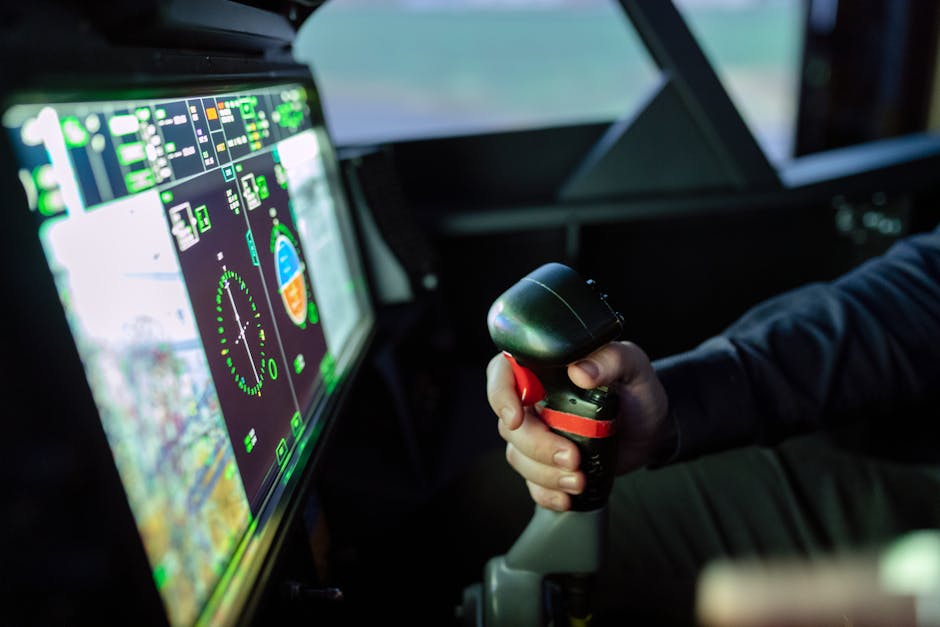
- Artificial intelligence can generate realistic driver behavior to train safety systems, but only under controlled conditions.
- AI-generated video can be photorealistic and temporally coherent, with precise metadata for supervised training of driver monitoring systems.
- Synthetic data can simulate rare events, like microsleep episodes, more frequently than real-world datasets, improving model robustness.
- Collecting real-world footage of drowsy, distracted, or impaired drivers is expensive, time-consuming, and raises ethical concerns.
- AI-generated video can fill the gap in training data for driver monitoring systems without compromising safety or accuracy.
Can artificial intelligence generate realistic enough driver behavior to train life-critical safety systems? As driver monitoring systems (DMS) become standard in modern vehicles, the demand for vast, diverse, and accurately labeled training data has surged. Collecting real-world footage of drowsy, distracted, or impaired drivers is not only expensive and time-consuming but raises serious ethical and privacy concerns. This bottleneck has led researchers and engineers to ask: can synthetic data—especially video generated by AI—fill the gap without compromising safety or accuracy?
Can AI-Generated Video Train Real-World Safety Systems?

The answer, increasingly, is yes—under controlled conditions. Advances in generative video models, particularly diffusion-based architectures and conditional GANs, now allow AI to produce photorealistic, temporally coherent video sequences of human drivers exhibiting specific behaviors: eye closure, head nodding, phone use, or even subtle signs of cognitive load. These synthetic clips are not random hallucinations; they are generated with precise metadata, such as gaze direction, blink frequency, and head pose, making them ideal for supervised training of DMS algorithms. By simulating rare but dangerous events—like sudden microsleep episodes—AI can generate edge cases far more frequently than they appear in real-world datasets, improving model robustness.
What Evidence Supports Synthetic DMS Data Efficacy?

Recent work from MIT and NVIDIA has demonstrated that models trained on synthetic driver data generalize surprisingly well to real-world test sets. In one 2023 study, a DMS model trained entirely on AI-generated video achieved 92% accuracy in detecting drowsiness on the real-world NTHU-DDPM dataset, compared to 95% for models trained on real data—a gap that narrows further when synthetic and real data are combined. As research published in Scientific Reports notes, synthetic data can match real data in distribution when models are conditioned on biomechanically plausible motion priors. Furthermore, companies like Affectiva and SmartEye are already integrating synthetic data pipelines into their DMS development workflows to augment limited real-world footage, especially for underrepresented demographics such as elderly drivers or those wearing glasses or head coverings.
Are There Risks in Relying on Synthetic Training Data?

Despite promising results, skeptics caution against overreliance on synthetic data. The core concern is the simulation-to-reality gap, or “sim-to-real” transfer problem: AI-generated videos, no matter how realistic, may lack the subtle noise, lighting variations, and unpredictable human micro-expressions present in real driving environments. For instance, a synthetic model might perfectly simulate eyelid movement but fail to capture reflections from sunglasses under flickering streetlights—a critical failure mode in actual DMS deployment. As Dr. Fei-Fei Li noted in a 2024 Stanford HAI lecture, “Synthetic data can amplify biases if the generative model itself learns from narrow datasets.” If the AI video generator is trained only on data from young, male drivers, the synthetic outputs will perpetuate those demographic skews, potentially leading to higher false-negative rates for women or older adults.
What Are the Real-World Impacts of This Technology?

The automotive industry is already feeling the impact. BMW and Volvo have publicly discussed using synthetic data to accelerate certification of their Level 3 autonomous systems, where driver readiness to resume control is critical. By generating millions of driver state transitions—such as a driver waking up after dozing off—engineers can stress-test DMS algorithms more thoroughly than physical testing allows. Regulatory bodies like the European New Car Assessment Programme (Euro NCAP) now recognize synthetic data in safety validation, provided it is traceable and verifiable. Beyond safety, synthetic data enables rapid iteration on privacy-preserving DMS designs: since no real individuals are recorded, concerns about facial data storage and consent are significantly reduced, aligning with GDPR and similar frameworks.
What This Means For You
If you drive a modern vehicle, your car’s ability to detect distraction or fatigue may soon depend on AI that learned from other AI-generated drivers. This shift makes safety systems faster to develop, more inclusive, and less invasive to privacy. While not a full replacement for real-world data, synthetic video is becoming an essential tool in the automotive AI pipeline—especially as regulators demand higher validation standards for autonomous features.
But how do we ensure synthetic data doesn’t create a false sense of security? As generative models improve, the line between real and artificial blurs, raising new challenges for auditing, transparency, and accountability in AI-driven safety systems. The next frontier may not be generating better video—but proving it’s safe to trust.
Source: Reddit