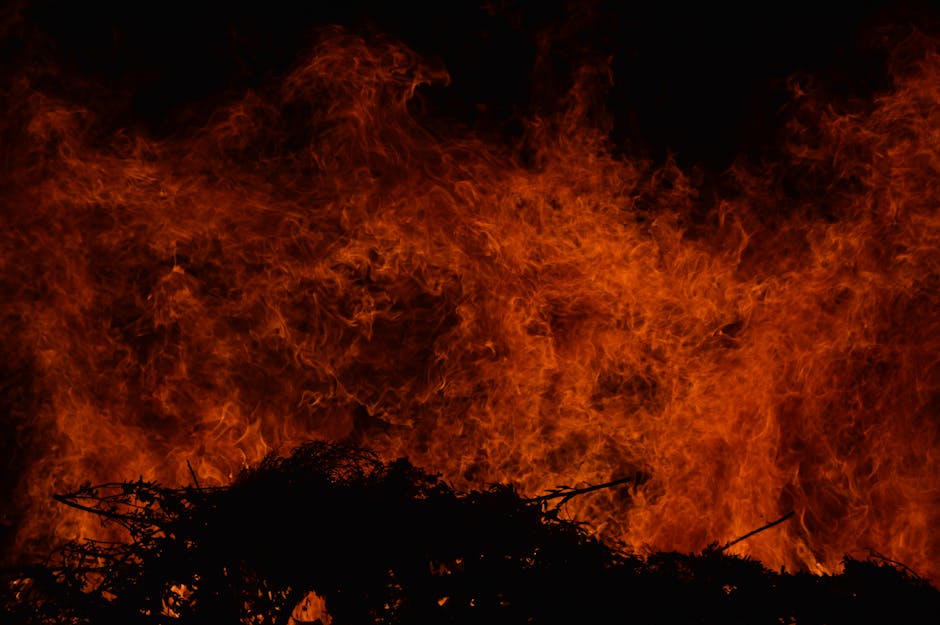
- A wildfire fueled by strong Santa Ana winds and low humidity has consumed over 180 acres in Simi Valley, California.
- The Simi Fire has destroyed at least six structures, including single-family homes, with dozens more threatened.
- Residents were forced to evacuate, some leaving behind pets and keepsakes, due to the fire’s rapid advancement.
- Firefighters from multiple jurisdictions are battling the blaze, including Los Angeles County and the California Department of Forestry and Fire Protection.
- The fire’s rapid spread has painted the sky an eerie orange and filled the air with the scent of burning wood and melted plastic.
Smoke churned like storm clouds over the rolling hills of Simi Valley, turning midday into dusk and painting the sky an eerie orange. Birds fled in panicked bursts as the crackle of burning chaparral grew louder, advancing with terrifying speed through dry brush. Residents scrambled to evacuate, some leaving behind pets and keepsakes, as flames leapt from hillside to hillside with little warning. Fire engines screamed down narrow cul-de-sacs, their sirens echoing off canyon walls, while helicopters thudded overhead, dumping bright red retardant in desperate attempts to slow the fire’s advance. The scent of burning wood and melted plastic hung thick in the air, a visceral reminder that in Southern California, the line between civilization and wildfire is often just a gust of wind.
Fire Engulfs 180 Acres Amid Evacuations

The Simi Fire, as it has been named by the Ventura County Fire Department, erupted in the early morning hours near the intersection of Long Canyon Road and State Route 118. Within hours, it had consumed more than 180 acres of dry vegetation, propelled by strong Santa Ana winds and low humidity. Mandatory evacuations were issued for neighborhoods including Santa Susana, parts of Royal Avenue, and homes along the ridge of the Simi Hills. At least six structures have been confirmed destroyed, including single-family homes, with dozens more threatened. Firefighters from multiple jurisdictions, including Los Angeles County and the California Department of Forestry and Fire Protection (Cal Fire), have deployed over 300 personnel, multiple engines, bulldozers, and aerial tankers to establish containment lines. As of the latest update, the fire remains 12% contained, with no reported fatalities but several minor injuries treated at the scene.
Rising Fire Risk in a Drought-Prone Region

This latest blaze is not an anomaly but part of a growing pattern in Southern California, where climate change, prolonged drought, and urban sprawl into wildland-urban interfaces have created a tinderbox. The region has experienced below-average rainfall for the past three years, leaving vegetation critically dry. According to the U.S. Centers for Disease Control and Prevention, the length and intensity of wildfire season in the western U.S. have increased significantly since the 1980s. In Ventura County alone, major fires in 2017 and 2018 — such as the Thomas Fire, which became the largest in modern California history at the time — reshaped land use policies and emergency preparedness. Yet, development continues in high-risk zones, often outpacing infrastructure improvements. The current fire season, which traditionally peaks in late summer and fall, has started earlier and more aggressively, signaling a dire shift in ecological norms.
Residents and First Responders on the Front Lines

Behind the statistics are families like the Garcias, who fled their Long Canyon home with only the clothes on their backs. “We saw the smoke from the backyard and had five minutes to grab the dog and go,” said Maria Garcia, standing in a parking lot designated as an evacuation center. Firefighters, many of whom live in the communities they protect, are working 24-hour shifts in extreme heat and hazardous air conditions. Captain Luis Mendez of the Ventura County Fire Department, his face streaked with soot, described the fire as “one of the fastest-moving I’ve seen in 15 years.” Volunteer brush firefighters from local ranches have joined the effort, using their knowledge of terrain to guide equipment through rugged paths. Meanwhile, emergency coordinators are relying on real-time data from satellite imagery and weather modeling to anticipate fire behavior, a high-stakes game of prediction against nature’s unpredictability.
Immediate and Long-Term Consequences

The immediate impact extends beyond property loss. Air quality in Simi Valley and surrounding areas has dropped to hazardous levels, prompting health advisories for vulnerable populations, including children and the elderly. Schools were closed, outdoor events canceled, and hospitals reported an uptick in respiratory complaints. Economically, the cost of firefighting, property damage, and lost productivity will likely reach millions. Insurance claims are expected to surge, and some residents may face difficulty rebuilding due to stricter fire codes and higher premiums. Environmentally, the burned landscape increases the risk of mudslides during winter rains, especially on denuded slopes. Recovery will require coordinated efforts between local, state, and federal agencies, and the trauma of displacement will linger long after the flames are out.
The Bigger Picture
This fire is not just a local disaster but a microcosm of a global crisis. Across the western United States, Australia, the Mediterranean, and Canada, wildfires are growing larger, faster, and more destructive. Scientists increasingly link this trend to climate change, which amplifies heat, dries fuels, and alters weather patterns. Southern California, with its unique geography and dense population, sits at the epicenter of this new fire regime. What happens here — in policy decisions, land management, and community resilience — may serve as a blueprint or a warning for other fire-prone regions worldwide. The question is no longer if another fire will come, but how well we are prepared to face it.
As night fell over Simi Valley, the glow of the fire still pulsed on the horizon, a grim reminder of nature’s power. Firefighters continued their grueling work, hoping for a shift in wind or a break in the heat. Officials urge residents to stay informed, heed evacuation orders, and prepare for more extreme fire events in the months ahead. The road to recovery will be long, but for now, the priority remains containment — and the hope that no more homes, and no lives, will be lost.
Source: Euronews