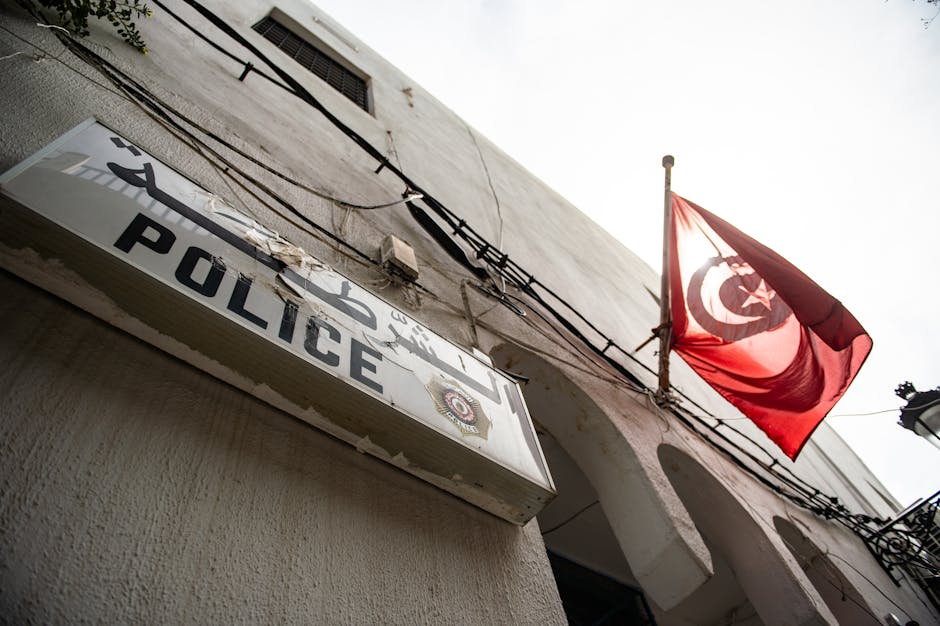
- A single gunshot triggered a swift response from San Diego Police Department officers, arriving within three minutes of the 911 call.
- The suspect, a 36-year-old male not affiliated with the mosque, was apprehended at the scene after a brief confrontation.
- The victim, a 42-year-old community leader, was pronounced dead at the scene, marking the first fatal attack on a mosque in Southern California in over a decade.
- Local law enforcement’s high-alert response and emergency preparedness protocols likely prevented further violence and potential loss of life.
- The incident has reignited national conversations about religious safety and hate-motivated violence in public spaces.
Just before noon on a Friday known for congregational prayers, a single gunshot shattered the quiet of the Islamic Center of San Diego, triggering a high-alert response from local law enforcement. Within three minutes of the 911 call, San Diego Police Department officers arrived to find a scene of chaos: panicked worshippers fleeing, blood near the entrance, and one man lying motionless. The suspect, a 36-year-old male not affiliated with the mosque, was apprehended at the scene after a brief confrontation, ending what could have been a far deadlier event. The victim, a 42-year-old community leader who had volunteered at the mosque for over a decade, was pronounced dead at the scene. This marks the first fatal attack on a mosque in Southern California in over a decade, reigniting national conversations about religious safety and hate-motivated violence in public spaces.
Escalation and Response Timeline

The incident unfolded rapidly, testing the city’s emergency preparedness protocols. According to the San Diego Police Department’s preliminary report, the first call came in at 11:47 a.m., reporting a man with a handgun near the mosque’s prayer hall. Officers from the North Division arrived by 11:50 a.m., using unmarked vehicles to establish a perimeter and secure exits. Surveillance footage obtained by CBS 8 shows the suspect entering the courtyard around 11:45 a.m., brandishing a semi-automatic pistol before firing a single round. No other shots were fired, either by the suspect or police. Eyewitnesses described a moment of stunned silence after the shot, followed by a stampede toward the rear exits. The swift containment was attributed to the mosque’s existing security protocol, which includes volunteer monitors and recent coordination with local law enforcement following a rise in anti-Muslim incidents nationwide.
Victim and Suspect Identified

Authorities confirmed the deceased as Amir Hassan, a Yemeni-American father of three and longtime outreach coordinator at the Islamic Center of San Diego. He had recently organized interfaith dialogues with local Christian and Jewish leaders and was praised by community members as a bridge-builder. The suspect, identified as Tyler J. Morrison, has no known criminal history but was flagged in a 2022 FBI database for posting extremist anti-immigrant and anti-Islamic rhetoric on fringe online forums. While Morrison acted alone, investigators are scrutinizing his digital footprint for links to broader networks. The weapon, a 9mm Glock 19, was legally purchased in Nevada in 2021 and registered under a previous owner before being transferred informally. No manifesto or declaration of intent was found at the scene or on his person.
Roots of Rising Religious Targeting

This attack occurs amid a troubling upward trend in religiously motivated violence in the United States. According to the FBI’s 2023 Hate Crime Statistics report, attacks targeting Muslim institutions have increased by 37% since 2020, the sharpest rise among all religious groups. The Council on American-Islamic Relations (CAIR) has documented over 500 incidents of harassment or violence against mosques nationwide in the past two years. Experts point to the convergence of online radicalization, political rhetoric, and inadequate federal monitoring as contributing factors. Dr. Lena Al-Hariri, a sociologist at UC San Diego specializing in religious violence, noted, “We’re seeing a normalization of dehumanizing language that emboldens lone actors.” A 2024 study by the Nature Human Behaviour journal linked a 22% increase in real-world hate incidents to spikes in algorithm-driven extremist content on social media platforms.
Community and National Fallout

The shooting has sent shockwaves through San Diego’s diverse religious communities, with vigils held at the mosque and interfaith gatherings across the city. Local imams have called for calm but also for tangible action, including increased federal protection for religious sites. The U.S. Department of Justice has opened a civil rights investigation to determine whether the attack constitutes a federal hate crime, which could carry enhanced penalties. Meanwhile, mosque attendance in the area has dropped by nearly 40% in the week following the shooting, according to community leaders. The psychological toll is evident: trauma counselors have been deployed to the Islamic Center, and school districts are preparing to address anxiety among Muslim students. The incident also places pressure on policymakers to revisit gun control measures, particularly around private firearm transfers and digital surveillance of extremist content.
Expert Perspectives
Security analysts are divided on the appropriate response. Some, like retired DHS official Mark Rienzi, argue that “hardening” religious sites with armed guards and barricades is now unavoidable. Others, including civil liberties advocate Nusrat Choudhury of the ACLU, warn that militarizing places of worship “undermines the very openness these communities represent.” There is consensus, however, on the need for improved intelligence sharing between federal agencies and local mosques. “We can’t prevent every attack,” said Dr. Al-Hariri, “but we can stop normalizing the rhetoric that fuels them.”
As the investigation continues, questions remain about Morrison’s radicalization pathway and whether warning signs were missed. The Justice Department’s findings could set a precedent for how federal authorities handle similar cases. Meanwhile, the Islamic Center of San Diego plans to reopen with enhanced but discreet security measures, determined not to let fear dictate their faith. The broader challenge for the nation remains: how to protect vulnerable communities without sacrificing the freedoms they cherish.
Source: Abcnews