- Pep Guardiola is leaving Manchester City after 11 years, citing the end of his current contract.
- Guardiola’s tenure at Manchester City saw the club win six Premier League titles and their first-ever UEFA Champions League trophy in 2023.
- The Spanish manager transformed English football with his tactical genius and relentless perfectionism.
- Guardiola’s legacy at Manchester City includes a win percentage exceeding 72% and over 250 victories in the Premier League.
- The news marks the conclusion of an era at Manchester City, with Guardiola’s departure set to leave a significant void.
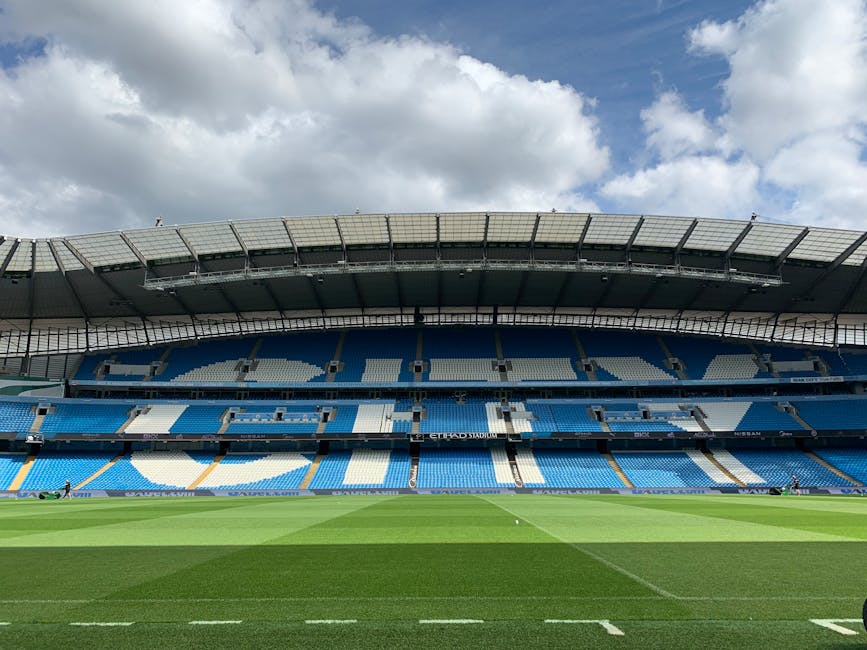
On a rain-drenched evening at the Etihad Stadium last May, the roar of 54,000 fans rose like thunder as Rodri’s late winner against Inter Milan clinched the Champions League, completing a historic treble. The pitch flooded with players, staff, and jubilant children as Pep Guardiola, usually reserved, danced barefoot in celebration — a rare moment of unfiltered emotion. Now, just months after that apex, the football world reels from the news that Guardiola will step down as manager of Manchester City this summer. The man who transformed English football with a blend of tactical genius and relentless perfectionism is poised to walk away from the club he elevated to global dominance. The final curtain may fall not with a loss, but in the aftermath of triumph — a decision as unexpected as it is seismic.
The End of an Era at Manchester City

According to reports from journalist David Ornstein and confirmed by multiple sources close to the club, Pep Guardiola has informed Manchester City’s board of his intention to leave at the end of his current contract. The decision, described as final, marks the conclusion of an 11-year tenure that redefined modern football. Under Guardiola, City won six Premier League titles, four League Cups, an FA Cup, and — most significantly — their first-ever UEFA Champions League trophy in 2023. With a win percentage exceeding 72% and over 250 victories in the Premier League alone, his legacy is etched in statistics and style. Enzo Maresca, the former Leicester City manager and recent assistant at City, is now the frontrunner to succeed him. Maresca, known for his progressive tactics and deep familiarity with Guardiola’s philosophy, is expected to be officially appointed in June.
The Roots of a Revolutionary Reign

Guardiola’s arrival in Manchester in 2016 was met with skepticism. Could the Catalan tactician, revered for his work at Barcelona, adapt his possession-heavy, high-pressing game to the physical demands of the Premier League? He answered swiftly. By 2018, City had claimed a record 100-point season, playing a brand of football so fluid and precise it was dubbed “tiki-taka for grown-ups.” His influence extended beyond results — it reshaped how clubs approached training, recruitment, and data analytics. The club invested in a state-of-the-art training complex and hired specialists in performance psychology, nutrition, and biomechanics, all under Guardiola’s vision. Over time, rivals like Liverpool and Chelsea adopted similar models, but none matched City’s consistency. The foundation laid by Sheikh Mansour’s ownership and Ferran Soriano’s executive leadership was brought to life by Guardiola’s relentless pursuit of footballing perfection.
The Architects of Manchester City’s Rise

At the heart of City’s transformation was a quiet but powerful triumvirate: Guardiola, sporting director Txiki Begiristain, and CEO Ferran Soriano — all alumni of Barcelona’s golden era. Their shared philosophy emphasized long-term planning, youth development, and a cohesive playing identity. Guardiola, often described as a footballing philosopher, demanded complete control over sporting decisions, from transfers to training schedules. His relationships with players like Kevin De Bruyne, İlkay Gündoğan, and Phil Foden were built on mutual respect and intense tactical education. Meanwhile, Maresca, who served as a first-team coach under Guardiola before managing in Italy and England, absorbed the methodology and is now seen as the natural torchbearer. Club insiders say Guardiola himself recommended Maresca, valuing his intelligence, humility, and alignment with City’s values.
What This Means for Players, Fans, and Rivals

For Manchester City’s players, the transition will test their adaptability. Guardiola’s departure removes not just a manager, but a mentor who micromanaged every detail of performance. Young talents like Rico Lewis and James McAtee may find more immediate opportunities under Maresca’s potentially less rigid approach. Fans, who have grown accustomed to dominance, now face an emotional reckoning — the end of a golden age. Commercially, the club remains stable, with lucrative sponsorship deals and global branding intact. However, rivals such as Arsenal and Manchester United will sense vulnerability. The Premier League, long shaped by City’s hegemony, could enter a more competitive phase. In Europe, teams like Real Madrid and Bayern Munich may see a power vacuum in the making.
The Bigger Picture
Guardiola’s exit is more than a managerial change — it’s a cultural inflection point for modern football. His tenure exemplified the rise of the coach as auteur, a figure whose influence extends beyond tactics into club identity. As other elite managers like Jürgen Klopp and Carlo Ancelotti also approach career twilight, the sport is entering a generational shift. The question now is whether Guardiola’s successor can maintain the standards he set, or whether his departure signals the end of an era defined by singular vision and control. The answer may determine not just City’s future, but the evolution of elite football management.
What comes next remains uncertain. Guardiola has not ruled out a return to management, possibly with the Spain national team or a project abroad. For now, he will take a sabbatical, a tradition after each of his major roles. At Manchester City, the focus turns to Enzo Maresca, a man who must honor a legacy without being imprisoned by it. The Etihad Stadium, once silent under rainy skies, will soon echo with new voices, new systems, and a new chapter. But the shadow of Guardiola — the architect, the artist, the relentless mind — will linger long after the final whistle.
Source: The New York Times