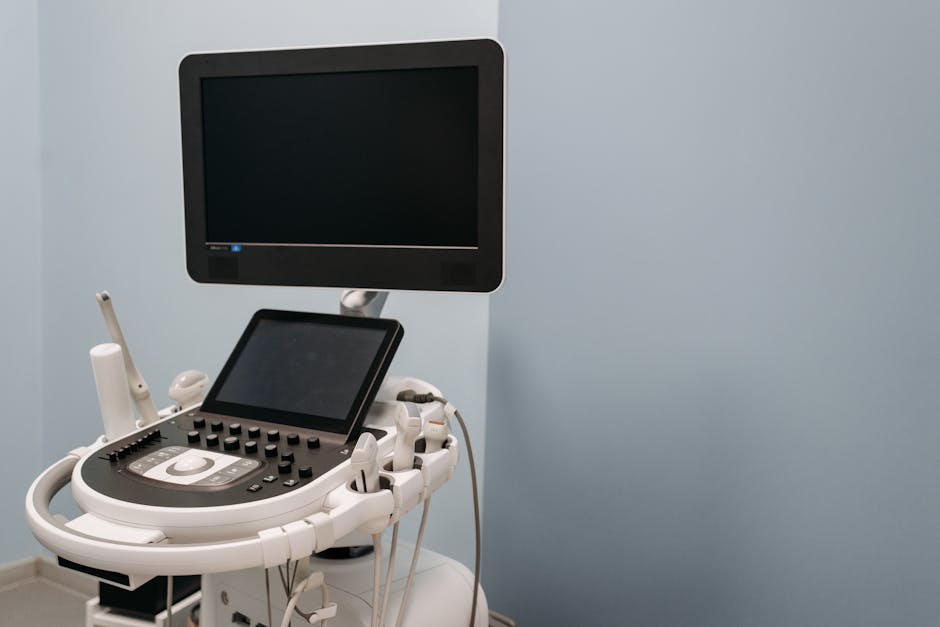
- Researchers have discovered that low-frequency ultrasound can enhance blood flow in microvessels by up to 40% in preclinical studies.
- The non-invasive technique stimulates endothelial cells to release nitric oxide, a molecule crucial for vasodilation and vascular health.
- Ultrasound devices may be deployed in clinics treating stroke, peripheral artery disease, and neurodegenerative disorders like Alzheimer’s in the future.
- Low-frequency ultrasound operates between 20 kHz and 1 MHz, and is typically used at low intensities to avoid thermal damage.
- This shift in ultrasound application could revolutionize the treatment of various vascular disorders and improve circulation.
For decades, ultrasound has been synonymous with diagnostics—a tool for peering into the human body without a single incision. Yet a groundbreaking shift is underway: researchers have discovered that low-frequency ultrasound can significantly enhance blood flow in microvessels, increasing circulation by up to 40% in preclinical studies. This non-invasive technique, once limited to imaging fetuses and internal organs, is now emerging as a powerful therapeutic modality. By stimulating endothelial cells lining blood vessels, low-frequency ultrasound triggers the release of nitric oxide, a molecule critical for vasodilation and vascular health. These findings, validated in animal models and early-phase human trials, suggest a future where ultrasound devices could be deployed not just in radiology departments, but in clinics treating stroke, peripheral artery disease, and even neurodegenerative disorders like Alzheimer’s, where impaired blood flow plays a key role.
A Paradigm Shift in Ultrasound Application

Ultrasound technology has long been celebrated for its safety and real-time imaging capabilities, but its therapeutic applications have remained largely unexplored until recently. The shift began with observations that certain ultrasound frequencies could influence cellular behavior without causing thermal damage. This led to a wave of research into low-intensity, low-frequency ultrasound (LILFU), typically operating between 20 kHz and 1 MHz. Unlike high-frequency diagnostic ultrasound, which uses short pulses for imaging, LILFU delivers continuous, gentle waves that interact with tissue at a molecular level. The significance lies in its ability to modulate biological processes—specifically, improving microcirculation in tissues that are oxygen-starved due to disease. With cardiovascular diseases remaining the leading cause of death globally—accounting for nearly 18 million deaths annually according to the World Health Organization—this innovation arrives at a critical juncture. It offers a potential non-pharmacological intervention to enhance perfusion in compromised tissues.
Mechanism and Clinical Evidence

The therapeutic effect hinges on mechanotransduction—how cells convert mechanical stimuli into biochemical signals. When low-frequency ultrasound waves pass through vascular tissue, they induce gentle oscillations in the endothelial cells. This mechanical stress activates ion channels and signaling pathways that culminate in the production of nitric oxide, a potent vasodilator. In a 2023 study published in Nature Biomedical Engineering, researchers demonstrated that 30 minutes of LILFU exposure increased capillary perfusion in rodent models by 35–40%. Human trials are still in early stages, but pilot data from institutions like Stanford University and the University of Pittsburgh show improved blood flow in patients with chronic limb ischemia. The devices used are compact, non-invasive, and can be targeted precisely to affected regions, making them ideal for outpatient or even home-based therapy. No significant adverse effects have been reported, suggesting a high safety margin.
Biological and Engineering Challenges

Despite the promise, translating this technology into widespread clinical use presents challenges. One major hurdle is determining the optimal frequency, intensity, and duration of exposure for different conditions. Too little energy may yield no effect; too much risks tissue damage or inflammatory responses. Moreover, the heterogeneity of vascular anatomy across patients requires personalized treatment protocols. Engineers are now developing adaptive ultrasound systems that use real-time feedback to modulate output based on tissue response. Another concern is long-term efficacy: while short-term improvements in blood flow are evident, it remains unclear whether repeated sessions lead to sustained vascular remodeling or angiogenesis—the formation of new blood vessels. Additionally, the blood-brain barrier poses a unique challenge in neurological applications. Although some studies suggest LILFU can enhance cerebral perfusion without disrupting the barrier, rigorous safety testing is ongoing.
Patient Impact and Accessibility

If proven effective, low-frequency ultrasound could profoundly impact patients with chronic conditions. For stroke survivors, improved cerebral blood flow may accelerate neurorehabilitation and reduce long-term disability. In diabetic patients with peripheral neuropathy, enhanced microcirculation could prevent ulcers and amputations. The therapy’s non-invasive nature and minimal side effects make it particularly attractive for elderly or frail individuals who cannot tolerate surgery or aggressive drug regimens. Furthermore, the potential for home-use devices could democratize access, especially in underserved or rural areas. However, cost and regulatory approval remain barriers. Current prototypes are expensive, and widespread adoption will depend on clinical trial outcomes and FDA or EMA clearance for specific indications.
Expert Perspectives
“This is not just an incremental improvement—it’s a reimagining of ultrasound’s role in medicine,” says Dr. Elena Torres, a vascular biologist at Harvard Medical School. “We’re moving from passive observation to active intervention.” Yet some experts urge caution. Dr. Rajiv Mehta, a cardiologist at Johns Hopkins, notes, “While the data is exciting, we need large-scale randomized trials before this becomes standard of care. The jump from rodents to humans is not trivial.” There is also debate over whether the benefits will be durable or merely transient. Still, the consensus is that the therapeutic potential warrants aggressive investigation.
Looking ahead, the field is poised for rapid evolution. Researchers are exploring combinations of ultrasound with microbubbles or nanocarriers to further enhance drug delivery to ischemic tissues. Clinical trials are expanding to include Alzheimer’s patients, testing whether improved cerebral perfusion can slow cognitive decline. As technology advances, wearable ultrasound patches may emerge, offering continuous vascular support. The question is no longer if low-frequency ultrasound will play a role in therapy—but how soon, and for whom it will become accessible.
Source: MedicalXpress