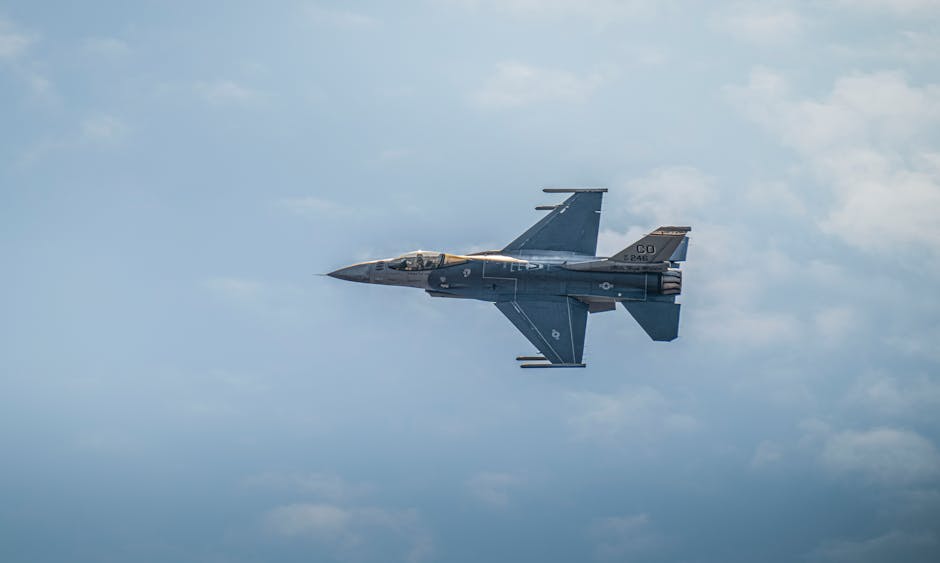
- US military commanders received authorization for strikes on Iranian radar and missile installations, but the order was later countermanded.
- President Trump expressed concerns about escalating the conflict in the Middle East, citing the need for a more measured approach.
- The reversal of the strike order revealed deep unease within the administration about the potential consequences of military action.
- This is not the first time Trump has authorized military action against Iran only to pull back at the last minute.
- The incident highlights the challenges of navigating the complex and volatile Middle East region, where small missteps can have significant consequences.
The sun had just breached the horizon over the Persian Gulf when U.S. military commanders received an encrypted alert: authorization had been granted for precision strikes on Iranian radar and missile installations. Warships shifted positions, fighter jets warmed engines, and Pentagon officials braced for a rapid escalation. But by mid-morning, the order was countermanded. In the White House Situation Room, President Donald Trump sat with arms crossed, reportedly telling advisors, “We can’t go in half-cocked.” The abrupt reversal—announced publicly just hours after threats of retaliation—revealed not just the volatility of the moment, but the deep unease within the administration over plunging the United States into another prolonged conflict in the Middle East.
Strikes Approved, Then Abruptly Halted

In June 2019, following Iran’s downing of a U.S. Global Hawk surveillance drone in international airspace, President Trump confirmed he had authorized military action before calling it off less than ten minutes before launch. The Pentagon had planned coordinated strikes on three Iranian military targets, including air defense systems and command centers, in response to what officials described as an unprovoked attack. But after consulting with top advisors—including then-Defense Secretary Patrick Shanahan and National Security Advisor John Bolton—Trump opted against escalation, stating the response would have been disproportionate to the loss of an unmanned aircraft. The decision stunned military leaders and allies alike, showcasing the president’s unpredictable approach to foreign policy and raising questions about strategic coherence in crisis moments.
Escalation and a Path to Brinkmanship

The incident was the culmination of months of rising tensions after the Trump administration unilaterally withdrew from the 2015 Iran nuclear deal, reimposing harsh economic sanctions that crippled Iran’s oil exports and currency. Tehran responded by incrementally breaching the agreement’s limits on uranium enrichment, while also targeting commercial shipping in the Strait of Hormuz—actions the U.S. attributed to Iranian-backed forces. A series of attacks on oil tankers in May and June 2019 heightened fears of a broader conflict. The downing of the drone, which the U.S. claimed was flying legally over international waters while Iran insisted it had violated Iranian airspace, became the flashpoint. According to reports from Reuters, the military was minutes away from launching when Trump halted the operation, concerned about civilian casualties and potential retaliation.
The Decision-Makers Behind the Standoff

The internal debate within the Trump administration mirrored a broader ideological rift. Hardliners like John Bolton and then-acting Defense Secretary Shanahan advocated for a robust military response, framing Iran as a destabilizing force that needed to be contained through strength. Conversely, more moderate voices, including Chairman of the Joint Chiefs Gen. Joseph Dunford and Secretary of State Mike Pompeo, cautioned against unintended escalation that could lead to a full-scale war. Trump himself appeared torn—publicly issuing bellicose statements while privately expressing doubts about the costs of another Middle Eastern war. His decision to abort the strikes reflected not just strategic calculation but also political sensitivity; public opinion polls showed strong opposition to military intervention in Iran, with majorities across party lines favoring diplomacy over force.
Consequences of a War That Didn’t Happen

While full-scale conflict was averted, the near-miss had lasting implications. Iran interpreted the aborted strike as a sign of U.S. hesitation, emboldening its regional proxies and accelerating its nuclear program. Militarily, the pause allowed Tehran to further entrench its capabilities in Iraq, Syria, and Yemen. Domestically, the episode intensified scrutiny over civilian control of the military and the concentration of war powers in the presidency. Critics pointed to the lack of congressional consultation, underscoring ongoing constitutional tensions. Meanwhile, U.S. allies in Europe expressed alarm at the unpredictability of American policy, complicating diplomatic efforts to revive nuclear negotiations or de-escalate regional hostilities.
The Bigger Picture
This moment crystallized a broader shift in U.S. foreign policy—one marked by rhetorical aggression but operational restraint. It also highlighted the paradox of modern American power: immense military capability paired with growing public and political aversion to prolonged engagements abroad. As global influence becomes less defined by military dominance and more by economic and diplomatic leverage, decisions like Trump’s withdrawal from strike orders signal a recalibration, albeit an inconsistent one. The incident serves as a cautionary tale about the dangers of brinkmanship in an era where miscalculation can quickly spiral into war.
What comes next remains uncertain. While open hostilities were avoided in 2019, tensions with Iran have never fully subsided. Successive administrations have grappled with the same dilemma: how to counter Iranian aggression without triggering a wider conflict. Diplomatic channels remain fragile, and the nuclear program advances. The world watches, aware that the next flashpoint could emerge with little warning—and that the decision to strike, or not, may once again rest on the instincts of a single leader in a moment of crisis.
Source: The New York Times