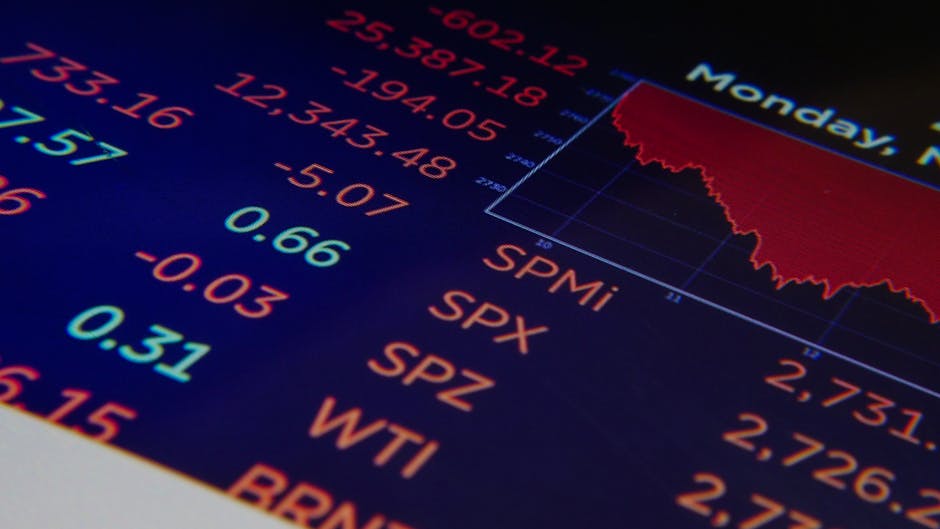
- The US Treasury yield has stabilized after a prolonged sell-off, but its sustainability is uncertain.
- The 30-year benchmark yield has reached levels not seen since 1999, with some traders taking profits.
- Stronger-than-expected demand at Treasury auctions has helped anchor yields, indicating institutional appetite.
- The Federal Reserve’s communications have given markets room to breathe, despite still being hawkish.
- The bond market is flashing caution signs that policymakers cannot afford to ignore.
Is the worst of the bond market turmoil behind us, or is this just a pause before the next wave? After a prolonged sell-off that sent tremors through global financial markets, U.S. Treasury yields have stabilized slightly — but not before the 30-year benchmark flirted with levels unseen since 1999. Investors are now asking whether this stabilization reflects renewed confidence or merely a temporary lull before another surge in long-term borrowing costs. With inflation proving stickier than expected and central banks signaling continued vigilance, the stakes for consumers, corporations, and governments couldn’t be higher. The bond market, often seen as the barometer of economic sentiment, is flashing caution signs that policymakers can’t afford to ignore.
What’s Driving the Stabilization in Treasury Yields?

The recent easing in the Treasury sell-off appears to stem from a combination of technical factors and recalibrated investor expectations. After the 30-year yield surged past 4.7%, nearing the 1999 high of 6.5%, some traders took profits, seeing valuations as stretched. Additionally, stronger-than-expected demand at recent Treasury auctions signaled underlying institutional appetite for long-dated debt, helping to anchor yields. The Federal Reserve’s latest communications, while still hawkish, avoided further aggressive rhetoric, giving markets room to breathe. According to analysts at Reuters, this brief reprieve reflects a pause rather than a reversal, as underlying macroeconomic pressures remain intact. Still, the temporary calm offers a window to assess the sustainability of current yield levels.
What Evidence Supports Continued Pressure on Bond Markets?

Despite the short-term stabilization, multiple data points suggest sustained upward pressure on long-term yields. Core inflation, excluding volatile food and energy prices, has remained above the Fed’s 2% target for 28 consecutive months. The latest CPI report showed a 3.8% year-over-year increase, well above historical norms. Meanwhile, strong labor markets and resilient consumer spending continue to fuel demand-side inflation. Central banks, including the European Central Bank and the Bank of England, have also maintained tight monetary policies, reinforcing global yield trends. As the BBC noted, the synchronized nature of global monetary tightening is amplifying bond market volatility. With few signs of a near-term policy pivot, many economists believe yields could remain elevated for years.
Are There Reasons to Doubt the Inflation Narrative?

Not all analysts agree that persistently high yields are justified. Some economists argue that inflation may be nearing its peak, citing declining housing costs, easing supply chains, and slowing wage growth. They point to the 10-year breakeven inflation rate — a market-based measure of expected inflation — which has declined from 2022 highs and now sits around 2.3%, suggesting long-term inflation expectations remain anchored. Critics also warn that aggressive rate policies could over-tighten financial conditions, risking a deeper recession. Strategists at major investment banks, including Goldman Sachs and JPMorgan, have cautioned that markets may be pricing in more Fed hawkishness than warranted, especially if economic growth slows in the second half of the year. In this view, the surge in long-term yields may be overstated and due for a correction.
What Are the Real-World Consequences of High Long-Term Yields?

The implications of elevated 30-year Treasury yields extend far beyond Wall Street. For homeowners, higher yields translate directly into more expensive 30-year fixed mortgages, potentially cooling the housing market. Corporate financing costs are also rising, making long-term investments in infrastructure, R&D, and expansion less attractive. Municipalities and state governments face steeper borrowing costs for public projects, from schools to transportation. Internationally, emerging markets with dollar-denominated debt are particularly vulnerable, as stronger U.S. yields strengthen the dollar and increase repayment burdens. Historically, periods of rising long-term rates have preceded economic slowdowns, as seen in the early 1980s and 2008. With debt levels significantly higher today, the ripple effects could be more severe.
What This Means For You
If you’re planning to buy a home, refinance debt, or invest in bonds, the current environment demands caution. Locking in long-term fixed rates may be prudent before yields climb further, while bond investors should consider shorter-duration assets to reduce interest rate risk. For savers, higher yields mean better returns on CDs and money market funds, offering a rare upside. But for the broader economy, persistently high borrowing costs could dampen growth, affect job markets, and delay recovery in interest-sensitive sectors like housing and autos.
One lingering question remains: Can central banks engineer a soft landing amid such financial strain? With inflation still above target and labor markets tight, the path forward is fraught with uncertainty. Will economic resilience offset the drag from high rates, or will tighter financial conditions eventually tip the economy into recession? The bond market’s verdict is still unfolding.
Source: CNBC