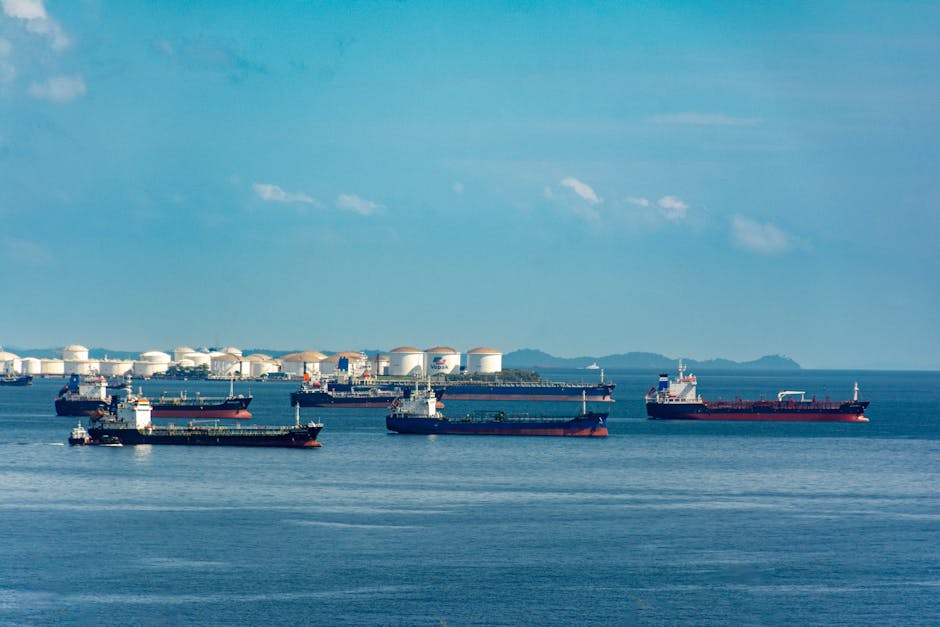
- Oil prices surged over 5% after US President Trump cancelled military strikes on Iran, causing volatility in energy markets.
- The Strait of Hormuz is the world’s most critical energy chokepoint, with nearly 20% of global oil passing through it daily.
- Market volatility spiked as investors assessed the risk of prolonged disruption to global oil supply routes.
- The incident marked the closest US and Iran have come to direct military conflict in years, escalating regional tensions.
- Shipping insurers reported sharp increases in tanker premiums due to escalating risks in the Strait of Hormuz.
Global oil prices surged more than 5% in volatile trading after U.S. President Donald Trump revealed he had authorized, then abruptly canceled, military strikes on Iran in retaliation for the downing of an American surveillance drone. The abrupt reversal sent shockwaves through energy markets, with Brent crude climbing above $65 per barrel as traders weighed the fragility of supply routes through the Strait of Hormuz, through which nearly 20% of the world’s oil passes daily. The incident marked the closest the U.S. and Iran have come to direct military conflict in years, turning the narrow waterway—a critical artery for Saudi, Iraqi, and Emirati exports—into a geopolitical tinderbox. Market volatility spiked as investors scrambled to assess the risk of prolonged disruption, with shipping insurers already reporting sharp increases in tanker premiums.
Strategic Chokepoint Under Threat

The Strait of Hormuz, a 21-mile-wide channel separating Iran from Oman, is the world’s most critical energy chokepoint. Any disruption here reverberates across global markets, given that approximately 17 to 20 million barrels of oil pass through it each day, accounting for over one-fifth of global consumption. The region’s volatility has been escalating since mid-2019, following attacks on oil tankers attributed by the U.S. to Iranian forces and Tehran’s announcement of reduced compliance with its nuclear deal obligations. The Trump administration’s decision to withdraw from the 2015 Iran nuclear accord and reimpose sanctions has further strained relations, prompting Iran to threaten closing the strait if its exports are fully blocked. This latest episode underscores how geopolitical brinkmanship can instantly destabilize energy markets, where even the perception of risk can trigger sharp price swings.
From Drone to Diplomacy: Timeline of Tensions

The crisis unfolded on June 20, 2019, when Iran’s Islamic Revolutionary Guard Corps shot down a U.S. Navy RQ-4A Global Hawk drone, claiming it had violated Iranian airspace. U.S. officials countered that the drone was over international waters, sparking immediate calls for retaliation. President Trump confirmed that military strikes were approved against three Iranian targets but canceled them just 10 minutes before launch, citing disproportionate response concerns. “I was against killing 150 people to defend an unmanned machine,” Trump later stated. The disclosure, made days after the incident, intensified market anxiety over unpredictable decision-making at the highest level. Meanwhile, Iran maintained a defiant stance, demanding the U.S. lift sanctions before any negotiations, while increasing its uranium enrichment beyond limits set by the Joint Comprehensive Plan of Action.
Market Reactions and Risk Calculations

Energy analysts noted that while the immediate threat of war receded, the underlying risk premium in oil prices remained elevated. “Markets aren’t pricing in war, but they are pricing in persistent instability,” said Helima Croft, head of global commodity strategy at RBC Capital Markets. Data from the U.S. Energy Information Administration showed global oil inventories were at healthy levels, providing a buffer against short-term supply shocks. However, any sustained closure of the Strait of Hormuz could deplete those reserves within weeks, especially given limited alternative transport routes. The incident triggered a flight to safety in financial markets, with investors boosting holdings in gold and U.S. Treasuries while energy stocks saw mixed reactions. Refiners with diversified sourcing, such as ExxonMobil and Royal Dutch Shell, fared better than those reliant on Middle Eastern crude.
Global Ripple Effects

The implications of heightened tension extend far beyond energy markets. Asian economies like Japan, South Korea, and India, which rely heavily on Gulf oil, face increased import costs and potential supply shortages. Maritime insurers have already begun adjusting premiums for vessels transiting the region, which could raise shipping rates and inflation pressures globally. European nations, still committed to the Iran nuclear deal, are caught between diplomatic efforts to de-escalate and alignment with U.S. policy. For oil-producing Gulf states, the episode reaffirms the need for diversified export infrastructure, including pipelines bypassing the strait. Meanwhile, consumers may see higher gasoline prices if tensions persist, particularly in the U.S., where summer driving demand could compound market stress.
Expert Perspectives
Analysts are divided on whether the incident marks a turning point or a temporary flare-up. Some, like Jason Bordoff of Columbia University’s Center on Global Energy Policy, argue that both sides have strong incentives to avoid war but warn that miscalculation remains a key risk. Others, including Flynt Leverett of Penn State, caution that U.S. sanctions have cornered Iran, pushing it toward asymmetric responses that could spiral out of control. “The danger isn’t just a deliberate strike,” Leverett noted, “It’s an incident at sea or in the air that neither side can afford to back down from.”
Looking ahead, markets will closely monitor Iran’s nuclear activities, U.S. military posture in the Gulf, and any diplomatic openings. The outcome of European-led efforts to salvage the nuclear deal could influence investor sentiment. Additionally, the resilience of alternative supply routes, such as Saudi Arabia’s East-West pipeline, will be scrutinized. With geopolitical risk now a structural feature of oil markets, traders must adapt to an era where headlines, not just fundamentals, drive price action.
Source: BBC