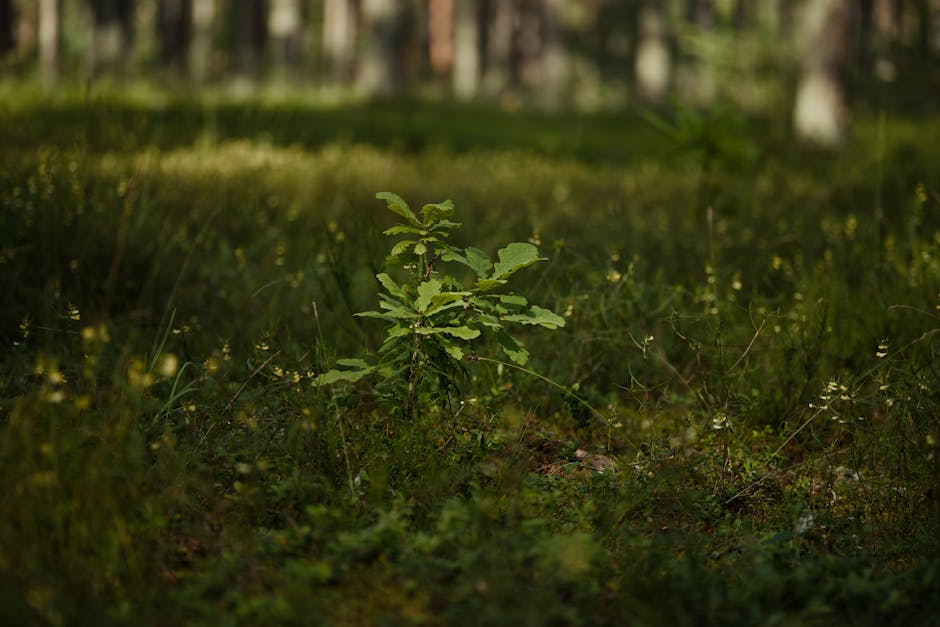
- Oak trees have developed a defense strategy to evade pests by delaying their spring growth by up to three days.
- This time-based defense disrupts the synchronized emergence of herbivorous insects, such as caterpillars.
- Oak trees reduce damage and increase survival by altering their developmental schedule.
- A 2023 study published in Nature Ecology & Evolution confirmed this phenological mismatch through long-term ecological monitoring.
- Researchers estimate that this delay reduces subsequent herbivory by 35-45% and provides a significant fitness advantage.
Recent research reveals that oak trees employ a sophisticated time-based defense strategy against caterpillar infestations, delaying the opening of their leaves by up to three days the following spring. This shift in phenology disrupts the synchronized emergence of herbivorous insects, which rely on precise timing to exploit tender new foliage. By altering their developmental schedule, oaks reduce damage and increase survival, suggesting a form of long-term, experience-based response previously underappreciated in plants.
Phenological Mismatch Confirmed by Field Data

Long-term ecological monitoring in European forest ecosystems has demonstrated that oak trees (Quercus robur) exposed to heavy caterpillar herbivory in one season consistently delay budburst the next year. A 2023 study published in Nature Ecology & Evolution analyzed data from over 1,200 trees across 15 sites in the Netherlands and Germany, showing an average delay of 2.8 days in leaf emergence after significant feeding events. This shift creates a phenological mismatch: caterpillars, whose eggs hatch based on temperature cues, emerge to find older, tougher, and less nutritious leaves. Researchers estimate this delay reduces subsequent herbivory by 35–45%, a significant fitness advantage over time. The effect persists even when controlling for climate variables, indicating an internal, adaptive adjustment rather than passive environmental response.
Key Players: Trees, Insects, and the Ecosystem

The primary actors in this ecological drama are the pedunculate oak (Quercus robur), the winter moth (Operophtera brumata), and the mottled umber (Erannis defoliaria), both of which specialize in feeding on oak foliage. These caterpillars hatch in spring, timed to coincide with the peak nutritional value of young leaves. However, the trees’ ability to ‘remember’ past attacks—likely through epigenetic or hormonal signaling—allows them to recalibrate their growth schedule. Scientists hypothesize that jasmonic acid, a plant hormone involved in defense responses, may play a role in modulating budburst timing. Meanwhile, natural predators like insectivorous birds (e.g., great tits, Parus major) benefit from the altered dynamics, as the extended window of caterpillar activity improves foraging opportunities. This tri-trophic interaction underscores the complexity of forest ecosystems, where defense strategies ripple across species boundaries.
Trade-offs in Timing and Survival

While delayed leafing offers protection from herbivores, it comes with physiological and ecological trade-offs. By opening their leaves later, oak trees shorten their photosynthetic season, potentially reducing carbon uptake and growth rates. In years with short growing seasons or early frosts, this delay could compromise energy reserves and reproductive output. However, the net benefit appears positive: the reduction in leaf damage outweighs the cost of lost time. Moreover, trees that delay budburst may allocate more resources to chemical defenses, such as tannins and phenolic compounds, which further deter feeding. The strategy reflects an evolved balance—prioritizing survival over maximal growth in the face of recurring threats. For forest managers, this suggests that suppressing natural herbivory too aggressively could inadvertently weaken trees’ adaptive responses.
Why This Defense Is Emerging Now

This delayed phenology strategy has likely existed for millennia, but it is only now being recognized due to advances in long-term ecological datasets and analytical methods. Climate change has intensified the selective pressure: as spring temperatures rise, the risk of phenological mismatch between trees and insects increases. In some regions, caterpillars are advancing their emergence faster than birds can adjust, but oaks are now shown to be active participants in this temporal arms race. The discovery emerged from a confluence of satellite phenology tracking, ground-based monitoring, and controlled experiments simulating herbivory. These tools have revealed that plants are not passive victims but dynamic agents in ecological interactions, capable of strategic, time-delayed responses to stress.
Where We Go From Here
In the next 6–12 months, researchers plan to investigate whether this delayed leafing response occurs in other tree species, such as beech and birch, and whether it can be induced artificially to enhance forest resilience. One scenario involves using low-impact herbivory mimics—like targeted mechanical damage or hormone treatments—to ‘prime’ trees in managed forests. A second possibility is that climate-driven mismatches could erode this defense if temperature shifts outpace trees’ ability to adjust. A third scenario envisions integrating this knowledge into conservation strategies, where preserving natural insect pressures becomes essential for maintaining tree hardiness. These pathways highlight the importance of viewing forests as adaptive systems rather than static resources.
Bottom line — oak trees’ ability to delay leaf emergence in response to past caterpillar attacks reveals a sophisticated, time-based defense strategy that challenges traditional views of plant passivity and underscores the depth of ecological intelligence in long-lived organisms.
Source: New Scientist