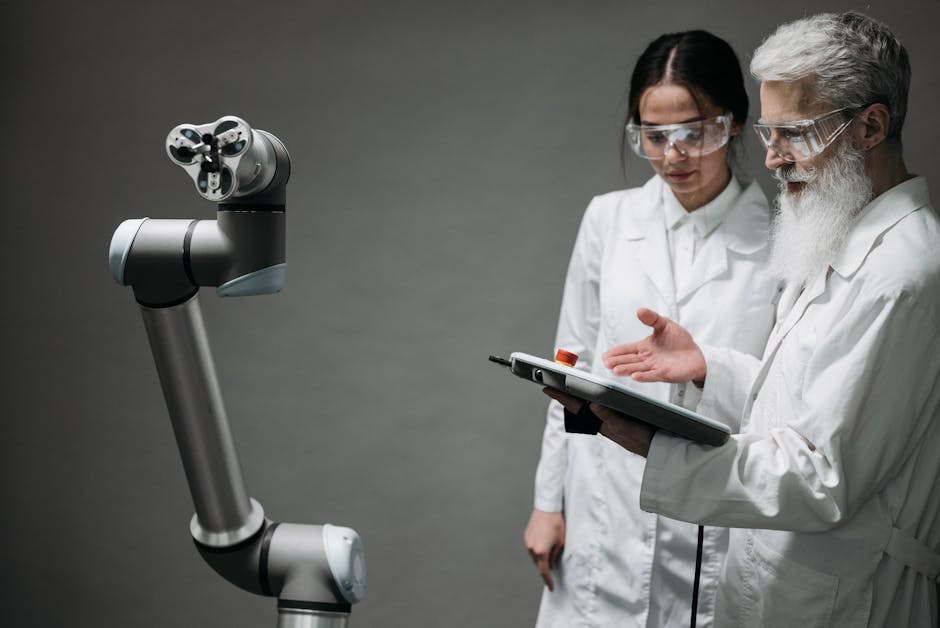
- Meta reassigns 7,000 employees to focus on artificial intelligence development, highlighting its commitment to dominating AI innovation.
- The company’s dual strategy of redeployment and downsizing aims to accelerate its AI roadmap, particularly in generative models and AI-powered consumer applications.
- Meta’s shift signals a broader recalibration of priorities across Silicon Valley, where AI has become the central axis of technological investment and organizational structure.
- The reassignment of thousands of engineers, product managers, and researchers to AI-centric roles demonstrates Meta’s determination to innovate quickly in the AI arms race.
- Generative AI is reshaping the tech industry, with companies under pressure to innovate or risk obsolescence, driving Meta’s strategic pivot towards AI-centric development.
Meta Platforms Inc. is undergoing one of the most significant workforce transformations in its history, reassigning approximately 7,000 employees to focus exclusively on artificial intelligence development—just two days before announcing plans to lay off roughly 10 percent of its global workforce, or about 8,000 employees. This dual strategy of strategic redeployment and downsizing highlights the intensity of Meta’s commitment to dominating the next phase of AI innovation. As competition with companies like Google, Microsoft, and OpenAI intensifies, Meta is betting that internal realignment will accelerate its AI roadmap, particularly in generative models, infrastructure, and AI-powered consumer applications. The scale of this shift signals a broader recalibration of priorities across Silicon Valley, where AI is no longer a supplementary initiative but the central axis of technological investment and organizational structure.
\n\n
A Strategic Pivot in the AI Arms Race

\n
Meta’s decision to reassign thousands of engineers, product managers, and researchers to AI-centric roles comes at a pivotal moment in the tech industry. With generative AI reshaping everything from search and advertising to content creation and customer service, companies are under immense pressure to innovate quickly or risk obsolescence. According to a report by Reuters, the reassignments are part of Meta’s Efficiency Year initiative, launched in 2023 to streamline operations and sharpen focus on high-impact areas. The AI push is particularly critical for Meta’s long-term vision of building advanced AI assistants, improving recommendation algorithms, and powering its Reality Labs division, which is developing augmented and virtual reality experiences. By concentrating human capital on AI, Meta aims to close the gap with rivals who have moved faster in commercializing large language models and AI-driven tools.
\n\n
Workforce Reshuffle and Layoff Context

\n
The reassignment of 7,000 employees coincides with Meta’s second major round of layoffs since 2022, affecting approximately 8,000 workers across various departments. While the company has not disclosed the exact overlap between those reassigned and those laid off, internal communications suggest that many displaced roles were in non-core functions, including project management, administrative support, and legacy platform maintenance. CEO Mark Zuckerberg emphasized in a company-wide memo that the restructuring is designed to make Meta “leaner and more innovative,” enabling faster decision-making and greater agility in AI development. Some reassigned employees are transitioning from ad tech and social media operations into AI research, model training, and infrastructure scaling—areas deemed essential for future growth. The shift also reflects a broader trend in Big Tech, where companies are reprioritizing talent away from mature products toward speculative but transformative technologies.
\n\n
Driving Innovation Through Organizational Change

\n
At the heart of Meta’s transformation is a calculated effort to embed AI across its entire product ecosystem. The company has already released several open-source large language models, including Llama 2 and Llama 3, positioning itself as a key player in democratizing AI access. By reallocating 7,000 employees to AI, Meta is significantly expanding its internal capacity to train, refine, and deploy these models at scale. According to industry analysts, this represents one of the largest internal talent migrations ever undertaken by a single tech firm in response to an emerging technology wave. The move is also intended to reduce reliance on external AI providers and strengthen Meta’s ability to customize AI systems for its unique use cases—such as content moderation, ad targeting, and immersive experiences in the metaverse. Internal data shared with executives indicates that AI-integrated features have already improved user engagement metrics by up to 18 percent in early trials.
\n\n
Impact on Employees and Industry Standards

\n
The workforce changes at Meta are sending shockwaves through the tech labor market, setting a precedent for how other companies may respond to the AI revolution. Employees affected by the layoffs are receiving severance packages, career transition support, and priority consideration for open roles, but the emotional and financial toll remains significant. At the same time, the reassignments raise questions about the future of non-AI roles in major tech firms—will functions like community management, legacy software maintenance, and even parts of human resources become increasingly marginalized? For the tech industry as a whole, Meta’s strategy underscores a growing consensus: AI is not just a tool, but a structural force reshaping corporate hierarchies, job functions, and innovation pipelines. Other companies, including Amazon and Salesforce, have begun similar reorganizations, suggesting that Meta’s model could become standard practice.
\n\n
Expert Perspectives
\n
Industry experts are divided on the long-term efficacy of Meta’s aggressive pivot. Dr. Fei-Fei Li, a leading AI researcher at Stanford University, praised the investment in AI talent but warned that “over-concentration on generative models risks neglecting foundational issues like bias, transparency, and energy efficiency.” Meanwhile, tech economist Susan Athey noted that such large-scale reassignments could lead to talent bottlenecks, stating, “Redirecting 7,000 people into AI doesn’t guarantee expertise—ramp-up time and retraining are critical.” Others argue that open-sourcing models like Llama gives Meta strategic leverage, allowing it to influence global AI development while reducing infrastructure costs through community contributions. Still, concerns persist about the sustainability of rapid organizational change and its impact on employee morale and innovation culture.
\n\n
Looking ahead, all eyes will be on Meta’s ability to translate this massive internal shift into tangible product advancements and market leadership. Key metrics to watch include user adoption of AI-powered features, performance benchmarks of upcoming Llama models, and Meta’s progress in integrating AI into its metaverse initiatives. The company’s next earnings call will likely provide further clarity on how the restructuring is affecting operational efficiency and R&D output. As the AI landscape evolves, Meta’s bold workforce realignment may be remembered as a defining moment—not just for the company, but for the future of work in the digital age.
Source: The New York Times