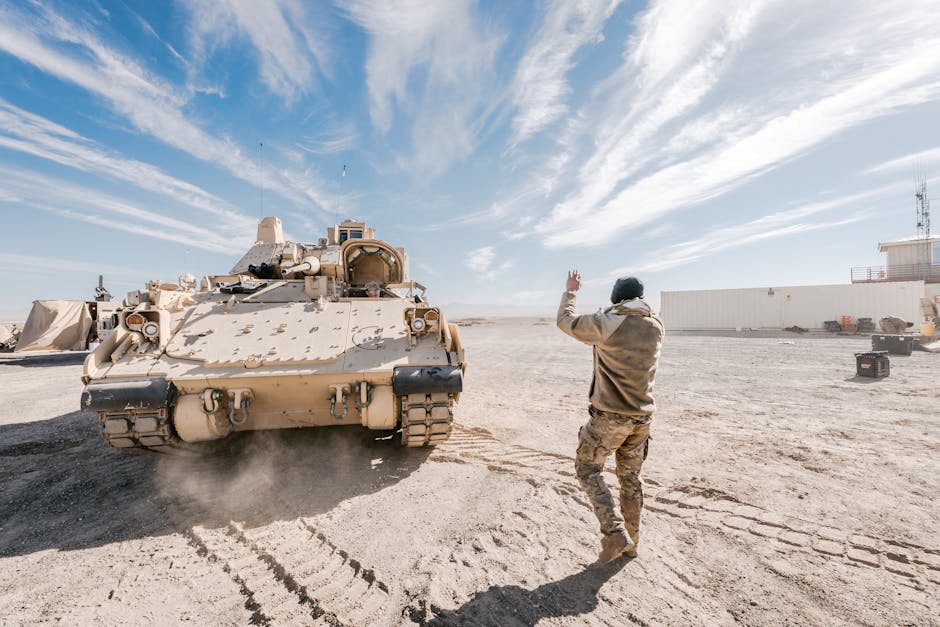
- Iraqi forces are conducting a massive desert operation to search for hidden military installations on sovereign soil.
- The operation, ‘Operation Iron Horizon,’ involves over 2,000 troops and advanced surveillance technology.
- Intelligence reports suggest clandestine bases are being built in remote desert corridors, sparking concerns over national sovereignty.
- The Tanf border crossing, a strategic location, is a key area of focus in the operation.
- The search for unauthorized military structures reflects growing alarm in Baghdad over potential breaches of national sovereignty.
In the predawn haze of Iraq’s western Anbar province, dust devils spiral across a barren expanse where the Euphrates fades into Syria. Camouflage-clad soldiers fan out across the cracked earth, their boots crunching over sun-bleached stones as drones hum overhead. This is no routine patrol. Iraqi special forces, backed by reconnaissance aircraft and armored convoys, are conducting one of the most extensive desert sweeps in years—searching not for insurgents, but for something far more elusive: hidden military installations allegedly built by a foreign power on sovereign soil. Intelligence reports, some leaked to Arab media outlets, suggest the presence of clandestine bases in remote desert corridors long used as smuggling routes. The operation, stretching across 500 kilometers of isolated terrain, reflects growing alarm in Baghdad over potential breaches of national sovereignty—and whispers of a shadow conflict unfolding beneath the radar.
Massive Desert Operation Underway

Since early June, the Iraqi Counter-Terrorism Service and border security units have intensified operations across the vast desert belt bordering Jordan and Syria. Official statements confirm the deployment of over 2,000 troops supported by surveillance drones, satellite imagery, and ground-penetrating radar. The mission, codenamed “Operation Iron Horizon,” aims to locate and dismantle any unauthorized military structures, particularly near the Tanf border crossing—a strategic but isolated zone that has seen rising geopolitical interest. While Iraq’s military has not named a specific country, anonymous defense officials have pointed to Israel, citing intelligence about covert construction activities and nighttime aerial movements. Though no physical evidence has been publicly presented, satellite analysts at Reuters have identified freshly graded airstrips and hardened underground facilities consistent with military use. Baghdad has summoned diplomatic envoys and vowed to respond decisively to any confirmed incursion.
Roots of the Suspicion

The current alarm stems from years of regional instability and overlapping intelligence operations in Iraq’s western deserts. Following the defeat of ISIS in 2019, vast stretches of Anbar and Al-Badiya were left loosely monitored, creating a vacuum exploited by militias, smugglers, and foreign actors. The Tanf garrison, established by U.S.-backed forces in 2016, sits just 35 kilometers from the Iraqi-Jordanian-Syrian tripoint and has long been a flashpoint. Iran-linked militias have repeatedly targeted it, accusing it of harboring foreign operatives. Meanwhile, Israel has maintained a policy of strategic ambiguity, neither confirming nor denying operations across the Middle East. But declassified assessments from regional intelligence agencies, as reported by BBC News, suggest Israel has conducted at least a dozen cross-border missions from remote desert landing zones since 2020—allegedly to disrupt weapons shipments to Hezbollah. These operations, long suspected but never proven, have fueled speculation that temporary bases may have evolved into permanent fixtures.
Key Players and Their Stakes

At the center of the unfolding drama are three key actors: the Iraqi government, Israel, and Iran-backed militias. Prime Minister Mohammed Shia al-Sudani faces domestic pressure to assert sovereignty, especially from nationalist factions within parliament who accuse Baghdad of tolerating foreign overreach. For Israel, the strategic calculus is clear: maintaining covert access to eastern Syria and western Iraq allows it to monitor and strike Iranian supply lines without relying on Turkish or Jordanian airspace. Israeli security officials, speaking anonymously to Western outlets, have emphasized the need for “forward observation nodes” to preempt threats. Meanwhile, Iran-aligned groups like Kata’ib Hezbollah view any foreign base—especially Israeli—as a direct provocation. Their rhetoric has escalated, with senior commanders vowing to “liberate every inch” of Iraqi soil. The interplay of these forces risks turning a surveillance operation into a broader confrontation.
Regional Fallout and Risks

If evidence of a foreign military base is confirmed, the consequences could be profound. For Iraq, already balancing relations with Washington, Tehran, and Arab Gulf states, the discovery could force a diplomatic reckoning. Openly confronting Israel might strain ties with the U.S., while silence could embolden further incursions. Militarily, the presence of foreign installations could trigger retaliatory strikes from Iran-backed groups, potentially drawing Iraq into a wider regional conflict. Jordan, too, has a stake; its intelligence services have long monitored cross-border movements and could face pressure to cooperate with Baghdad. Moreover, the precedent of unauthorized foreign bases undermines Iraq’s post-2003 efforts to consolidate state authority. Any erosion of territorial integrity risks reigniting sectarian and tribal tensions, particularly in Anbar, where local communities already distrust central government control.
The Bigger Picture
This episode is not just about one country’s borders—it reflects a broader trend of shadow warfare in the 21st century. Across the Middle East, state and non-state actors increasingly operate in legal and geographic gray zones, using deniability and remote terrain to pursue strategic aims. From drone strikes in Yemen to clandestine outposts in the Sahara, the era of overt military deployments is giving way to a new form of geopolitical chess. Iraq’s desert, once a battleground for tanks and insurgent cells, has become a theater for invisible lines of power. The current operation may yield no dramatic captures, but its significance lies in the assertion of sovereignty in an age when borders are increasingly porous and warfare is waged in silence.
What comes next remains uncertain. Iraqi forces may find nothing—or they may uncover evidence that forces a public confrontation. Either way, the desert sweep marks a turning point in Baghdad’s willingness to challenge foreign military activity on its soil. As surveillance continues and diplomatic channels hum with urgency, one truth is clear: in the vast, sun-scorched silence of western Iraq, even the smallest footprint can echo across the world.
Source: Al Jazeera