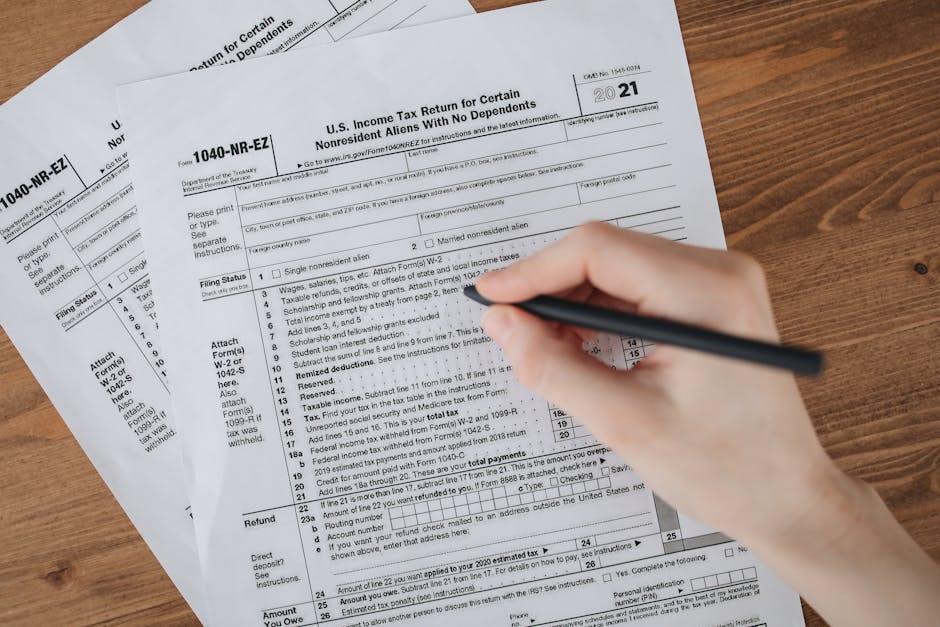
- Stricter immigration policies could lead to a $479 billion loss in federal tax revenue over the next decade.
- Undocumented workers contribute billions annually to the US economy through taxes, despite their legal status.
- Removing undocumented workers would shrink the labor force, depress wages, and erode the tax base.
- Immigration policy is a central determinant of long-term fiscal health and economic growth in the US.
- Restricting immigrant labor triggers ripple effects across industries, reducing taxable income and supply.
The United States could lose up to $479 billion in federal tax revenue over the next decade if former President Donald Trump reinstates and expands his administration’s strict immigration enforcement policies, according to a 2024 analysis by the Center on Budget and Policy Priorities. This staggering figure stems from the projected removal of millions of undocumented workers—who, despite their legal status, contribute billions annually through payroll, sales, and income taxes. Deportation efforts, combined with reduced legal immigration pathways, would shrink the labor force, depress wages in key sectors, and ultimately erode the tax base. The estimate underscores how immigration policy is not just a political or humanitarian issue, but a central determinant of long-term fiscal health and economic growth in the U.S.
Why Immigration Drives Tax Revenue

Undocumented immigrants are far from tax-exempt. The Institute on Taxation and Economic Policy estimates that unauthorized workers contributed $33.2 billion in state and local taxes in 2023 alone, while federal contributions—including through Individual Taxpayer Identification Numbers (ITINs) and payroll withholdings—add tens of billions more. Many work in construction, agriculture, hospitality, and food services—industries that rely heavily on immigrant labor and that generate substantial tax receipts. Restricting this workforce not only reduces taxable income but also triggers ripple effects across supply chains and consumer demand. With the U.S. facing persistent labor shortages and an aging population, removing a significant share of working-age adults threatens to slow GDP growth, increase public spending on unemployment and social services, and weaken overall economic resilience.
The Scope of Trump’s Proposed Crackdown

During his 2024 presidential campaign, Trump has called for the largest mass deportation in American history, targeting an estimated 11 million undocumented individuals. His platform includes reinstating and expanding programs like ‘Remain in Mexico,’ terminating birthright citizenship, and withholding federal funds from so-called ‘sanctuary cities.’ He has also pledged to revive the controversial ‘public charge’ rule, which deters legal immigrants from accessing public benefits, potentially discouraging low-income families from immigrating altogether. These measures, if implemented, would drastically reduce both undocumented and legal immigration flows. According to the Cato Institute, legal immigration dropped by nearly 30% during Trump’s first term due to policy changes and increased vetting, a trend likely to intensify under a second term with broader enforcement mechanisms.
Economic Costs and Fiscal Projections

The $479 billion revenue loss projection accounts for both direct tax shortfalls and indirect economic contractions. The analysis assumes that deporting millions of working-age adults would reduce labor force participation, lower consumer spending, and increase costs for industries dependent on immigrant labor. For example, the U.S. Chamber of Commerce warns that agriculture could face a 20% decline in output without immigrant workers. Moreover, reduced immigration slows population growth, which in turn dampens housing demand, business investment, and long-term tax receipts. The Congressional Budget Office has previously found that higher immigration levels consistently improve the federal budget outlook, while restrictions worsen deficits. Even if enforcement costs were fully offset, the sheer scale of lost productivity and taxation would leave a lasting fiscal scar.
Who Bears the Brunt?

The economic fallout from aggressive immigration enforcement would fall disproportionately on low- and middle-income communities, especially in states like California, Texas, and Florida, where immigrant labor is integral to key industries. Small businesses relying on immigrant employees could face closures or reduced hours, while consumers may see higher prices for food, housing, and services. Public sector budgets could also suffer, as schools, hospitals, and local governments lose funding tied to population-based allocations. Paradoxically, the very communities that support strict immigration policies may experience the sharpest economic downturns. Meanwhile, Wall Street and corporate investors could see reduced earnings from sectors exposed to labor shortages, affecting retirement funds and financial markets.
Expert Perspectives
Economists are divided on the net fiscal impact of immigration, but most agree that large-scale deportation would be economically damaging. Brookings Institution researchers argue that while some low-skilled immigrants may use public services, their long-term tax contributions outweigh costs, especially as they age into higher-earning years. Others, like George Borjas of Harvard, contend that low-skilled immigration depresses wages for native-born workers without college degrees. However, even Borjas does not advocate mass deportation, citing implementation costs and social disruption. As economist Alex Nowrasteh of the Cato Institute notes, ‘You can’t deport your way to prosperity—removing productive workers always has economic consequences.’
Looking ahead, the debate over immigration policy will hinge not only on enforcement but on how the U.S. balances labor needs, fiscal sustainability, and demographic trends. With Social Security and Medicare facing long-term funding shortfalls, a shrinking workforce could accelerate solvency crises. Policymakers may soon confront a stark choice: restrict immigration for political gain or embrace it as an economic imperative. The $479 billion tax loss projection serves as a warning—not just about revenue, but about the broader cost of disengaging from global labor flows in an aging, competitive world economy.
Source: The Guardian