- Toto Ltd., a Japanese plumbing company, has been producing advanced ceramic substrates for data centers and AI accelerators since the 1990s.
- These ceramic substrates are crucial for housing and connecting semiconductor chips in high-heat and high-stress environments.
- Toto’s substrates are used in AI accelerators, server processors, and networking hardware, enabling the global AI revolution.
- The company’s stock surged over 40% in early 2024 due to growing recognition of its role in the semiconductor supply chain.
- Toto’s pivot to semiconductor production has made it an unsung player in the global AI ecosystem.
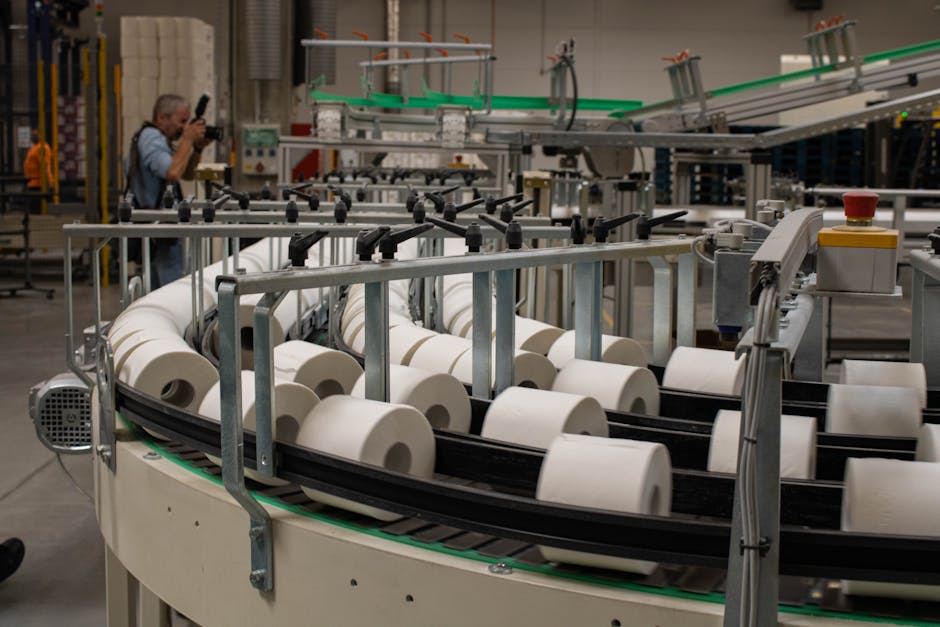
In a quiet industrial park on the outskirts of Kitakyushu, Japan, a factory hums with activity far removed from its public image. Conveyor belts glide silently beneath robotic arms placing precision-engineered ceramic plates into climate-controlled chambers. These aren’t parts for bidets or washlets—though those roll off nearby lines—but rather advanced ceramic substrates bound for data centers in Silicon Valley, Seoul, and beyond. For over three decades, Toto Ltd., best known for its $5,000 self-cleaning toilets, has been producing these unassuming components, which now sit at the heart of the global AI revolution. While the world fixates on Nvidia’s soaring stock and TSMC’s cutting-edge fabs, an unsung player has been quietly enabling the entire ecosystem: a plumbing company turned stealth semiconductor enabler.
The AI Gold Rush Notices an Unlikely Supplier

Toto’s stock surged more than 40% in early 2024, catching analysts off guard—not because of rising toilet sales, but due to growing recognition of its role in the semiconductor supply chain. The company manufactures high-performance ceramic substrates used to house and connect semiconductor chips in high-heat, high-stress environments. These substrates are critical in AI accelerators, server processors, and networking hardware where thermal stability and electrical insulation are paramount. Despite no major public pivot, Toto has supplied these materials to major semiconductor packaging firms in Taiwan and South Korea for years. Recent supply chain disclosures from companies like AMD and Broadcom revealed Toto as a tier-two supplier, prompting investors to reassess its valuation. As AI infrastructure demand escalates, so does the need for reliable, durable materials—and Toto has been quietly meeting that demand since the 1990s.
From Bathrooms to Bare Dies: The Long Road to Relevance

Toto’s journey into high-tech manufacturing began not with AI, but with ceramics expertise honed in bathroom fixtures. Founded in 1917, the company mastered the art of shaping and firing porcelain at scale. By the 1980s, it began applying that knowledge to industrial ceramics, developing heat-resistant, electrically insulating materials for automotive and electronics applications. In 1992, Toto established its Electronics Materials Division, focusing on ceramic packages for integrated circuits. At the time, Japan was a global leader in advanced materials, and Toto’s precision manufacturing gave it an edge. As chip densities increased and thermal management became critical, especially in data centers, Toto’s substrates—made from aluminum nitride and other advanced ceramics—became indispensable. While competitors exited the space during Japan’s lost decades, Toto maintained low-profile contracts, reinvesting modestly but consistently. The foundation for today’s relevance was laid not in a boardroom strategy session, but through decades of incremental engineering excellence.
The Engineers Behind the Scenes

The people driving Toto’s quiet success are not executives giving TED Talks, but materials scientists in lab coats analyzing microfractures under electron microscopes. Dr. Haruka Tanaka, a senior researcher at Toto’s R&D center in Fukuoka, has spent 22 years refining ceramic formulations to withstand repeated thermal cycling in server farms. “Our substrates must last ten years under constant load,” she said in a rare interview with Reuters. “That’s not glamorous, but it’s essential.” Meanwhile, Hiroshi Matsuda, who oversees supply chain logistics, quietly nurtures relationships with packaging firms in the Philippines and Malaysia. These engineers and managers operate in near-anonymity, shielded from market hype, focused instead on yield rates and defect reduction. Their motivation isn’t fame or stock options, but a deep-rooted culture of monozukuri—the Japanese ethos of meticulous craftsmanship. It’s this mindset, not a sudden pivot, that has kept Toto in the game.
Consequences for Tech and Trade

Toto’s emergence as a critical supplier highlights vulnerabilities and opportunities in the global tech supply chain. As the U.S. and Europe push to onshore semiconductor production, attention has focused on fabs and lithography machines—but materials like ceramic substrates are equally vital and often overlooked. Toto’s dominance in this niche means any disruption to its operations could ripple through AI hardware production. Conversely, its success offers a model for other industrial firms: leveraging deep materials expertise to serve high-growth tech sectors. Competitors in South Korea and Germany are now racing to replicate Toto’s formulations, but decades of process knowledge are not easily duplicated. For investors, the lesson is clear: value isn’t always found in headlines, but in the quiet, durable layers beneath the surface.
The Bigger Picture
Toto’s story challenges the myth of disruptive innovation as the only path to relevance. In an era obsessed with startups and moonshots, it’s a reminder that enduring value often lies in incremental advancement, specialized knowledge, and patient investment. The AI revolution isn’t powered solely by breakthrough algorithms or billion-dollar chips—it runs on the reliability of materials engineered to last. As global demand for computing power grows, so will the importance of the hidden infrastructure that supports it. Companies like Toto, long dismissed as relics of old industries, may prove to be the unsung pillars of the digital age.
What comes next for Toto isn’t a radical reinvention, but a quiet expansion. The company has announced a $120 million investment to increase substrate output by 30% over the next three years. There are no plans to rebrand or spin off divisions. Instead, Toto will continue doing what it has done for decades: making things that work, precisely and reliably, behind the scenes. In a world chasing the next big thing, sometimes the future is already built—just not where we’re looking.
Source: Fortune