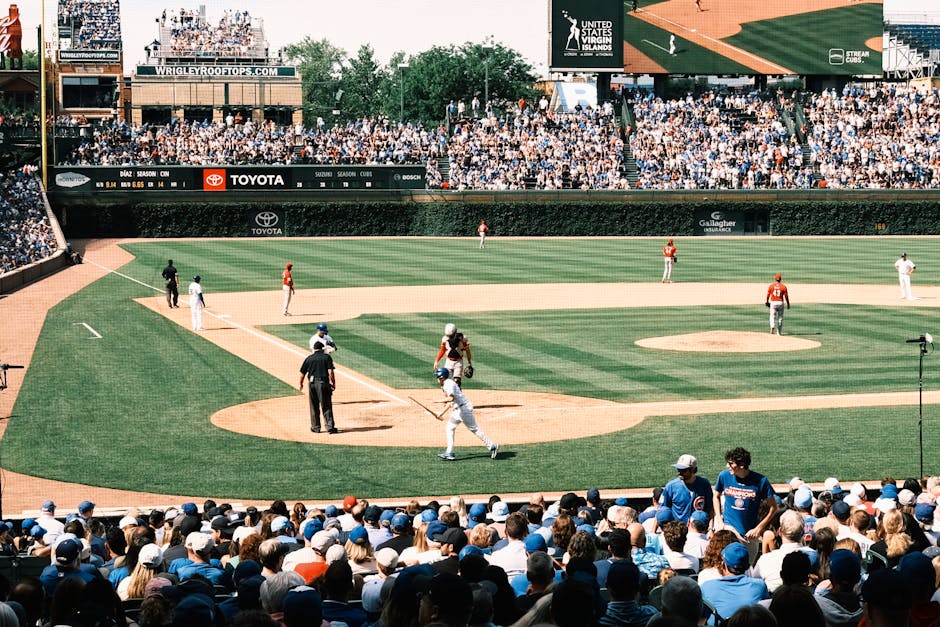
- Cubs outfielder Pete Crow-Armstrong got into a heated argument with a White Sox fan during an interleague game.
- The incident was captured on video and quickly went viral on social media, sparking public backlash.
- Crow-Armstrong, known for his defensive skills, responded to a fan’s taunts with a profanity-laced retort.
- The Cubs lost the game 5-3 to the White Sox, but the focus was on the controversy surrounding Crow-Armstrong’s outburst.
- The outfielder has since apologized for his choice of words, acknowledging it was not the right response.
The summer air in Chicago carried its usual mix of humidity and anticipation on Saturday evening as fans filed into Wrigley Field, scarves draped over shoulders despite the heat—a testament to the city’s undying baseball pride. The rivalry between the Cubs and White Sox, though less formal than others, pulses with local intensity, especially during interleague play. That night, beneath the ivy-covered bricks and under the shadow of the iconic scoreboard, a different kind of drama unfolded not on the diamond, but in the stands. Cubs outfielder Pete Crow-Armstrong, a 22-year-old center fielder known more for his defensive grace than fiery outbursts, found himself at the center of an unexpected storm when a heated exchange with a White Sox fan was captured on video and swiftly spread across social media.
Incident Caught on Camera Sparks Public Backlash

During the sixth inning of the Cubs’ 5-3 loss to the White Sox, a fan seated near the Cubs’ dugout reportedly shouted repeated taunts at Crow-Armstrong, who had struck out earlier in the game. Video footage, later verified by Reuters, shows the outfielder turning toward the stands, responding with a profanity-laced retort before being pulled away by a teammate. The clip, lasting less than 15 seconds, quickly went viral, drawing criticism from fans and commentators alike for breaching the unspoken code of player-fan decorum. The Cubs organization released a brief statement the following day, confirming that Crow-Armstrong had apologized internally and would address the media. In his press appearance, the young outfielder said, “I regret my choice of words. It was a moment of frustration, but that’s no excuse. I let my emotions get the best of me.”
Roots of the Rivalry and Player Pressure in Chicago

The Cubs-White Sox rivalry, often dubbed the ‘Crosstown Classic,’ lacks the historical depth of other MLB matchups but carries unique local weight. Unlike the Yankees-Red Sox or Dodgers-Giants, the two Chicago teams play in different leagues and rarely meet in the postseason, yet their meetings stir civic pride and neighborhood allegiance. Wrigley Field, with its open sightlines and proximity to fans, amplifies the intimacy—and volatility—of such encounters. Players have long been targets of sharp-tongued hecklers, a tradition celebrated in Chicago baseball lore. But as social media has turned every seat into a potential broadcast booth, the line between banter and misconduct has blurred. This incident reflects a broader shift in athlete accountability, where even a fleeting reaction can dominate headlines. Crow-Armstrong, a player still establishing his presence in the majors, now finds himself navigating that modern minefield.
The People Behind the Moment

Pete Crow-Armstrong, drafted 19th overall in 2020 and traded from the Mets to the Cubs in 2021 as part of the Javier Báez deal, has been viewed as a cornerstone of Chicago’s rebuilding outfield. Known for his elite speed and defensive instincts, he has struggled at the plate in his first full MLB season, posting a .218 batting average through mid-July. That pressure, combined with the expectations of a storied franchise, likely contributed to his emotional response. The fan involved, whose identity remains undisclosed, has not commented publicly, though reports suggest he was ejected from the game by security. Teammates have rallied around Crow-Armstrong, with veteran pitcher Marcus Stroman telling reporters, “We’ve all been there. The difference now is everyone’s got a phone. One second can follow you forever.”
Consequences for Player and Franchise

While Major League Baseball has not announced disciplinary action, the incident has sparked internal discussions within the Cubs’ front office about player conduct and media training. The organization, which has emphasized culture and accountability under manager Craig Counsell, is wary of allowing a young player’s misstep to derail a development arc. For Crow-Armstrong, the fallout extends beyond public perception—endorsement opportunities and fan engagement metrics could be affected. Meanwhile, the fan’s behavior has also drawn scrutiny, as some argue that persistent heckling, especially with personal jabs, crosses a line. The episode underscores the evolving tension between fan engagement and player dignity in the digital age.
The Bigger Picture
This moment transcends one player or one game. It speaks to the growing pressure athletes face in an era where every reaction is recorded, analyzed, and weaponized. As sports organizations grapple with how to support players emotionally while holding them to high public standards, the balance remains fragile. Crow-Armstrong’s apology reflects not just personal regret but a broader acknowledgment of the spotlight that comes with professional sports—especially in a city where baseball is woven into the civic fabric.
What comes next for Crow-Armstrong may define more than his season—it could shape his career. With counseling, reflection, and time, the incident could become a turning point rather than a stain. The Cubs, too, face a choice: to treat this as a teachable moment or a cautionary tale. In a sport where grace under pressure is revered, how both the player and the franchise respond will resonate far beyond the confines of Wrigley Field.
Source: CBS Sports