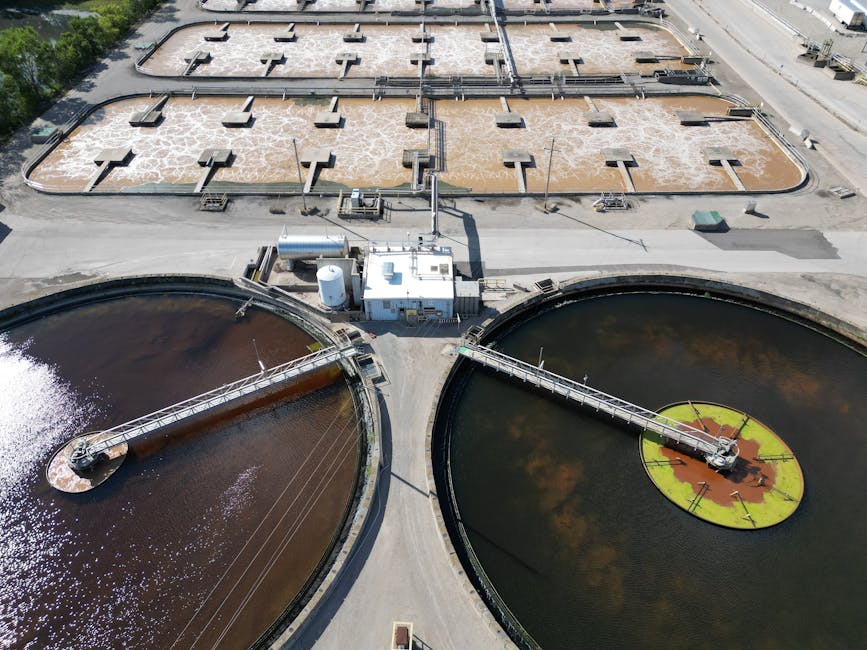
- Over 80% of Argentines rely on public water services, which are now under threat from privatization plans.
- President Javier Milei’s economic reform agenda aims to eliminate fiscal deficits and attract foreign investment through state asset sales.
- Critics warn that privatization could deepen inequality and erode public trust in essential services.
- Argentina’s push for privatization stems from a profound economic crisis marked by decades of stagnation and IMF bailouts.
- The country’s public spending on subsidies for utilities and transportation is a significant portion of its budget.
More than 80% of Argentina’s 46 million people rely on publicly managed water and sanitation services, a system now under existential threat from President Javier Milei’s radical economic reform agenda. Since taking office in December 2023, Milei has advanced a sweeping plan to privatize state-owned utilities, including critical water, electricity, and gas providers, as part of a broader strategy to eliminate fiscal deficits and attract foreign investment. With inflation exceeding 280% annually and public debt at unsustainable levels, the government argues that selling off state assets is the only viable path to economic stabilization. Yet critics warn that commodifying essential services could deepen inequality, erode public trust, and mirror the disastrous privatization experiments of the 1990s, when private utility takeovers led to price hikes, service degradation, and widespread social unrest.
The Urgency Behind Milei’s Market-Driven Reforms

Argentina’s push for privatization comes amid a profound economic crisis marked by decades of stagnation, currency devaluation, and reliance on International Monetary Fund (IMF) bailouts. The country’s fiscal deficit stood at nearly 6% of GDP in 2023, with public spending on subsidies for utilities and transportation consuming a significant portion of the budget. Milei, a libertarian economist turned president, contends that state-run enterprises are inherently inefficient, bloated with political patronage, and unaccountable to consumers. By transferring ownership to private operators, his administration claims services will become more efficient, technologically modernized, and financially sustainable. The reforms are anchored in a series of emergency decrees that bypass Congress, allowing the executive to restructure or liquidate state entities without legislative approval—a move that has drawn sharp criticism from opposition leaders and constitutional scholars.
From State Control to Private Hands: What’s on the Block

The government has identified over 150 state-owned enterprises for potential privatization or closure, including AySA (Agua y Saneamientos Argentinos), the national water company serving 14 million people in Buenos Aires and surrounding provinces. Energy firms such as ENARSA, CAMMESA, and several provincial electricity distributors are also under review. While no formal tenders have been launched yet, preliminary discussions with international investment banks suggest the administration aims to raise $10–15 billion through asset sales over the next two years. Foreign investors, particularly from the U.S. and Europe, have expressed cautious interest, drawn by Argentina’s vast natural resources and underdeveloped infrastructure. However, the lack of regulatory clarity, political instability, and historical skepticism toward foreign ownership of utilities remain significant barriers to large-scale investment.
Lessons from the Past: The Shadow of 1990s Privatizations

The current debate echoes Argentina’s contentious privatization wave in the 1990s under President Carlos Menem, when industries ranging from telecommunications to railways were sold to private entities. While initially praised for boosting efficiency, many of these deals later unraveled due to lack of competition, regulatory failures, and profiteering. The water concession granted to Suez and Vivendi in Buenos Aires, for instance, led to rate increases of over 300% within five years, while service coverage stagnated and water quality declined. When the contracts were ultimately terminated in the early 2000s, the state was forced to re-nationalize the system. Experts warn that without robust regulatory frameworks and enforceable service obligations, a repeat of these outcomes is likely. “Privatization isn’t inherently bad, but it fails when it prioritizes shareholder returns over public welfare,” said economist Cecilia Olivet of the University of Buenos Aires, in a recent interview with BBC News.
Who Bears the Cost? Equity and Access in Question

If implemented, the privatization of water and energy services could disproportionately impact low-income households, particularly in marginalized urban neighborhoods and rural areas where infrastructure is already fragile. Private operators typically seek profitability through tariff adjustments, which may outpace wage growth in an economy still grappling with hyperinflation. Moreover, privatization could lead to disconnections for non-payment, a practice already common in Argentina’s fragmented private utility zones. Labor unions representing utility workers fear mass layoffs, as private firms streamline operations. With over 50% of the population already living below the poverty line, the social risks are substantial. Human rights organizations, including Amnesty International, have urged the government to safeguard the right to water as a public good, citing United Nations guidelines that affirm access to clean water as a fundamental human right.
Expert Perspectives
Economic analysts are divided on Milei’s strategy. Supporters, such as those at the Manhattan Institute, argue that Argentina’s state-owned enterprises are fiscally unsustainable and shielded from innovation. “Markets, not bureaucrats, should determine efficiency,” wrote analyst Daniel Di Martino in a policy brief. Conversely, development economists like José Luis Machinea, former head of the Economic Commission for Latin America and the Caribbean (ECLAC), caution that privatization without social safeguards risks exacerbating inequality and undermining long-term development. “Efficiency gains mean little if the poor are priced out of basic services,” he stated in a Reuters report.
What happens next depends on both political will and public resistance. As legal challenges mount and protests simmer, the government must navigate a delicate balance between fiscal reform and social stability. The coming months will reveal whether Argentina’s privatization drive delivers economic recovery—or deepens its social fracture.
Source: Reddit