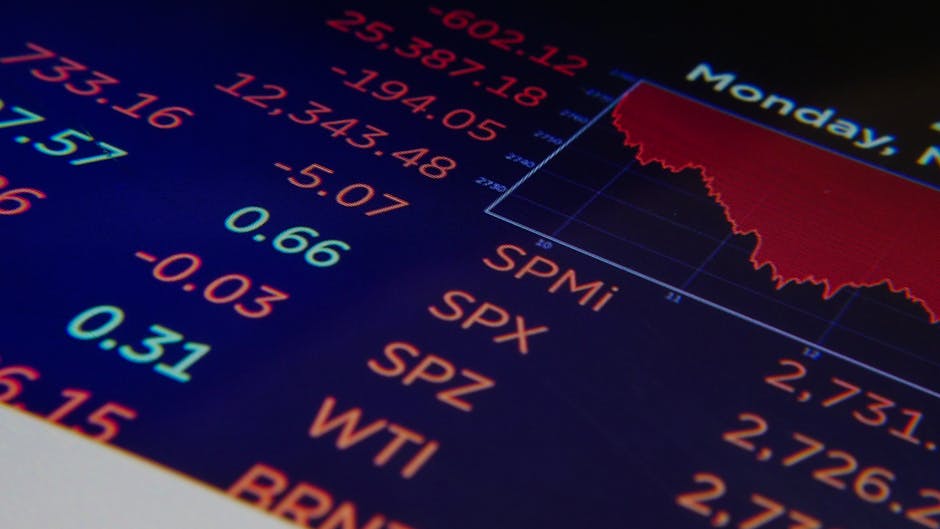
- The Federal Reserve may be forced to raise interest rates in July to restore credibility with financial markets.
- Rising long-term Treasury yields indicate bond investors have lost confidence in the Fed’s ability to control inflation.
- Incoming Chair Kevin Warsh may face pressure to tighten policy, reversing market assumptions of imminent easing.
- Bond yields and inflation expectations suggest a loss of Fed credibility, increasing the risk of premature monetary accommodation.
- The Fed’s forecasts of imminent easing may be upended by a dramatic pivot to rate hikes in a still-hot macroeconomic environment.
Despite widespread calls for rate cuts in 2024, the Federal Reserve may be forced to do the opposite—raise interest rates in July—to restore credibility with financial markets. Rising long-term Treasury yields suggest bond investors, often dubbed ‘bond vigilantes,’ are no longer confident the Fed can sustainably control inflation. As inflation expectations creep higher and core CPI data remains sticky, incoming Chair Kevin Warsh could face immediate pressure to tighten policy, reversing dovish market assumptions. This shift would mark a dramatic pivot from forecasts of imminent easing, underscoring the risks of premature monetary accommodation in a still-hot macroeconomic environment.
Bond Yields Signal Loss of Fed Credibility

Recent movements in the U.S. Treasury market point to growing skepticism about the Federal Reserve’s inflation-fighting resolve. The yield on the 10-year Treasury note has climbed to 4.62%, its highest level since late 2023, while 5-year inflation breakevens have edged above 2.7%, exceeding the Fed’s 2% target. According to data from the Federal Reserve Bank of St. Louis, real yields adjusted for inflation expectations are now pricing in a 75-basis-point net tightening over the next 12 months—despite futures markets still anticipating at least one 25-basis-point cut by September. Historically, such dislocations have preceded aggressive Fed action: in 1994 and 2022, surging yields forced the central bank to hike rates faster than planned. As Reuters reported in mid-June, ‘the bond market is no longer buying the Fed’s dovish narrative.’
Key Players: Fed Leadership and Market Sentiment

The incoming Federal Reserve Chair, Kevin Warsh—a former governor and close observer of central bank credibility—faces a defining early test. Known for his hawkish leanings during the 2008 financial crisis, Warsh has previously warned that ‘credibility is the Fed’s most important asset.’ Market participants are watching his inaugural FOMC meeting closely for signs he will prioritize inflation control over growth concerns. Meanwhile, major institutional investors, including BlackRock and PIMCO, have shifted portfolios toward inflation-protected securities, signaling reduced confidence in nominal bond returns. At the same time, members of the FOMC remain divided: while regional presidents like Susan Collins advocate patience, others, including Tom Barkin, have echoed concerns about entrenched price pressures. This internal tension, combined with external market pressure, could force a July hike even if data does not yet formally justify it.
Trade-Offs: Growth Risk vs. Inflation Control

Raising interest rates in July carries significant economic trade-offs. On one hand, higher rates would strengthen the dollar, cool demand, and anchor long-term inflation expectations—critical for maintaining the Fed’s credibility. On the other, they risk derailing a still-fragile housing market and increasing pressure on highly leveraged corporate borrowers. The Institute for Supply Management’s latest report shows manufacturing activity barely above contraction levels, while consumer confidence has softened amid persistent inflation in services. Yet allowing inflation expectations to de-anchor could prove costlier: a 2023 study by the National Bureau of Economic Research found that delayed responses to inflation spikes increase long-term unemployment by up to 1.2 percentage points. The Fed must weigh near-term pain against the far greater risk of a 1970s-style stagflation spiral.
Why Now? The Timing of Market Rebellion

The timing of the bond market’s revolt is no coincidence. With CPI data in May showing core inflation at 3.8% year-over-year—well above target—and shelter costs rising at their fastest pace in a year, investors are questioning whether the Fed can declare victory prematurely. Additionally, the Treasury’s increased borrowing to fund rising deficits has flooded the market with new supply, exacerbating yield pressures. According to Treasury Department data, net issuance of marketable debt rose 22% in Q2 2024 compared to the same period last year. This confluence—stubborn inflation, fiscal expansion, and leadership transition—creates a perfect storm. As Ed Yardeni of Yardeni Research noted, ‘The bond vigilantes are back, and they’re sending a clear message: don’t ease until inflation is truly beaten.’
Where We Go From Here
Over the next six to twelve months, three scenarios are plausible. In the first, the Fed hikes rates by 25 basis points in July, stabilizing yields and gradually restoring credibility, leading to a slow decline in inflation and a soft landing. In the second, the Fed holds steady despite market pressure, triggering a further sell-off in Treasuries, pushing 10-year yields above 5%, and forcing an emergency hike later in the year. In the third, incoming data shows a sudden drop in inflation and labor demand, allowing the Fed to avoid a hike and pivot to cuts by year-end—though this scenario now has less than a 30% probability according to CME Group’s FedWatch Tool. Each path hinges on the interplay between data, communication, and market psychology.
Bottom line — the Federal Reserve may soon have to choose between disappointing Wall Street or risking a loss of inflation control, with bond markets already casting their vote for tighter policy.
Source: CNBC