- José Mourinho has verbally agreed to a two-year contract with Real Madrid, marking his return to the club.
- Mourinho, a former Real Madrid manager, will assume managerial duties immediately after completing administrative formalities.
- His return comes at a critical juncture for Real Madrid, which is navigating a transitional phase following recent changes.
- Mourinho has not managed since leaving Roma in 2022, sparking speculation about his next move.
- The Portuguese manager’s return to Real Madrid has sent shockwaves through European football, captivating fans and pundits alike.
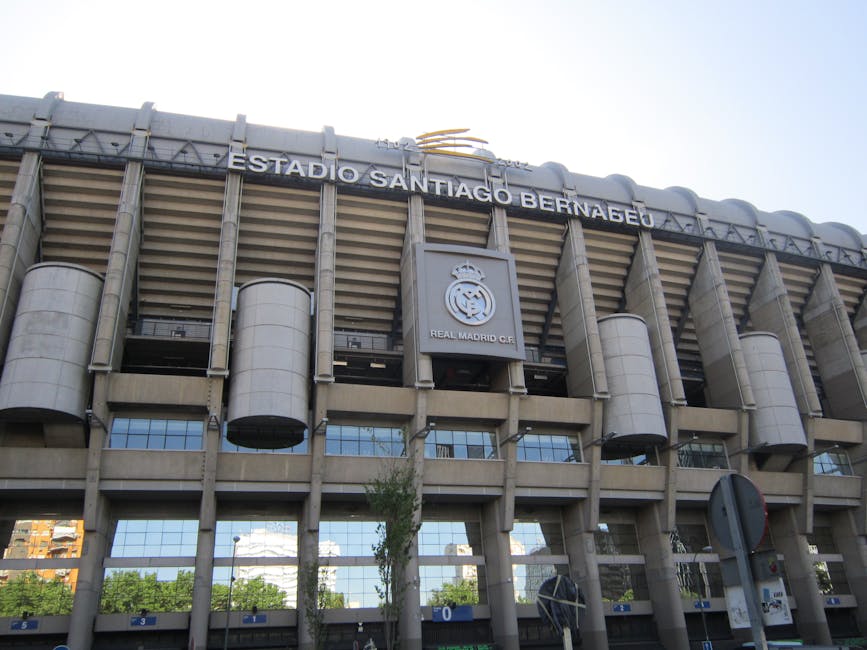
Under the soft glow of the Santiago Bernabéu’s floodlights, fans still whisper stories of the 2012 season when Real Madrid stormed through La Liga with a record 100 points — a campaign masterminded by José Mourinho. The Portuguese manager, with his trademark black coat and defiant glare, turned the club into a relentless winning machine, ending Barcelona’s dominance in dramatic fashion. Now, over a decade later, those echoes are growing louder. As Athletic Bilbao’s final whistle approached on a tense Saturday evening, Madridistas began scrolling feverishly through social media, not just to dissect the match, but to confirm a rumor that felt both impossible and inevitable: Mourinho was coming home. Not as a nostalgic guest, but as their next manager. The air in the Spanish capital thickened with anticipation, as if football history were folding back on itself.
Mourinho’s Return Confirmed in Principle

José Mourinho has verbally agreed to a two-year contract with Real Madrid, with official documentation expected to be finalized within days. The announcement, first reported by Italian journalist Fabrizio Romano and quickly corroborated by Spanish outlets like Marca and AS, has sent shockwaves through European football. Mourinho, currently without a club since leaving Roma in 2022, will assume managerial duties immediately after completing administrative formalities. His arrival comes at a critical juncture, with Real Madrid navigating a transitional phase following Carlo Ancelotti’s departure and a mixed season that saw them win the UEFA Champions League but underperform domestically. The club’s hierarchy views Mourinho’s return as a stabilizing force — a coach known for discipline, tactical clarity, and an uncompromising will to win. His initial plan includes restructuring the midfield, reinforcing youth integration, and reasserting Madrid’s psychological edge in El Clásico clashes. BBC Sport notes that such a move represents a rare second chapter for a manager at a modern European giant.
The Road Back to Madrid

Mourinho’s first stint at Real Madrid, spanning from 2010 to 2013, was a paradox of triumph and tension. He delivered the long-elusive La Liga title in 2012, defeating Pep Guardiola’s Barcelona at the peak of their powers, but his tenure was marred by public feuds, most notably with Iker Casillas and Sergio Ramos, and a fractured relationship with the media. Despite winning 102 of 137 matches, his confrontational style eventually led to a mutual departure. Since then, Mourinho has managed Chelsea (twice), Manchester United, Tottenham, and Roma, with results growing increasingly inconsistent. His tenure at Roma ended quietly, but his reputation as a big-game motivator and master of defensive organization remains intact. Real Madrid’s interest resurged after internal evaluations questioned whether the club’s current playing style lacked competitive ruthlessness. The board, led by president Florentino Pérez, concluded that only a figure of Mourinho’s stature could recalibrate the team’s mentality ahead of a new competitive cycle in La Liga and the Champions League.
The Minds Behind the Decision

Florentino Pérez, Real Madrid’s long-serving president, is the architect of this bold move, driven by a blend of nostalgia and pragmatism. Pérez, who previously backed Mourinho’s appointment in 2010, believes the manager’s psychological toughness can reignite a squad some insiders describe as drifting post-Ancelotti. Mourinho, for his part, has long expressed a desire to “complete unfinished business” in Madrid, referring to his inability to win the Champions League during his first spell. At 61, and with fewer top-tier offers materializing, he sees this as a final shot at elite validation. Key players like Vinícius Júnior and Jude Bellingham have reportedly been consulted, though reactions within the dressing room remain mixed. Some veterans recall the 2012 season with reverence; others remember the internal divisions. Ultimately, this reunion hinges on mutual need: Madrid wants control, Mourinho wants redemption.
Implications for Club and Contenders

The ramifications of Mourinho’s return extend far beyond the Bernabéu. In Spain, Barcelona and Atlético Madrid now face a re-energized rival led by a coach who knows their weaknesses intimately. La Liga, recently seen as more balanced, could tilt back toward Madrid’s favor under Mourinho’s structured, counterattacking system. For the players, the shift means a return to intense physical preparation and media discipline — a stark contrast to Ancelotti’s relaxed approach. European rivals, particularly Bayern Munich and Manchester City, must now factor in a Madrid side likely to prioritize defensive solidity and transition speed. The financial stakes are also high: Mourinho’s presence boosts merchandising, global visibility, and sponsorship appeal. However, risks remain — if the team fails to adapt, the second act could end more acrimoniously than the first.
The Bigger Picture
This appointment reflects a broader trend in modern football: the resurgence of the “strongman” manager in an era increasingly dominated by data-driven, possession-based philosophies. While clubs like Manchester City champion continuity and system over personality, Real Madrid’s move signals that charisma, psychological warfare, and tactical pragmatism still hold currency at the highest level. Mourinho, once labeled football’s most controversial figure, now represents a counter-narrative — a reminder that emotion and identity matter as much as analytics. His return isn’t just about winning trophies; it’s about reclaiming a certain kind of footballing soul.
What comes next is a delicate dance of legacy and reality. Mourinho will arrive in Madrid not as the revolutionary he once was, but as a seasoned tactician with something to prove. Training sessions will begin, press conferences will ignite, and the weight of expectation will settle once more. Whether this second chapter ends in triumph or turmoil may depend not on tactics, but on whether both Mourinho and Real Madrid can evolve without losing the fire that once defined them.
Source: Bsky