- Targeted radiotherapy significantly extends progression-free survival in patients with oligometastatic breast cancer.
- Precision radiation strikes microscopic tumor deposits while sparing healthy tissue, making it a more effective treatment option.
- Aggressive local treatment can delay the relentless march of cancer and offer more meaningful time for patients.
- Results from the TARGET-BC trial show that adding targeted radiotherapy to systemic therapy is a promising approach.
- This treatment shift is grounded in emerging clinical evidence that supports the use of targeted therapy in early metastasis.
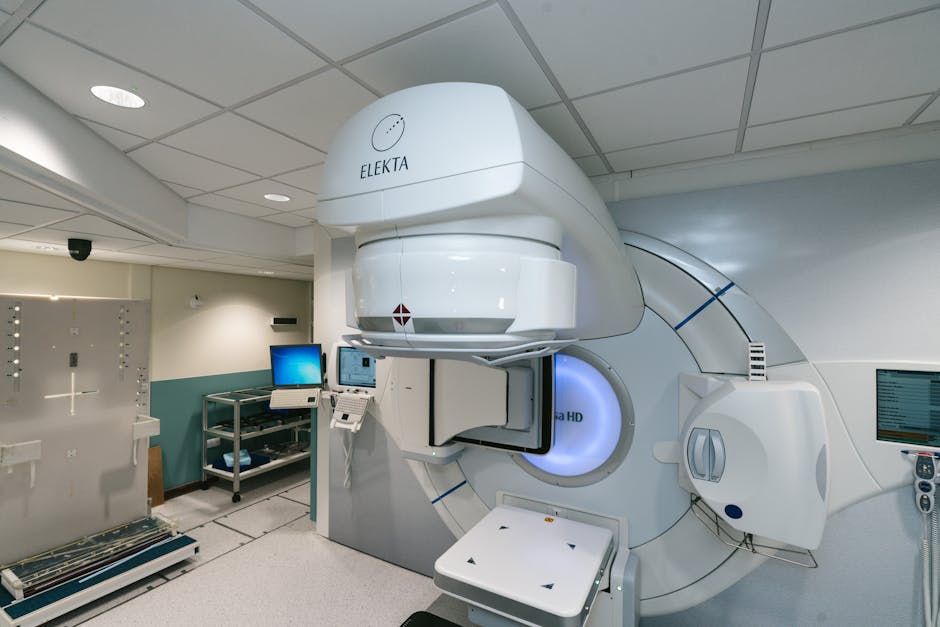
In a quiet oncology ward in Amsterdam, a 52-year-old woman with metastatic breast cancer lies still beneath a sleek, white machine, her breath synchronized with the rhythmic hum of a linear accelerator. Unlike traditional radiation that blankets large areas, this treatment is a precision strike—each beam calibrated to obliterate microscopic tumor deposits in her lungs and bones while sparing healthy tissue. Just a few years ago, such targeted therapy would have been reserved only for symptom relief. Now, it’s being used not just to ease suffering, but to change the course of the disease. This shift is not theoretical. It’s grounded in emerging clinical evidence that, for some women, aggressive local treatment can delay the relentless march of cancer—offering not just more time, but more meaningful time.
Radiotherapy Delays Disease Progression in Early Metastasis

Results from a small but pivotal randomized controlled trial presented at the Congress of the European Society for Radiotherapy and Oncology (ESTRO 2026) show that adding targeted radiotherapy to systemic therapy significantly extends progression-free survival in patients with oligometastatic breast cancer—meaning the disease has spread to only a few, limited sites. The trial, known as TARGET-BC, enrolled 126 patients across six European centers. Half received standard systemic treatment alone, including chemotherapy, hormone therapy, or targeted drugs like CDK4/6 inhibitors. The other half received the same systemic regimen plus stereotactic body radiotherapy (SBRT) directed at all known metastatic lesions. After a median follow-up of 28 months, the group receiving radiotherapy had a median progression-free survival of 15.6 months, compared to 9.8 months in the control group—a 37% reduction in the risk of progression. While overall survival data are not yet mature, early trends favor the radiotherapy arm, suggesting a potential survival benefit.
The Evolution of Metastatic Cancer Treatment

For decades, metastatic breast cancer was considered uniformly incurable, treated solely with systemic therapies designed to control disease throughout the body. The idea of using local treatments like surgery or radiation was largely abandoned once spread occurred, based on the assumption that if cancer was visible in one or two sites, microscopic disease was already widespread. But advances in imaging—particularly PET-CT and MRI—have challenged that dogma. These tools can detect tiny metastases earlier and more accurately, revealing a subset of patients with truly limited spread. This has given rise to the concept of ‘oligometastatic disease,’ a middle ground between localized and widely disseminated cancer. Pioneering studies in lung and prostate cancers first suggested that aggressive local therapy could improve outcomes in these patients. The TARGET-BC trial builds on that foundation, providing some of the strongest evidence yet that breast cancer may follow a similar pattern, at least in carefully selected cases.
Pioneers Behind the Precision Medicine Approach

Dr. Elise van der Pol, a radiation oncologist at the Netherlands Cancer Institute and lead investigator of the TARGET-BC trial, has spent over a decade advocating for a more nuanced approach to metastatic disease. ‘We’ve been treating metastasis as a monolithic diagnosis for too long,’ she said in an interview. ‘But biology doesn’t work that way. Some tumors spread slowly, in a controlled way, and those are the ones we might actually influence with local intervention.’ Her team’s work is part of a broader movement reshaping oncology, led by researchers who combine advanced imaging, molecular profiling, and precision radiotherapy to redefine what’s possible. Oncologists like Dr. Van der Pol are not just treating tumors—they’re mapping individual cancer trajectories, seeking windows of opportunity where aggressive local control can tilt the balance in the patient’s favor. Their motivation is not just prolonging life, but redefining what living with metastatic cancer can look like.
Implications for Patients and Treatment Guidelines

While the results are promising, the findings apply only to a specific subgroup: patients with five or fewer metastatic lesions, no aggressive molecular subtypes like triple-negative disease with visceral crisis, and who are responding well to initial systemic therapy. For these individuals, adding SBRT could become a new standard of care, potentially delaying the need for more toxic chemotherapy regimens and preserving quality of life. However, access remains a challenge. SBRT requires specialized equipment and expertise not available in all hospitals, particularly in low-resource settings. There are also concerns about over-treatment, as not all oligometastatic patients will benefit equally. Ongoing biomarker research aims to identify which tumors are most likely to respond, ensuring that only those who stand to gain are exposed to the risks of additional radiation.
The Bigger Picture
This trial reflects a broader transformation in cancer care—one that moves away from broad categorizations and toward personalized, biologically informed strategies. As discussed in Nature Reviews Clinical Oncology, the oligometastatic paradigm challenges the traditional binary of ‘curable’ versus ‘incurable.’ Instead, it introduces a spectrum of disease states, each demanding a tailored approach. If validated in larger trials, these findings could influence global guidelines, including those from the European Society for Medical Oncology and the National Comprehensive Cancer Network.
The future may lie in combining SBRT with emerging immunotherapies or targeted agents to amplify systemic control. Larger multicenter trials are already in development to confirm these results and explore combinations. For now, the message is cautious but hopeful: in select patients with metastatic breast cancer, the tide may not be unstoppable. With precision, timing, and the right tools, it might be possible to hold it back—for longer than we once believed.
Source: MedicalXpress