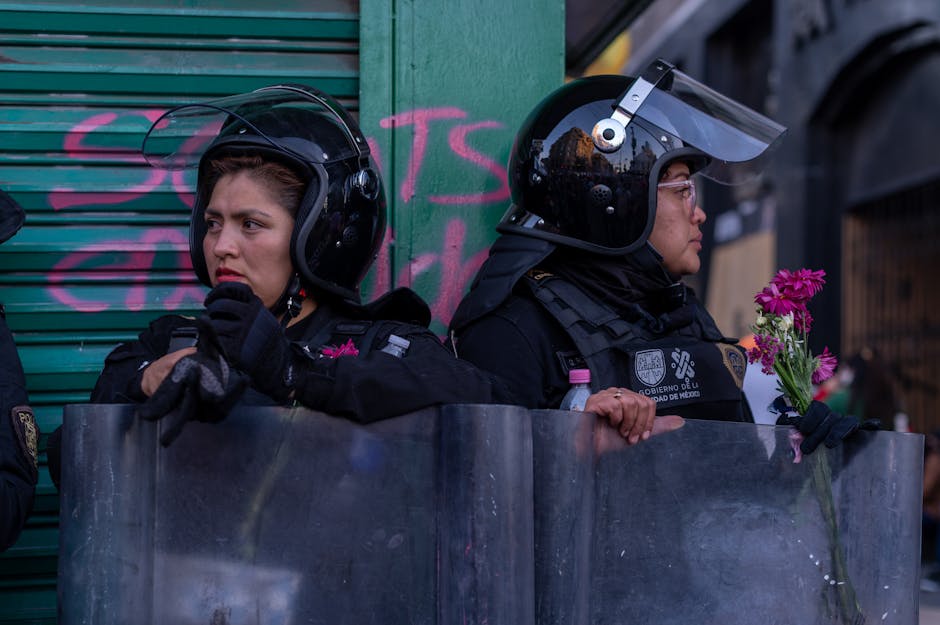
- The 2026 FIFA World Cup in Mexico is set to open on June 11 amidst growing public safety concerns and a 30% increase in violent demonstrations nationwide.
- At least 14 Mexican states have been flagged as high-risk zones due to cartel activity, police corruption, and political unrest, according to human rights organizations and travel advisories.
- Millions of fans are preparing to travel across North America for the tournament, which is jointly hosted by Mexico, the United States, and Canada.
- The opening match in Mexico City’s Estadio Azteca is expected to draw over 80,000 spectators, but intelligence reports warn of planned protest actions near key venues.
- Recent data from Mexico’s National Human Rights Commission reveals a spike in extrajudicial violence and forced disappearances in regions like Guerrero, Michoacán, and Tamaulipas.
Mexico is set to open the 2026 FIFA World Cup on June 11 amid growing international concern over public safety, with over 1,200 violent demonstrations recorded nationwide in the first five months of the year—a 30% increase from the same period in 2023. Human rights organizations and travel advisories from the U.S. and Canada have flagged at least 14 Mexican states as high-risk zones due to cartel activity, police corruption, and political unrest. As millions of fans prepare to travel across North America for the tournament, which is jointly hosted by Mexico, the United States, and Canada, the spotlight is intensifying on Mexico’s ability to manage security challenges that threaten to overshadow the world’s most-watched sporting event. The opening match in Mexico City’s Estadio Azteca is expected to draw more than 80,000 spectators, but intelligence reports warn that protest groups are planning coordinated actions near key venues.
Why Mexico’s Security Climate Matters Now

The 2026 World Cup marks the first time the tournament will span three nations, with 16 matches scheduled in Mexico—including the historic opener. However, the country’s selection as a host has come under renewed scrutiny as recent data from Mexico’s National Human Rights Commission reveals a spike in extrajudicial violence and forced disappearances, particularly in regions like Guerrero, Michoacán, and Tamaulipas. While FIFA maintains that host nations are ultimately responsible for security, the global nature of the event means lapses in protection could have diplomatic and economic repercussions. The U.S. Department of State has issued a Level 3 travel advisory—‘reconsider travel’—for over half of Mexico’s 32 states, citing kidnapping and homicide rates that exceed 20 per 100,000 residents in some areas. With an estimated $2.3 billion in projected tourism revenue at stake, the stakes for Mexico’s international reputation could not be higher.
Key Players and the Security Landscape

The Mexican government, led by President Claudia Sheinbaum, has committed $450 million to security and infrastructure upgrades in host cities such as Mexico City, Guadalajara, and Monterrey. Federal and state police, the National Guard, and military units are being deployed in coordinated operations under the newly formed World Cup Security Task Force. Yet, civil society groups like Artículo 19 and Human Rights Watch have criticized the plan for relying too heavily on militarized responses, warning they could escalate tensions. Meanwhile, FIFA has appointed former Interpol director Ronald Noble as its security liaison, while private contractors from firms like Gavin de Becker & Associates are advising on crowd control and threat assessment. The U.S. and Canadian governments are also dispatching liaison officers to assist with intelligence sharing, underscoring the transnational nature of the security challenge.
Root Causes and Data Behind the Unrest

The surge in unrest is tied to deep-rooted issues: drug cartel influence in 28 of 32 states, widespread impunity with less than 5% of crimes leading to convictions, and growing public anger over police abuse and government corruption. According to BBC News, cartel-linked violence has displaced over 40,000 people since 2020, many of whom now live in precarious urban settlements near proposed fan zones. A 2024 report by the Mexican Institute for Competitiveness found that cities hosting World Cup matches have seen protest activity increase by 44% since FIFA’s 2018 announcement. Experts argue that while mega-events often prompt short-term security crackdowns, they rarely address structural problems. Dr. Luz Edilia Gutiérrez, a security analyst at CIDE in Mexico City, stated, ‘The state can deploy thousands of officers for a month, but if the rule of law remains weak, the risks return as soon as the spotlight fades.’
Who Stands to Be Affected

FIFA officials, visiting fans, local residents, and migrant communities are all at risk. International supporters may face targeted scams or harassment, particularly in poorly policed transit corridors, while local activists fear crackdowns on dissent under the guise of public order. Migrant populations, especially those from Central America transiting through Mexico, could become collateral in heightened surveillance operations. Economically, disruption could deter future tourism and investment if the World Cup is marred by violence. Conversely, successful management could boost national morale and validate Mexico’s capacity to host global events. The tournament’s legacy will hinge not just on football, but on whether security efforts prioritize human rights alongside spectacle.
Expert Perspectives
Security experts are divided on Mexico’s preparedness. Robert Muggah, co-founder of the Igarapé Institute, warns that ‘highly visible security operations often displace violence rather than eliminate it,’ pointing to Brazil’s 2014 World Cup, where police militarization led to dozens of civilian casualties. In contrast, Dr. Carlos Vilalta of the Center for Economic Research and Teaching argues that ‘the political will and funding behind this operation are unprecedented,’ citing improved coordination between federal and local agencies. Meanwhile, FIFA’s official stance, as expressed by Secretary General Fatma Samoura, emphasizes ‘full confidence in Mexico’s ability to deliver a safe and memorable tournament,’ though she acknowledged the need for ‘constant risk assessment.’
Looking ahead, all eyes will be on the opening week of the tournament, particularly the June 11 match at Estadio Azteca. Analysts will monitor not only for incidents of violence but also for signs of disproportionate force against protesters. The integration of real-time intelligence platforms, facial recognition technology, and international liaison units will be tested under global scrutiny. If Mexico navigates the event without major crisis, it could signal a turning point in its security governance. But any major incident risks reinforcing long-standing perceptions of instability, with lasting implications for tourism, diplomacy, and domestic trust in state institutions.
Source: Al Jazeera