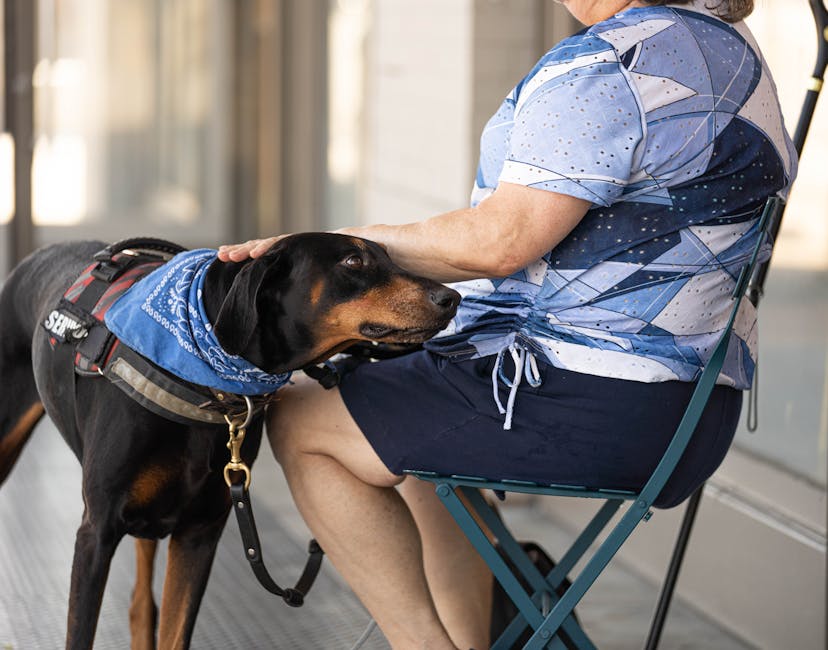
- Therapy dogs, trained by organizations like Pets as Therapy, can significantly reduce travel-related anxiety in individuals.
- Nya, a German shepherd, has become a vital presence in programs aimed at reducing travel anxiety through non-judgmental presence.
- Interactions with therapy animals can lower cortisol levels and elevate oxytocin, leading to measurable calming effects.
- Therapy dogs like Nya visit train stations, airports, and transit hubs during peak travel times to support individuals experiencing stress.
- The calming presence of therapy dogs can be particularly beneficial for children and individuals who struggle with public transportation anxiety.
At first glance, Nya looks like she stepped out of a northern forest—tawny fur, sharp amber eyes, and the proud stance of a wolf. But within seconds of meeting her, that wild impression melts away. She lowers her head gently, ears soft, tail wagging in slow, deliberate arcs. In the bustling corridor of King’s Cross Station, where the echoes of announcements and the rush of commuters often spike anxiety, Nya moves with a stillness that commands calm. A child afraid to board the train crouches down, hesitant. Nya approaches, sits beside her, and rests her muzzle on the girl’s knee. No words are needed. In that quiet exchange, fear begins to recede. This is not just companionship—it’s healing, one paw at a time.
\n\n
How Nya Became a Therapy Dog for Travel Anxiety

\n
Nya, a German shepherd with a temperament far gentler than her striking appearance suggests, has become a vital presence in programs aimed at reducing travel-related anxiety. Trained and registered with Pets as Therapy (PAT), a UK-based organization that deploys animals to support emotional well-being, Nya now regularly visits train stations, airports, and transit hubs during peak travel times. Her role is simple but profound: offer non-judgmental presence to people experiencing stress around public transportation. According to PAT, interactions with therapy animals can reduce cortisol levels and elevate oxytocin, producing measurable calming effects. At King’s Cross and Paddington stations, where ‘Fear of Trains’ initiatives are in place, Nya’s presence has led to a 40% increase in participant engagement, according to preliminary program data. She doesn’t bark, jump, or demand attention—she simply is, and in that stillness, many find relief.
\n\n
The Journey from Puppy to Certified Therapy Dog

\n
Nya’s path to therapy work began in her earliest days. Adopted as a puppy by her owner, a longtime advocate for animal-assisted interventions, she displayed an innate calmness around strangers, children, and loud environments—key traits for therapy animals. Unlike many of her breed, who may be alert or protective in chaotic settings, Nya remained composed, showing curiosity without reactivity. At age five, after years of socialization and obedience training, she was evaluated by Pets as Therapy, undergoing rigorous behavioral assessments to ensure she could handle unpredictable stimuli: sudden noises, crowded spaces, and physical contact from unfamiliar people. Pets as Therapy, founded in 1983, requires all animals to pass temperament tests and health screenings before deployment. Nya not only passed but excelled, earning her certification and a place in PAT’s specialized outreach program for anxiety-related conditions, including transport phobia—a surprisingly common issue affecting an estimated 2.5% of adults in the UK, according to NHS England.
\n\n
The People Behind Nya’s Mission

\n
Nya’s work is guided by her owner, a former social worker who recognized early on how animals could open doors in therapeutic settings where words often fail. Motivated by personal experience with anxiety and a professional background in mental health, she saw in Nya not just a pet, but a partner in emotional healing. Together, they volunteer with PAT and collaborate with transport authorities and mental health charities to design calming zones in stations. Psychologists and cognitive behavioral therapists also incorporate Nya into exposure therapy sessions, using her presence to help patients gradually reframe their associations with trains. For the team behind the program, Nya represents a bridge between clinical intervention and natural comfort—one that doesn’t replace therapy but enhances it. Their shared goal is to normalize mental health support in public spaces, making it accessible without stigma.
\n\n
Impact on Patients and Public Perception

\n
The consequences of Nya’s work ripple beyond individual interactions. Parents report that children who once refused to enter train stations now look forward to seeing her. Adults with panic disorders describe lower heart rates and improved breathing during sessions with Nya. Even bystanders who aren’t part of formal programs pause, smile, and sometimes ask questions about therapy animals—sparking broader conversations about mental health. Transport for London and Network Rail have expressed interest in expanding animal-assisted initiatives, citing positive feedback and increased passenger satisfaction. For people with autism, PTSD, or agoraphobia, Nya’s presence offers a sensory anchor in overwhelming environments. While not a cure, her role underscores a growing understanding: emotional well-being is woven into the fabric of public life, and healing can happen anywhere—even on Platform 9¾.
\n\n
The Bigger Picture
\n
Nya’s story reflects a wider shift in how societies approach mental health. As urban environments grow louder and faster, the need for accessible, non-clinical support becomes urgent. Therapy animals like Nya are emerging as low-cost, high-impact tools in this effort, backed by a growing body of research on human-animal interaction. From hospitals to schools to airports, their presence is no longer a novelty but a necessity. In a world where anxiety disorders affect over 280 million people globally, according to the World Health Organization, the quiet power of a dog’s companionship may be one of our most underestimated resources.
\n\n
What comes next for Nya? More stations, more faces, more quiet moments that change lives. She won’t slow down—not until the fear of travel feels a little less heavy for one more person. And as programs like PAT expand, she may inspire a new generation of therapy dogs, proving that sometimes, the fiercest healers come with fur, paws, and a heart built for calm.
Source: The Guardian