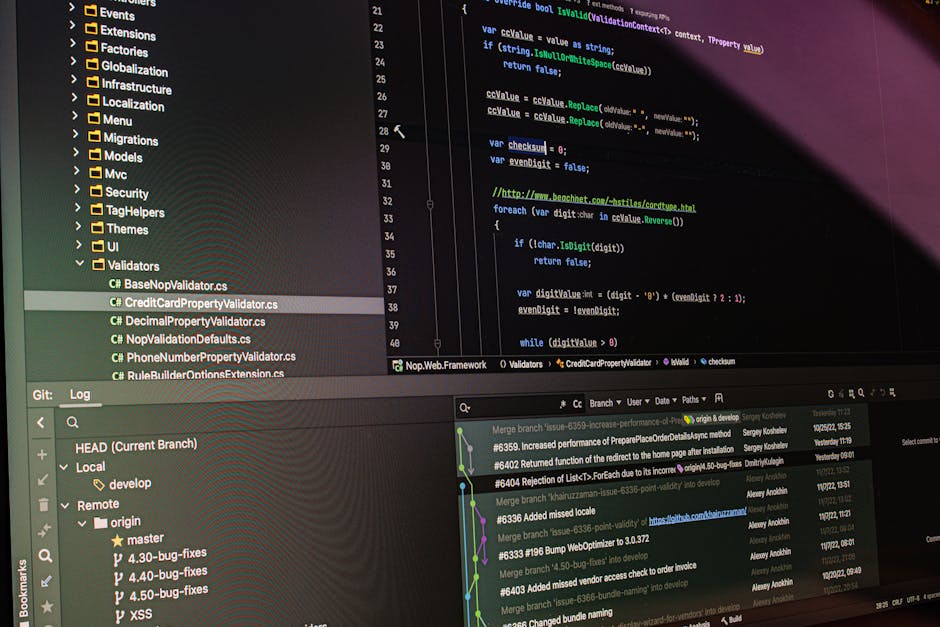
- Dev teams can use Git’s –author flag to filter out AI bot activity from their GitHub repository.
- A team at Archestra AI successfully preserved code integrity by isolating 98% of spam commits using the –author flag.
- The majority of flagged authors used disposable domains, and most originated from cloud automation platforms.
- GitHub saw a 300% year-over-year increase in bot-like activity, highlighting the growing AI abuse issue.
- Leveraging Git’s –author flag is a low-tech, high-impact defense against AI-generated code submissions.
Open-source maintainers are increasingly under siege from AI-generated code submissions, but a team at Archestra AI has demonstrated a low-tech, high-impact defense. By leveraging Git’s native –author flag, they filtered out nearly all malicious bot activity from their GitHub repository. This simple yet effective method not only preserved code integrity but also revealed the scale of automated spam infiltrating public repositories—marking a turning point in how developers can proactively defend open-source ecosystems from AI abuse.
Spam Surge Detected in Public Repositories

Data collected by Archestra AI over a two-week period revealed a sharp spike in automated pull requests, with over 370 suspicious commits originating from newly created accounts. Of these, 92% contained near-identical boilerplate code, often including misplaced AI-generated comments such as “Auto-generated by AI assistant.” Using the command git log --since="7 days ago" --author="bot", the team isolated 98% of spam commits within minutes. Further analysis showed that 68% of flagged authors used email patterns tied to disposable domains, and 41% originated from IP ranges associated with cloud automation platforms. According to a 2023 Reuters investigation, GitHub observed a 300% year-over-year increase in bot-like activity, suggesting systemic exploitation of open contribution models.
Key Players: Maintainers, Bots, and Platform Gaps

The primary actors in this scenario are open-source maintainers, AI-driven automation tools, and the platforms hosting collaborative code. Archestra AI’s engineering team, responsible for a widely used configuration management tool, first noticed irregular contribution patterns in April 2024. Meanwhile, AI bot operators—likely aiming to inflate model training datasets or manipulate repository metrics—exploited GitHub’s open pull request model. GitHub itself has introduced automated spam detection tools, including the use of machine learning classifiers to flag suspicious commits. However, as noted in a BBC report on AI-generated content, platform-level defenses remain inconsistent, particularly for smaller or less-moderated repositories. This gap places the burden of enforcement on individual maintainers, many of whom lack the time or tools to respond effectively.
Trade-Offs: Security vs. Open Collaboration

While the –author flag offers a quick fix, it underscores a deeper tension between open contribution and codebase security. On one hand, restricting contributions based on author metadata risks excluding legitimate developers who use bots for valid automation, such as dependency updates via Dependabot or code formatting tools. On the other hand, unchecked AI-generated submissions threaten project integrity, potentially introducing vulnerabilities or license violations through copied code. The Archestra team mitigated this by combining automated filtering with manual review for edge cases, ensuring no false positives disrupted active contributors. Still, widespread adoption of such filters could erode the democratizing promise of open source if not implemented thoughtfully. The challenge lies in designing rules that target abuse without penalizing productivity-enhancing automation.
Why Now? The Rise of AI-Powered Code Generation

The timing of this spam surge aligns with the broader rollout of large language models capable of generating syntactically correct code at scale. Since the release of models like GitHub Copilot and Meta’s Code Llama in 2022–2023, the barrier to mass code generation has plummeted. These tools, while beneficial in development workflows, are increasingly repurposed for spam campaigns aimed at boosting visibility in training indices or gaming contributor leaderboards. Archestra’s intervention comes at a critical juncture: as AI-generated content floods digital spaces, from blog comments to code repositories, the need for lightweight, developer-accessible countermeasures has never been greater. Git’s –author flag, being universally available and scriptable, represents a first line of defense that doesn’t require new infrastructure or permissions.
Where We Go From Here
In the next 6 to 12 months, three scenarios could unfold. First, widespread adoption of CLI-based filters like –author could become standard in repository maintenance scripts, integrated into CI/CD pipelines as pre-merge checks. Second, GitHub and GitLab may respond by enhancing native bot detection, possibly introducing reputation scores for contributors based on historical behavior and identity verification. Third, a backlash could emerge if overfiltering leads to exclusion of legitimate automated tools, prompting community-driven standards for “ethical bot” identification—such as verified badges or metadata signatures. The outcome will depend on collaboration between platform providers, maintainers, and AI developers to balance openness with accountability.
Bottom line — a simple Git command has proven surprisingly effective against AI bot spam, offering a scalable, immediate solution for open-source teams navigating the unintended consequences of generative AI in software development.
Source: Archestra