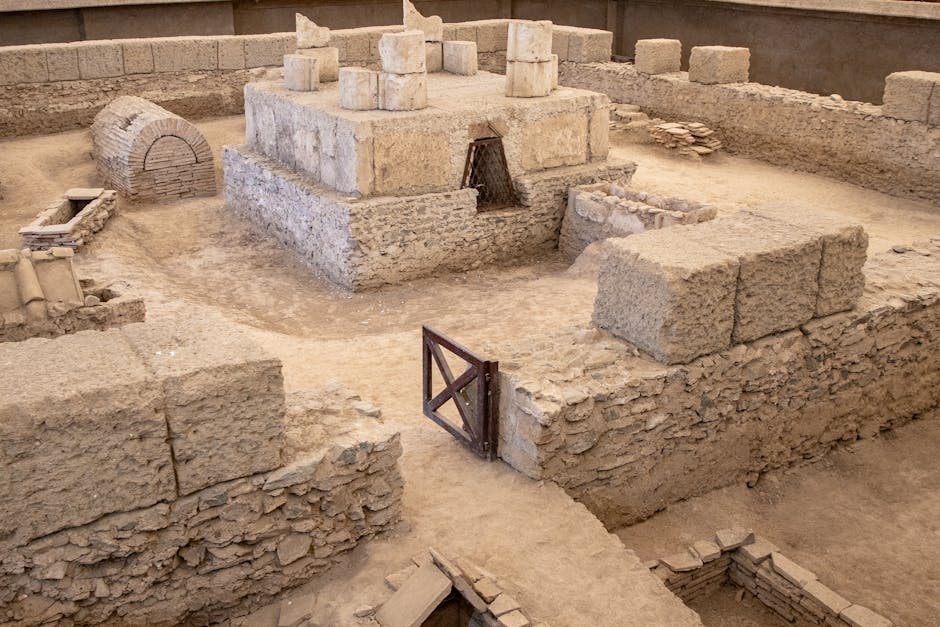
- A 2,000-year-old medical kit was discovered in Pompeii’s House of the Surgeon, revealing the identity of a skilled surgeon.
- High-resolution X-rays and CT scans revealed the intricately designed bronze case and its locking mechanism.
- The surgical kit included a scalpel, probe, and bone lever, indicating the surgeon’s elite status.
- The case was found untouched near the man’s upper torso, preserved since the city’s burial in 79 AD.
- Advanced non-invasive imaging confirmed the presence of the compact medical case.
In the ash-choked silence of Pompeii’s House of the Surgeon, time stood still for nearly two millennia. The carbonized outline of a man lies curled beneath the rubble, his final moments preserved in volcanic tuff—a snapshot of horror frozen by Mount Vesuvius’s cataclysm in 79 AD. Now, for the first time, modern technology has breathed narrative into his remains. New high-resolution X-rays and CT scans have revealed a small, intricately designed bronze case clutched near his side, its locking mechanism still intact. Inside, a collection of corroded yet identifiable metal instruments—scalpels, a probe, a bone lever—paints a portrait not of a common laborer, but of a man of skill and status: a surgeon, likely of elite standing, whose tools of trade became the key to unlocking his identity after 2,000 years.
Breakthrough Scans Expose Surgical Kit in Situ

Using advanced non-invasive imaging, researchers from the Pompeii Archaeological Park and Italy’s National Research Council have confirmed the presence of a compact medical case adjacent to the man’s upper torso, untouched since the city’s burial. The case, measuring just 12 centimeters in length, features a hinged lid with a functioning clasp, suggesting both portability and intentionality in its use. Inside, micro-CT reconstruction revealed at least six surgical implements, including a slender iron scalpel with a tapered tip, a blunt probe likely used for wound exploration, and a small, lever-like tool possibly designed for setting fractures or extracting foreign objects. According to lead archaeologist Dr. Maria Antonietta Tomei, the precision and preservation of these instruments are exceptional. The findings, published in a recent bulletin of the Italian Ministry of Culture, confirm that this was no mere first-aid kit but a professional surgical set—a rare artifact in Roman archaeology. The man, long misidentified as a household servant, is now believed to have been a physician-surgeon serving Pompeii’s upper classes.
The Legacy of Roman Medicine Unearthed

The discovery offers rare physical evidence of a medical tradition long known from texts but seldom seen in material form. Roman medicine, particularly in the 1st century AD, was surprisingly advanced, blending Greek theory with practical surgical techniques. Figures like Galen and Scribonius Largus documented procedures ranging from cataract surgery to setting broken bones, often using instruments nearly identical to those found in Pompeii. The House of the Surgeon—named for earlier discoveries of medical tools—was first excavated in the 18th century, but early archaeologists, focused on art and architecture, overlooked or misread the significance of small metallic objects. Now, with digital imaging capable of detecting minute densities within volcanic rock, researchers can distinguish iron from bronze, and tools from debris. The case’s survival is itself remarkable: most organic materials, including wood and leather, disintegrated under the pyroclastic flow. That the bronze container and its iron contents endured—and that they were positioned so deliberately near the body—suggests the man may have been attempting to save himself or others when the final surge hit.
The Man Behind the Instruments

While DNA analysis remains inconclusive due to degradation, anthropological study of the skeleton suggests a man in his late 40s to early 50s, with signs of moderate physical labor but no evidence of chronic disease. His location in a well-appointed home near the city’s forum hints at social standing, possibly as a freedman or even a citizen. In Roman society, surgeons occupied a complex position—respected for their skill but often considered beneath elite physicians who avoided manual work. Yet, in a city like Pompeii, where wealthy merchants and landowners demanded care, a competent surgeon could achieve both prosperity and influence. The presence of a custom-designed, lockable case suggests not only personal pride but also concern over theft or contamination—tools were expensive and symbolized professional identity. Researchers speculate that he may have been preparing treatments when Vesuvius erupted, or attempting to flee with his livelihood in hand. His final act, whether in service or survival, immortalized him.
Implications for Understanding Ancient Life

This discovery reshapes how we interpret individual lives in ancient cities. Rather than viewing Pompeii’s victims as anonymous casualties, new technologies allow us to reconstruct professions, social roles, and even last moments with startling clarity. The surgeon’s kit is one of the most complete medical assemblages ever found in the Roman world, offering insights into sterilization practices, tool organization, and the mobility of medical professionals. It also underscores the vulnerability of expertise in the face of natural disaster—knowledge preserved in texts, but lives and tools erased in an instant. For historians, the find bridges the gap between literary accounts and material reality, confirming that Roman medicine was not merely theoretical but actively practiced with precision instruments. Museums and researchers now face the challenge of conserving these fragile metals, which continue to oxidize even in controlled environments.
The Bigger Picture
As climate change increases the frequency of natural disasters, Pompeii’s tragedy resonates with modern urgency. The surgeon’s story—cut short mid-duty—echoes the experiences of frontline workers in today’s crises, from pandemics to wildfires. His tools, designed to heal, became relics of a civilization interrupted. Yet, through science, his legacy is being restored. The fusion of archaeology and digital imaging is transforming Pompeii from a static ruin into a dynamic archive of human experience, where even the smallest object can rewrite history.
What comes next is a deeper investigation into the other so-called “unidentified” victims of Pompeii. With over 100 plaster casts of human remains recovered, many have never been scanned with modern technology. The surgeon’s identification sets a precedent: each body may carry hidden clues to identity, profession, and personal history. As researchers plan a full imaging campaign across the site, the silent city continues to speak—one scan at a time. National Geographic has documented similar efforts in neighboring Herculaneum, where dental analysis revealed diet and migration patterns. The past, it seems, is not dead—it’s just waiting to be decoded.
Source: Ars Technica