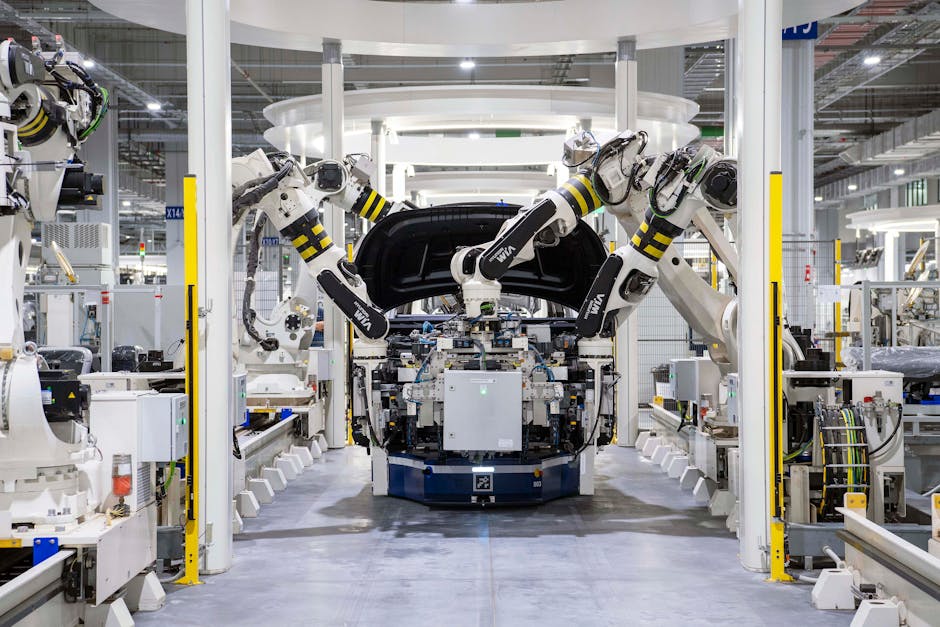
- China has seen a 67% surge in electric vehicle exports, driven by global demand and geopolitical instability.
- Chinese EV manufacturers are benefiting from the global energy crisis, with crude oil futures surging past $100 a barrel.
- The shift to electric mobility is accelerating, with consumers and governments looking to reduce reliance on fossil fuels.
- China’s state-backed infrastructure and subsidized manufacturing have enabled the country to become the world’s largest EV producer.
- Europe is increasingly turning to Chinese EVs as a way to reduce dependence on Middle Eastern oil and US auto imports.
Under the steel-gray skies of Shanghai’s Yangshan Deep-Water Port, rows of sleek electric vehicles gleam like freshly minted medals, stacked tightly on cargo ships bound for Europe, Southeast Asia, and Latin America. The rhythmic clang of cranes fills the air as thousands of EVs—bearing names like BYD, NIO, and XPeng—are loaded onto vessels that will soon cross oceans, carrying not just cars, but a quiet declaration of industrial ambition. Just a decade ago, these brands were little more than footnotes in a market dominated by Detroit and Stuttgart. Today, they move with the precision of a supply chain finely tuned by state-backed infrastructure, subsidized manufacturing, and a global energy crisis that has given them an unexpected tailwind—geopolitical instability centered on Iran’s volatile position in the world’s oil corridors.
EV Boom Amid Geopolitical Crisis

While the war in Iran has triggered global oil price spikes and strained Western defense and energy policies, it has also created a paradoxical boon for Chinese electric vehicle manufacturers. With crude oil futures surging past $100 a barrel and fuel costs soaring, consumers and governments alike are accelerating their pivot to electric mobility. China, already the world’s largest EV producer, has ramped up exports by 67% year-over-year, according to data from the China Association of Automobile Manufacturers. European importers, seeking to reduce reliance on both Middle Eastern oil and U.S. auto suppliers, are turning to Chinese EVs for their affordability, range, and advanced battery technology. As one international trade analyst put it: “As tragic as it is—war is tragic for anyone involved—it is probably one of the best things that could have happened to the Chinese EV makers.” This shift is not accidental but the result of years of strategic planning, now amplified by global uncertainty.
How China Built Its EV Advantage

The roots of China’s electric vehicle dominance trace back to the early 2010s, when Beijing launched a series of aggressive industrial policies aimed at leapfrogging Western automakers in the next generation of transportation. Subsidies, battery research grants, and strict emissions regulations nurtured domestic EV startups and forced traditional manufacturers to adapt. The government invested heavily in lithium refining, battery production, and charging infrastructure, creating an ecosystem where innovation could scale rapidly. By 2020, China accounted for over half of all electric vehicles sold worldwide. While Detroit grappled with union negotiations and slow transitions from internal combustion engines, Chinese firms like BYD were already exporting to over 70 countries. The war in Iran, by destabilizing oil markets and prompting energy insecurity, has only accelerated the urgency for electrification—playing directly into China’s long-term strategy.
The Architects of China’s Auto Revolution

At the heart of this transformation are figures like Wang Chuanfu, founder of BYD, a company once dismissed as a battery shop that now outsells Tesla in certain markets. Wang, an engineer by training, built his empire on vertical integration—controlling everything from raw materials to final assembly. Then there’s William Li of NIO, who positioned his brand as the “Tesla of China” but with deeper customer engagement and battery-swapping networks. These entrepreneurs did not operate in a vacuum; they thrived under a state-capitalist model where policy directives and financial backing aligned with corporate goals. Local governments offered land and tax breaks, while state banks provided low-interest loans. Unlike their American counterparts, who faced political resistance to green subsidies, Chinese EV leaders enjoyed a unified national vision—one that saw energy independence and technological leadership as inseparable from economic security.
Global Repercussions of China’s Rise

The consequences of China’s EV surge are being felt from Detroit to Stuttgart. U.S. automakers, still adjusting to union demands and lagging battery production, are losing ground in international markets. The European Union has launched anti-subsidy investigations into Chinese EV imports, fearing market distortion, but enforcement remains politically fraught. Meanwhile, developing nations—particularly in Africa and Southeast Asia—are embracing Chinese EVs as affordable, reliable alternatives to fossil-fuel vehicles. This shift threatens to rewire global trade flows, with China not just exporting cars but also setting standards for charging infrastructure, battery chemistry, and software integration. For oil-dependent economies, the message is stark: the era of petro-power is waning, and the new energy order is being built in Shenzhen and Guangzhou.
The Bigger Picture
This moment transcends the auto industry. It reflects a broader realignment in global economic power, where technological infrastructure and state-backed industrial policy can outmaneuver traditional advantages in brand legacy and military reach. The war in Iran did not create China’s EV dominance, but it exposed the fragility of Western energy assumptions and the speed with which strategic foresight can turn crisis into opportunity. As climate pressures and geopolitical risks intensify, the ability to adapt—technologically, politically, and economically—will define national competitiveness. China’s EV rise is not just about cars; it’s about who shapes the rules of the 21st-century economy.
What comes next may be a new phase of global industrial rivalry, one fought not on battlefields but in battery labs and shipping lanes. The U.S. and EU are now scrambling to revive domestic EV production through initiatives like the Inflation Reduction Act, but they face steep challenges in supply chain control and manufacturing scale. Meanwhile, Chinese automakers are eyeing deeper integration into Western markets, even as political tensions grow. The vehicles rolling off Shanghai’s docks today carry more than lithium-ion batteries—they carry the weight of a changing world order.
Source: Fortune