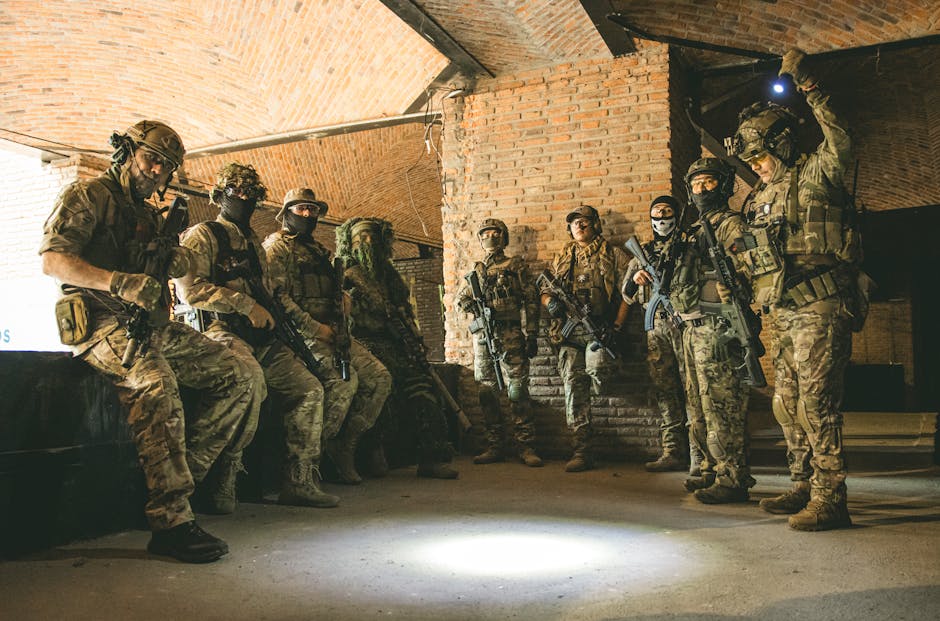
- NATO’s largest special forces exercise, Operation Allied Spirit XI, brings together 3,000 elite troops from 24 nations.
- The exercise tests interoperability among elite units, including the US Army Green Berets and British SAS.
- Operation Allied Spirit XI integrates counterterrorism, hostage rescue, and deep reconnaissance missions.
- The drill underscores NATO’s focus on readiness in the face of hybrid threats and potential near-peer conflicts.
- The exercise’s backdrop is uncertain due to the United States’ potential disengagement from NATO commitments.
What does it mean when NATO launches its largest special forces exercise in Europe at the very moment the United States appears to be stepping back from its traditional leadership role in global security? With 3,000 elite troops from the US, UK, and 22 other nations converging across multiple European countries, Operation Allied Spirit XI has drawn global attention. Yet the backdrop is increasingly uncertain: former President Donald Trump’s rhetoric during his 2024 campaign has emphasized reducing financial and military commitments to NATO allies, questioning the value of defending nations that, in his view, do not contribute enough. This raises a pressing question—can NATO maintain its operational edge and strategic cohesion if its most powerful member begins to disengage?
What Is NATO’s Largest Special Forces Exercise About?

Operation Allied Spirit XI is a high-intensity, multinational special operations forces (SOF) drill hosted by NATO’s Special Operations Headquarters (SOHQ) and coordinated across Germany, Poland, and the Baltic states. The exercise integrates counterterrorism, hostage rescue, deep reconnaissance, and rapid insertion missions under realistic, near-peer conflict conditions. Designed to test interoperability among elite units—from the US Army Green Berets and British SAS to lesser-known contingents like Lithuania’s SOF and Norway’s Forsvarets Spesialkommando—it underscores NATO’s focus on readiness in the face of hybrid threats and potential Russian aggression. Despite the scale and sophistication of the drills, they occur as the US political climate casts doubt on long-term defense commitments, making the exercise both a show of strength and a test of alliance resilience.
What Evidence Supports NATO’s Need for Such Drills?

Recent intelligence assessments from NATO and national defense agencies highlight growing threats from state and non-state actors in Eastern Europe and the Arctic. According to a 2024 report by the North Atlantic Treaty Organization, Russian military activity near NATO’s eastern flank has increased by 37% compared to the previous year, including long-range bomber flights and unannounced exercises near Estonia and Romania. Former Supreme Allied Commander Europe, General Christopher Cavoli, stated in a Reuters interview that “interoperability among special forces is no longer a luxury—it’s the frontline of deterrence.” The exercise includes simulated cyber-physical attacks and electronic warfare scenarios, reflecting lessons from Ukraine, where SOF units have played critical roles in sabotage and intelligence gathering. These drills are also timed just months before NATO’s 75th anniversary summit, where burden-sharing and force posture will be central topics.
Are There Counterarguments to This Level of Military Posturing?

While NATO officials frame the exercise as defensive and necessary, critics argue it risks escalating tensions with Russia and reinforcing a Cold War mindset. Some European policymakers, including members of Germany’s Green Party, have voiced concern that large-scale military drills may provoke rather than deter, citing past Russian reactions to NATO exercises near its borders. Others, such as the Stockholm International Peace Research Institute (SIPRI), caution that focusing on special operations may divert resources from broader defense needs like logistics, air defense, and reserve mobilization. Additionally, internal NATO disparities persist—only 11 of 31 member states currently meet the 2% GDP defense spending target. Skeptics question whether symbolic shows of force can compensate for uneven commitment, especially if the US continues to signal disengagement under potential future administrations.
What Are the Real-World Impacts of This Exercise?

The immediate impact of Operation Allied Spirit XI is the strengthening of tactical coordination and trust among allied special forces—critical in scenarios requiring split-second joint decisions. For example, during a live-fire insertion in Poland, US Navy SEALs successfully coordinated with Danish Jaeger Corps units using encrypted cross-platform communications, a capability that could prove decisive in actual conflict. Beyond the battlefield, the exercise influences diplomatic dynamics: countries like Finland and Sweden, newly joined to NATO, are using participation to signal full integration into the alliance’s defense framework. Meanwhile, local communities near training zones report disruptions, including temporary airspace closures and traffic restrictions, highlighting the civilian footprint of military readiness. The broader geopolitical signal is clear—NATO remains operationally active, even as its political foundations face strain.
What This Means For You
For global citizens, this exercise reflects an evolving security landscape where elite military capabilities play an outsized role in deterrence and crisis response. It suggests that even if political leadership fluctuates, military alliances maintain operational continuity. However, sustained security depends not just on drills but on consistent policy, funding, and diplomatic unity. The strength of NATO may increasingly rely on European members stepping up as US engagement becomes less predictable.
As great-power competition intensifies, one question remains unanswered: can military cohesion endure without political consensus among allies? The answer may shape the future of global security for decades to come.
Source: News