- American jobs highly exposed to AI have seen a measurable decline since 2023, marking a shift in the nation’s economic landscape.
- Over 1.4 million jobs in sectors like clerical work, data entry, and customer support are at high risk of AI automation.
- Occupations with high AI exposure have declined at a rate 2.3 times faster than low-exposure roles.
- Jobs like data entry and back-office administration are being replaced by machines and artificial intelligence.
- US labor market is undergoing a significant transformation due to the increasing adoption of AI technologies.
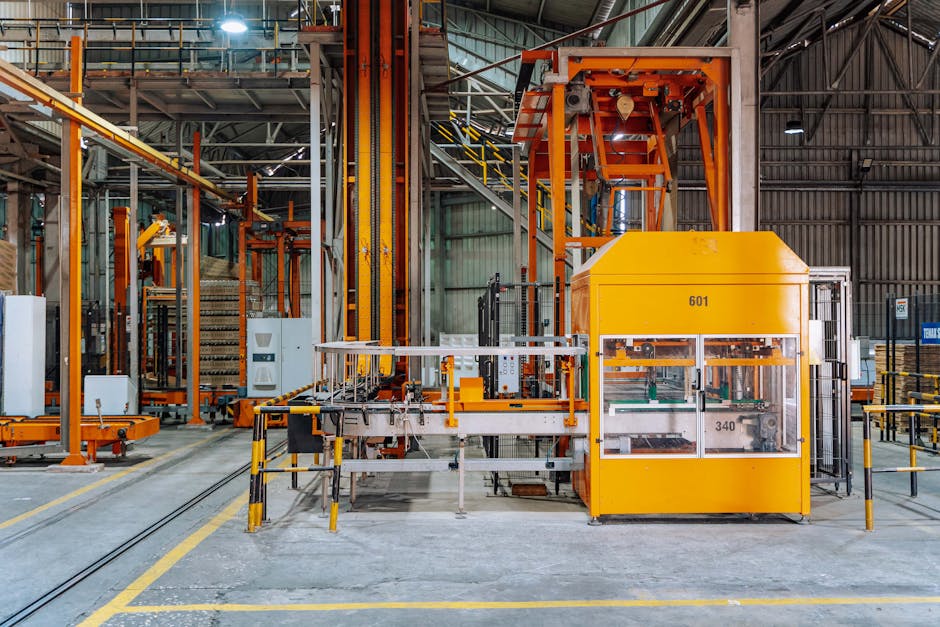
In a quiet corner of a Midwestern distribution center, rows of robotic arms sort packages with silent precision, guided by machine learning algorithms that never tire or negotiate benefits. Nearby, former warehouse clerks—once responsible for inventory logs and shipping labels—now sit in retraining programs, learning basic coding and machine oversight. This scene, repeated across hundreds of facilities from Ohio to California, is no longer a speculative vision of the future. It is unfolding in real time. New labor data reveals that American jobs most exposed to artificial intelligence are not just under pressure—they are disappearing. For the first time, empirical evidence shows a measurable decline in employment within occupations ranked high on AI exposure indices, marking a pivotal shift in the nation’s economic landscape.
\n\n
AI-Exposed Jobs Are Shrinking Faster Than Expected

\n
A 2024 study by the National Bureau of Economic Research, drawing on data from the Bureau of Labor Statistics and machine learning exposure scores developed at Stanford and MIT, found that occupations with the highest potential for AI automation have seen a statistically significant employment decline since 2023. The analysis identified over 1.4 million jobs in sectors like clerical work, data entry, customer support, and back-office administration as highly exposed to AI. These positions have declined at a rate 2.3 times faster than low-exposure roles. In industries such as finance, insurance, and telecommunications, AI-driven automation has already reduced staffing needs for routine cognitive tasks. For example, mortgage processing roles have dropped by nearly 18% in two years, as large language models streamline document review and risk assessment. The trend is not limited to low-wage jobs—mid-level analysts and paralegals are also seeing reduced hiring, replaced by AI tools that can parse legal precedents or generate financial forecasts in seconds.
\n\n
How We Got Here: The Acceleration of AI in the Workplace

\n
The erosion of AI-exposed jobs did not happen overnight. For over a decade, economists and technologists have warned that automation would eventually reach cognitive tasks once thought safe from machines. The turning point came in 2022 with the public release of generative AI models like OpenAI’s GPT-4, which demonstrated an unprecedented ability to understand, generate, and manipulate human language. Companies quickly realized these tools could perform tasks previously requiring years of training and human judgment. By 2023, major firms in banking, legal services, and healthcare began integrating AI into daily operations. According to Reuters reporting on enterprise AI adoption, over 60% of Fortune 500 companies had deployed AI in at least one business function. Unlike earlier waves of automation, which targeted manual labor, this shift directly affects white-collar and service-sector roles, accelerating displacement in ways earlier models failed to predict.
\n\n
The People Shaping the New Labor Reality

\n
At the center of this transformation are corporate decision-makers, AI developers, and policymakers navigating uncharted territory. Tech executives argue that AI enhances productivity, not just replaces jobs. Sundar Pichai of Google and Satya Nadella of Microsoft have repeatedly stated that AI will augment human workers, enabling them to focus on higher-value tasks. Yet, internal corporate memos and workforce planning documents suggest a different priority: cost reduction. A leaked strategy paper from a major U.S. bank, reported by The New York Times, outlined plans to cut 22% of back-office staff by 2026 using AI automation. Meanwhile, AI researchers at institutions like OpenAI and Anthropic are under growing pressure to consider the societal impact of their work. Some, like former Google AI ethicist Timnit Gebru, warn that without regulation, the current trajectory will deepen inequality and destabilize labor markets.
\n\n
Consequences for Workers and the Economy

\n
The shrinking of AI-exposed jobs carries profound consequences. Workers in affected roles often lack the resources or access to retraining needed to transition into AI-resistant fields like healthcare, skilled trades, or creative industries. Wage growth in declining occupations has stalled, while job polarization intensifies—high-paying tech roles and low-wage service jobs grow, but middle-income positions vanish. This trend threatens to exacerbate regional economic disparities, particularly in cities dependent on administrative or finance-sector employment. Unions and labor advocates are calling for new forms of social protection, including AI impact assessments and universal basic income pilots. Without intervention, economists warn of a “hollowing out” of the middle class, reminiscent of the manufacturing declines of the 1980s—but happening at a much faster pace.
\n\n
The Bigger Picture
\n
This shift is not just about job losses—it signals a fundamental reordering of how value is created in the economy. As AI takes over routine cognitive labor, the definition of “work” itself is evolving. The U.S. may be approaching a post-productivity era, where economic output grows without corresponding employment gains. Other industrialized nations are watching closely, with the European Union already advancing the AI Act to regulate high-risk applications in hiring and management. The challenge now is not to stop technological progress, but to ensure it serves broad human welfare rather than simply boosting corporate profits.
\n\n
What comes next will depend on policy choices made in the next few years. Investments in education, worker transition programs, and fair AI governance could soften the disruption. But if left unmanaged, the current wave of AI-driven displacement may become one of the most destabilizing economic shifts in modern history. The jobs are already vanishing. The question is whether society is ready to respond.
Source: Reddit