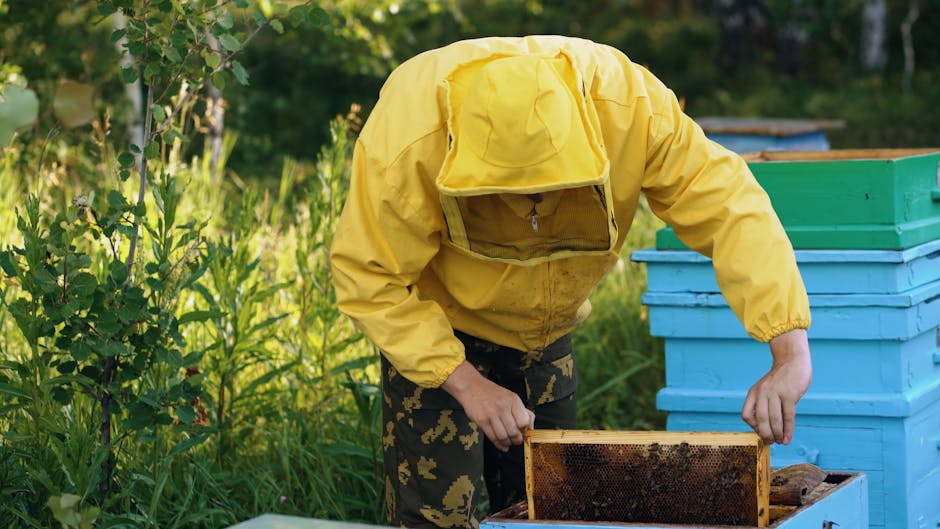
- Farm workers are at higher risk of exposure to drug-resistant bacteria through contact with animals, soil, and waste.
- Antibiotic use in agriculture is breeding dangerous, drug-resistant bacteria that can spread to farm workers.
- Workers in industrial livestock operations are more likely to carry resistant bacteria due to routine antibiotic use.
- Limited access to protective gear and proper medical facilities exacerbates the occupational hazard for farm workers.
- Farm workers are on the front lines of a potential global health crisis due to antimicrobial resistance (AMR).
Could the next global health crisis begin not in a crowded city, but on a livestock farm? A surge of evidence suggests that widespread antibiotic use in agriculture is breeding dangerous, drug-resistant bacteria — and farm workers are on the front lines. These workers, often overlooked in public health discussions, face daily exposure to resistant pathogens through contact with animals, soil, and waste. With infections that once responded to simple treatments now becoming life-threatening, the question is no longer whether antimicrobial resistance (AMR) affects human health, but how quickly we can protect those most at risk — starting with the people who produce our food.
\n
Are farm workers at higher risk of antimicrobial resistance?

\n
Yes, farm workers are at significantly higher risk of exposure to and colonization by antimicrobial-resistant bacteria, particularly in industrial livestock operations where antibiotics are routinely used for growth promotion and disease prevention. According to a 2026 analysis published in Nature, workers in swine and poultry facilities show elevated rates of carrying resistant strains of E. coli, Salmonella, and MRSA. The study found that workers in antibiotic-heavy farms were up to five times more likely to harbor resistant bacteria than those in antibiotic-free operations. This occupational hazard is compounded by limited access to protective equipment, inadequate training, and poor healthcare access — factors that turn routine farm labor into a high-risk public health concern. The findings underscore that AMR is not just a medical or environmental issue, but a labor and equity one.
\n
What does the data say about farm exposure and resistance?

\n
Multiple studies across North and South America, Europe, and Southeast Asia have documented the transmission of resistant bacteria from animals to humans on farms. One longitudinal study of U.S. poultry workers found that 57% carried ESBL-producing E. coli, a strain resistant to key penicillin and cephalosporin antibiotics, compared to just 12% in the general population. Genetic sequencing confirmed that the strains in workers matched those in their livestock, proving direct transmission. In the Netherlands, where farm antibiotic use is closely monitored, researchers found that residents living within 2 kilometers of intensive livestock farms had a 30% higher risk of carrying resistant bacteria. The World Health Organization has long warned against non-therapeutic antibiotic use in animals, citing the irreversible damage it causes to global treatment efficacy. Yet globally, nearly 73% of all antibiotics are used in animal agriculture, primarily in low- and middle-income countries with weak regulatory oversight.
\n
Are there alternative perspectives on agricultural antibiotics?

\n
Some agricultural and industry groups argue that antibiotic use in livestock is essential for maintaining food safety, animal welfare, and economic viability. They contend that banning routine use could increase animal suffering from untreated infections and raise production costs, leading to higher food prices. In countries with high livestock density, such as Denmark and the U.S., some veterinarians support limited prophylactic use during high-risk periods, like weaning or transport. Others point to successful reductions in antibiotic use through improved hygiene and vaccination programs, suggesting that innovation — not elimination — is the path forward. However, critics argue these measures are often unevenly applied and that economic incentives still favor high-output, high-density systems that depend on antimicrobials. The debate reflects a deeper tension between industrial efficiency and long-term public health, with farm workers’ safety often sidelined in the balance.
\n
What are the real-world consequences of inaction?

\n
When resistant bacteria leave the farm, they enter communities through workers’ households, local water supplies, and even retail meat products. In Punjab, India, a 2024 outbreak of carbapenem-resistant infections was traced back to farmworkers who commuted between industrial poultry sites and densely populated neighborhoods. In the U.S., children of farmworkers have been found to carry resistant bacteria at rates comparable to their parents, indicating household transmission. These pathogens can lead to urinary tract infections, sepsis, and pneumonia that resist standard treatments, increasing hospitalization rates and healthcare costs. Beyond health, the economic toll is staggering: a 2025 World Bank report estimated that unchecked AMR could push 28 million people into poverty by 2050, with agricultural workers among the most vulnerable. Without targeted protections, today’s farm exposure becomes tomorrow’s public health emergency.
\n
What This Means For You
\n
Even if you’ve never set foot on a farm, the antibiotics used in food production affect your health. Resistant bacteria travel through food chains, water systems, and human contact, threatening the effectiveness of modern medicine for everyone. Supporting policies that limit non-essential antibiotic use in agriculture, advocating for worker safety standards, and choosing meat from farms that avoid routine antibiotics are concrete steps consumers can take. But systemic change requires stronger regulations, better surveillance, and equity-centered public health strategies that prioritize those most exposed.
\n
As the line between agricultural practice and human health blurs, one question remains urgent: how many lives must be put at risk before we redefine what it means to produce food safely? The answer may lie not just in labs or legislation, but in the lived experiences of the workers who feed the world.
Source: Nature