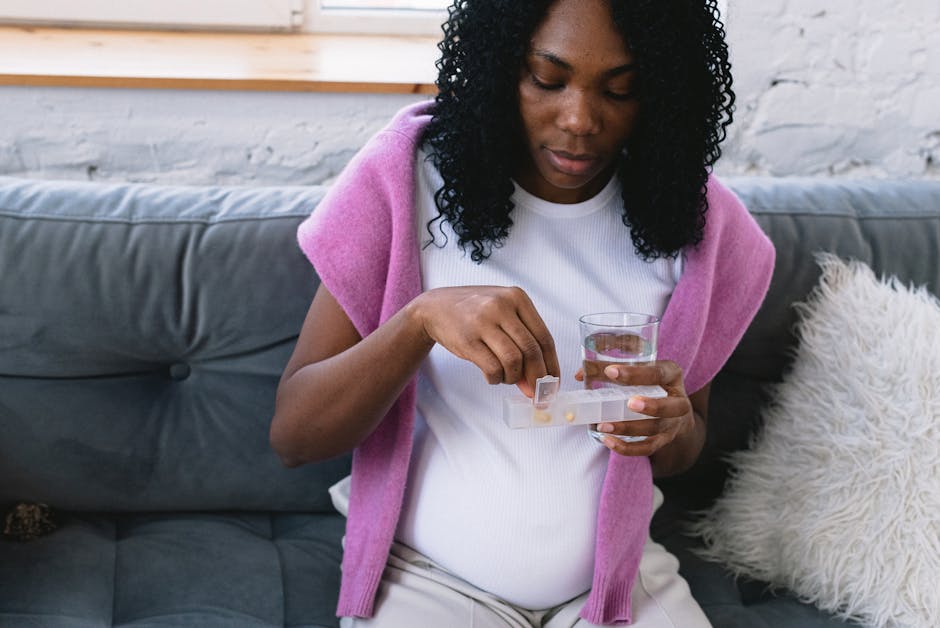
- A new study analyzed data from over 700,000 children and found no causal link between SSRI use during pregnancy and autism or ADHD.
- Researchers used advanced methods to isolate the effects of medication from underlying maternal mental health conditions.
- The study suggests that SSRIs may not contribute to neurodevelopmental conditions in children, alleviating concerns for expectant parents.
- The review analyzed decades of epidemiological data from multiple countries, providing robust evidence for its findings.
- The study’s results could help inform discussions around prenatal medication use and pregnancy planning.
Could taking antidepressants during pregnancy increase a child’s risk of autism or ADHD? It’s a question that has weighed heavily on millions of expectant parents and clinicians for over a decade. While untreated depression poses serious risks to both mother and child, concerns have persisted that selective serotonin reuptake inhibitors (SSRIs)—commonly prescribed during pregnancy—might contribute to neurodevelopmental conditions. Now, a sweeping new analysis of data from more than 700,000 children across multiple countries is providing powerful evidence that these fears may be unfounded. The study, one of the largest of its kind, suggests there is no causal link between SSRI use before or during pregnancy and the development of autism spectrum disorder (ASD) or attention-deficit/hyperactivity disorder (ADHD) in offspring.
Do SSRIs in Pregnancy Cause Autism or ADHD?

The answer, according to the latest scientific evidence, is no—there is no causal relationship between prenatal SSRI exposure and increased risk of autism or ADHD in children. Published in a major peer-reviewed journal, the comprehensive review analyzed decades of epidemiological data from population registries in Scandinavia, the United Kingdom, and North America. Researchers used sibling-controlled designs and genetic liability models to isolate the effects of medication from underlying maternal mental health conditions. They found that when accounting for familial and genetic factors—such as a parent’s history of depression or anxiety—the apparent association between SSRIs and neurodevelopmental disorders disappeared. This suggests earlier studies may have misattributed risk to medication rather than the genetic and environmental factors tied to maternal mental illness itself.
What Does the Evidence Show?

The strongest evidence comes from a 2023 meta-analysis published in Molecular Psychiatry, which synthesized data from 17 cohort studies involving over 700,000 children. The study found no significant increase in autism risk among children exposed to SSRIs in utero after adjusting for confounding variables. Similarly, a Danish nationwide cohort study tracking children born between 1997 and 2014 showed that while unadjusted data suggested a 20% higher likelihood of ADHD diagnosis, this association vanished in sibling comparisons—where one child was exposed to SSRIs and another was not. Experts argue this design controls for shared genetic and socioeconomic factors. Dr. Jakob Christensen, an epidemiologist at Aarhus University and co-author of several key studies, stated, “Our findings indicate that the signal previously seen was not due to the drugs, but to the underlying condition and its heritability.”
Are There Still Skeptics?

Despite mounting evidence, some researchers urge caution. A minority of studies, including a 2017 paper in JAMA Pediatrics, initially reported modest associations between SSRI use and autism, particularly with first-trimester exposure. Critics argue that residual confounding—unmeasured environmental or lifestyle factors—could still influence results, even in sibling studies. Others raise concerns about potential neurobehavioral effects not captured by autism or ADHD diagnoses, such as subtle differences in emotional regulation or sensory processing. Additionally, SSRIs cross the placenta and affect fetal serotonin signaling, which plays a role in brain development. While no causal harm has been proven, some clinicians advocate for shared decision-making, weighing the benefits of treating severe depression against theoretical risks. As Dr. Adam Urato, a maternal-fetal medicine specialist, noted in a 2021 commentary, “We must ensure pharmaceutical influence doesn’t overshadow scientific skepticism.”
What Are the Real-World Implications?

These findings have profound consequences for prenatal care and mental health treatment. For years, many pregnant individuals have discontinued antidepressants out of fear, sometimes leading to relapse, hospitalization, or adverse birth outcomes like preterm delivery. The American College of Obstetricians and Gynecologists (ACOG) and the American Psychiatric Association jointly recommend that decisions about antidepressant use be individualized, but emphasize that untreated depression carries significant risks. With robust evidence now indicating no causal link to autism or ADHD, clinicians can provide more confident guidance. For example, a 32-year-old expecting mother with a history of major depressive disorder can now be reassured that continuing her sertraline regimen is unlikely to harm her child’s neurodevelopment—while stopping could jeopardize her well-being and pregnancy outcomes.
What This Means For You
If you’re pregnant or planning a pregnancy and managing depression, this research supports the safety of continuing prescribed SSRIs when medically indicated. The greatest risk may not be the medication, but stopping it without alternatives. Mental health is a critical component of prenatal care, and these findings empower patients and providers to make decisions grounded in science—not fear. Always consult your healthcare team before making changes to treatment.
While current evidence strongly refutes a causal link, questions remain about the long-term cognitive and emotional development of children exposed to SSRIs in utero. Future research using neuroimaging, longitudinal behavioral assessments, and deeper genetic profiling may uncover subtler effects. For now, though, the consensus is clear: treating maternal depression is not at the expense of a child’s neurodevelopmental health.
Source: Healthline