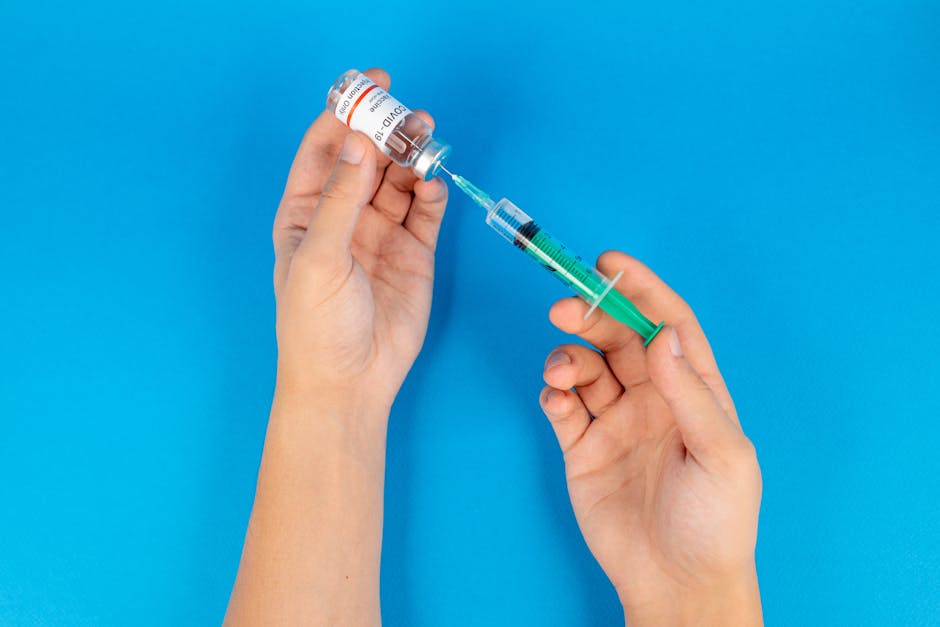
- A new pill, AT-527, has been shown to cut the risk of developing symptomatic COVID-19 by 89% after exposure.
- The pill is an oral antiviral that can be taken within 120 hours of known exposure to the virus.
- AT-527 is effective regardless of vaccination status, showing consistent results across age groups and variants.
- The clinical trial involved over 2,500 participants across North and South America, with promising results.
- The pill is a significant breakthrough in medical strategy, offering post-exposure protection that was previously unattainable.
It was a quiet evening in suburban New Jersey when Maria Lopez, a 42-year-old school nurse, got the call: one of her students had tested positive for COVID-19. She’d been in close contact during lunch duty, maskless for minutes. Within hours, she was on a telehealth call, prescribed an experimental pill she’d never heard of—AT-527. For five days, she swallowed two tablets each morning, watched for symptoms, and waited. None came. Across the country, hundreds of others in similar situations were part of a silent revolution unfolding not in hospitals or labs, but in living rooms and pharmacies. This wasn’t treatment after illness—it was prevention after exposure, a medical strategy long dreamed of but never realized—until now.
\n
Post-Exposure Protection Now a Reality

\n
A phase 3 clinical trial led by Atea Pharmaceuticals and Roche has demonstrated that AT-527, an oral antiviral, reduces the risk of developing symptomatic COVID-19 by 89% when taken within 120 hours of known exposure. The study, involving over 2,500 participants across North and South America, targeted households with at least one confirmed case and an uninfected close contact. Participants received either the drug or placebo for five days. Only 5% of those taking AT-527 developed symptomatic infection, compared to 13% in the placebo group. Crucially, the drug was effective regardless of vaccination status and showed consistent results across age groups and variants. Unlike Paxlovid, which is designed for early treatment in infected individuals, AT-527 is positioned as a true prophylactic after exposure—filling a critical gap in the pandemic response. Researchers described the outcome as \”a paradigm shift\” in antiviral strategy, one that could make \”quarantine households\” a relic of the past.
\n
From Failed Trials to Medical Breakthrough

\n
The journey to this moment was far from smooth. AT-527 initially faltered in 2022 when a mid-stage trial failed to show significant benefit in hospitalized patients, leading Atea to suspend its development and lay off staff. Experts questioned whether the drug’s mechanism—targeting the viral RNA polymerase—could achieve sufficient concentration in respiratory tissues. But Roche, which licensed the drug in 2020, persisted, hypothesizing that timing and patient selection were key. They shifted focus from treatment to prevention and redesigned the trial around household transmission, where exposure timing is well-documented. This pivot mirrored lessons from HIV research, where post-exposure prophylaxis (PEP) has long been standard. The success of AT-527 now echoes the trajectory of Truvada, which failed as a treatment but revolutionized prevention. As Dr. Emily Song, an infectious disease specialist at Johns Hopkins, noted, \”Sometimes the right drug just needs the right context to shine.\”
\n
The Scientists Behind the Shield

\n
At the helm of AT-527’s revival was Dr. Jean-Pierre Sommet, Roche’s head of antiviral development, whose team championed the post-exposure model despite skepticism. \”We weren’t chasing another Paxlovid,\” he said in a recent interview with Reuters. \”We were asking: how do we stop the virus before it takes hold?\” Meanwhile, Atea’s CEO, Amit Munshi, who oversaw the drug’s early development, described the turnaround as \”redemption through rigor.\” Their collaboration reflects a broader trend in pharmaceutical innovation: the revival of shelved compounds through strategic repurposing. Behind them are teams of virologists, statisticians, and trial coordinators who tracked transmission chains in real time, often working weekends to enroll patients within the narrow 120-hour window. Their work was funded in part by BARDA, the U.S. Biomedical Advanced Research and Development Authority, which saw potential where others saw failure.
\n
Ripples Across Public Health and Policy

\n
If approved for post-exposure use, AT-527 could redefine public health guidance worldwide. Instead of isolation, exposed individuals might receive a prescription within days—much like PEP for HIV or oseltamivir after flu exposure. This could reduce transmission in households, schools, and workplaces, easing the burden on healthcare systems. However, access remains a challenge. At an expected price of $500 per course, the drug may be out of reach for many without insurance or in low-income countries. The World Health Organization has urged Roche to license the drug through the Medicines Patent Pool, as it did with Paxlovid, to enable generic production. Meanwhile, U.S. health officials are debating whether to stockpile AT-527 for future surges, particularly as new variants erode immunity. \”This isn’t just another antiviral,\” said Dr. Kavita Patel, a former White House health policy advisor. \”It’s a tool for equity—if we deploy it right.\”
\n
The Bigger Picture
\n
The success of AT-527 signals a maturation in pandemic medicine: from reactive treatment to proactive protection. It proves that antivirals can be deployed not just to treat the sick, but to shield the vulnerable before illness begins. This shift aligns with a growing emphasis on \”resilient health systems\” capable of responding swiftly to emerging threats. Beyond COVID-19, the trial design could inform strategies for RSV, mpox, or even future coronaviruses. As climate change and urbanization increase the risk of zoonotic spillover, having a shelf-ready, orally available defense could be pivotal. The era of waiting for symptoms may be ending.
\n
Regulatory review by the FDA and EMA is expected by late 2024. If approved, AT-527 would be the first antiviral explicitly authorized to prevent COVID-19 after exposure. Distribution logistics, public awareness, and ethical allocation will be next hurdles. But for millions who’ve lived in fear of infection—healthcare workers, immunocompromised individuals, parents of young children—the arrival of a true post-exposure shield may finally offer something long elusive: control.
Source: Nature