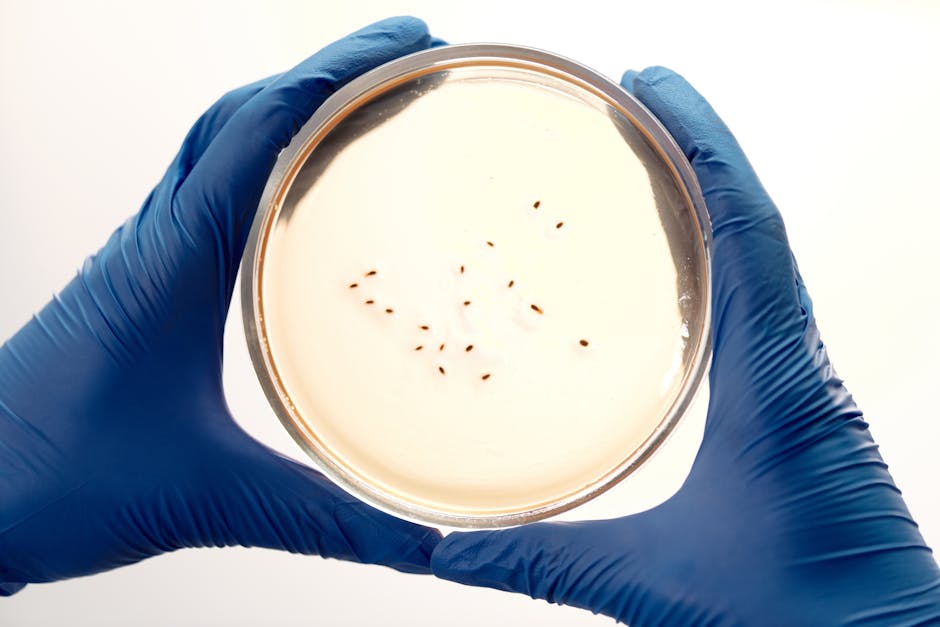
- Scientists discovered a mechanism for primitive cell-like droplets to divide without protein-based machinery, reshaping understanding of early life’s replication.
- Multilamellar droplets composed of lipids and nucleotides can spontaneously split into unequal parts under controlled conditions.
- This self-organized fission is driven by physicochemical forces, suggesting early forms of cellular life replicated through material instabilities.
- The discovery offers a compelling model for prebiotic evolution, a key area of study in understanding the origins of life.
- Researchers created multilamellar droplets that self-assembled and then divided into unequal parts, mimicking a rudimentary form of cell division.
Scientists have uncovered a fundamental mechanism by which primitive cell-like droplets can undergo asymmetric division without the aid of protein-based machinery, a discovery that may reshape understanding of early life’s replication processes. In a study published in Nature, researchers demonstrated that multilamellar droplets composed of lipids and nucleotides can spontaneously split into unequal parts under controlled conditions, mimicking a rudimentary form of cell division. This self-organized fission, driven purely by physicochemical forces, suggests that the earliest forms of cellular life might have replicated through inherent material instabilities rather than complex biochemical systems, offering a compelling model for prebiotic evolution.
Physical Evidence of Spontaneous Division

The experimental evidence centers on multilamellar droplets formed from a mixture of fatty acids, glycerol monooleate, and nucleotide-rich aqueous solutions, which self-assemble into onion-like concentric bilayers. When subjected to gentle flow or thermal gradients in microfluidic chambers, these droplets exhibited repeated fission events, with daughter droplets consistently differing in size—often by a ratio of 2:1 or greater. High-speed microscopy revealed that division initiates at surface instabilities, where membrane curvature and osmotic stress concentrate, leading to neck formation and eventual pinching. Quantitative image analysis showed that over 78% of division events were asymmetric, with nucleotide content unevenly partitioned—a feature reminiscent of stem cell differentiation. Critically, no engineered proteins, cytoskeletal elements, or external catalysts were introduced, confirming that the phenomenon arises from intrinsic physicochemical dynamics. These findings, supported by interfacial tension measurements and fluorescence recovery after photobleaching (FRAP), indicate that phase separation and membrane elasticity are sufficient to drive lifelike division behaviors.
Key Researchers and Institutional Roles

The study was led by a multidisciplinary team at the Max Planck Institute for Biochemistry, in collaboration with synthetic biology groups at the University of Tokyo and the Scripps Research Institute. Dr. Lena Hofmann, the paper’s lead author, specialized in non-equilibrium soft matter systems and designed the microfluidic platforms used to monitor droplet dynamics in real time. Senior author Dr. Arvind Murugan, a theoretical biophysicist, developed the mathematical model predicting instability thresholds based on bending modulus and surface tension gradients. The project emerged from the Origins of Life Initiative, a global consortium funding research into prebiotic chemistry and early cellular evolution. Notably, the team built upon earlier work from the lab of Jack Szostak, who pioneered studies on protocell membrane dynamics, though this new result diverges by eliminating peptide-assisted division mechanisms. The convergence of experimental precision and theoretical modeling underscores a growing trend in origins-of-life research: treating early cellular behaviors as emergent physical phenomena rather than strictly biochemical ones.
Trade-Offs Between Simplicity and Fidelity

While the absence of protein machinery simplifies the system and enhances plausibility for early Earth conditions, it introduces trade-offs in replication accuracy and control. On one hand, asymmetric partitioning could have provided an evolutionary advantage by generating diversity—akin to modern asymmetric cell division in stem cells—enabling selection pressures to act on variable droplet populations. On the other hand, the randomness of nucleotide distribution limits hereditary fidelity, raising questions about how genetic continuity might have emerged. Additionally, the droplets’ reliance on external stimuli like flow or temperature shifts implies environmental dependency, which could restrict their viability in stagnant prebiotic pools. However, the energy efficiency of such division—driven by ambient thermal or hydrodynamic fluctuations—contrasts sharply with the ATP-dependent complexity of modern mitosis, suggesting a potential path from passive physics to regulated biology. These trade-offs highlight a central tension in origins-of-life models: balancing minimalism with functional robustness.
Why This Discovery Emerges Now

This breakthrough arrives at a confluence of advances in microfluidics, high-resolution imaging, and theoretical soft matter physics that were not available a decade ago. Recent improvements in phase-contrast and confocal microscopy allow real-time tracking of nanoscale membrane deformations, while computational models can now simulate multilamellar stress fields with high fidelity. Moreover, the growing acceptance of ‘messy’ prebiotic chemistry—where mixtures of molecules behave collectively rather than in isolated reactions—has shifted focus toward emergent behaviors in heterogeneous systems. The current study benefits from this paradigm, treating droplets not as purified constructs but as complex, dynamic environments. Earlier attempts to model protocell division often assumed homogeneous membranes or required engineered peptides, but the inclusion of nucleotides as both solutes and structural modulators reflects a more realistic prebiotic scenario. Thus, the timing reflects both technological readiness and conceptual evolution in the field.
Where We Go From Here
In the next 6 to 12 months, three scenarios could unfold. First, researchers may attempt to couple this division mechanism with RNA replication, testing whether unevenly distributed nucleotides can support differential gene expression in daughter droplets. Second, planetary scientists might simulate early Earth hydrothermal pore environments to assess whether natural temperature gradients could sustain such fission cycles. Third, synthetic biologists could harness this asymmetry to design rudimentary selection systems in vitro, advancing protocell engineering. Each path would test the boundary between passive physics and evolvable systems. Success in any would strengthen the case that life’s earliest divisions were not guided by genetic programs but emerged from the inherent instability of matter under non-equilibrium conditions.
Bottom line — this study demonstrates that asymmetric cell-like division can emerge from simple physicochemical principles, offering a compelling, protein-free pathway for how primitive life might have replicated before the evolution of complex molecular machinery.
Source: Nature