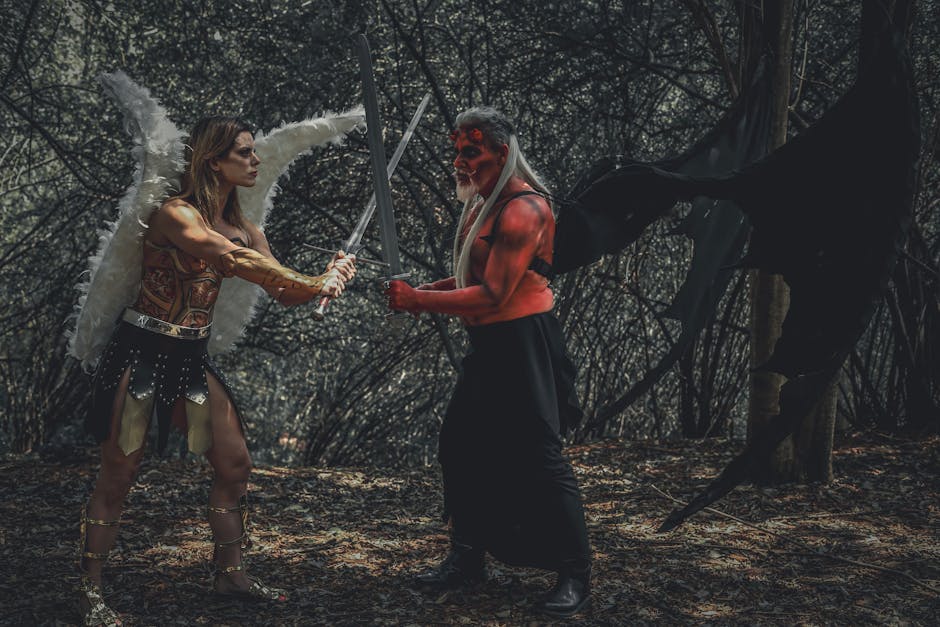
- The final episode of Good Omens wraps up the story in six perfect minutes, making the most of a condensed narrative.
- The series concludes with a quietly devastating moment that feels like a revelation, rather than a mere plot twist.
- Heaven seeks to reset creation under a new, authoritarian doctrine, led by a rebranded and insidious Metatron.
- Aziraphale agrees to lead the new Age of Adamant, but only if Crowley joins him, highlighting the complexities of their partnership.
- Crowley ultimately refuses to join Aziraphale, emphasizing his rejection of damnation and his own path in life.
It’s raining in Soho, as it often does in stories that straddle the line between the divine and the doomed. Neon signs flicker like failing prayers, and the air hums with the quiet tension of decisions long delayed. In a modest flat above a bookshop that smells of mildew and ancient parchment, two beings who have spent six thousand years circling each other—never quite close, never quite apart—stand at the edge of a choice that could unravel eternity. This is not the end of the world, not exactly. But it might be the end of something rarer: a love that defied heaven, hell, and the ineffable plan. The final episodes of Good Omens, though compressed and at times breathless, culminate in a moment so quietly devastating it feels less like fiction and more like revelation.
The Final Confrontation and Its Aftermath

The series’ abbreviated third season, reduced to a single extended episode due to the untimely death of co-creator Neil Gaiman’s collaborator, Terry Pratchett, and later scheduling challenges, moves with urgent momentum. Heaven, now under the control of a rebranded, more insidious Metatron, seeks to reset creation under a new, authoritarian doctrine. Aziraphale, swayed by promises of reinstatement and cosmic order, agrees to lead the new Age of Adamant—only if Crowley joins him. But Crowley, the demon who long ago stopped believing in damnation, refuses. The climactic confrontation unfolds not with fire and brimstone, but in a quiet embrace outside the bookshop, where centuries of unspoken devotion collapse into a single, desperate kiss. When Aziraphale walks back into Heaven’s golden light, leaving Crowley behind, the separation feels less like betrayal and more like tragedy written in the stars. The final shot—Crowley driving away in the Bentley, eyes glistening, as Queen’s “Love of My Life” plays on the radio—lingers like a wound.
From Page to Screen: The Long Road to the End

Good Omens began as a 1990 novel co-written by Terry Pratchett and Neil Gaiman, a satirical take on the apocalypse that balanced wit with existential weight. For years, it lived in the margins of cult fandom, too strange for mainstream adaptation—until Amazon Prime, with Gaiman at the helm, revived it in 2019. The first season expanded the original story, weaving in deeper threads of the angel and demon’s shared history. The second season, though criticized for pacing, deepened their emotional entanglement. Plans for a third season were always meant to explore the Fall and the true nature of their bond. But when Pratchett passed in 2015, and Gaiman later stepped back from showrunning, the project evolved into a farewell shaped by loss—both in narrative and in real life. What emerged was not the sprawling saga once envisioned, but a distilled, intimate conclusion.
The Architects of the Apocalypse

At the heart of Good Omens are two performers: David Tennant as Crowley, the serpent with a soul, and Michael Sheen as Aziraphale, the fussy angel with a taste for Earthly pleasures. Their chemistry—decades in the making, both on and off screen—anchors the entire series. Gaiman, serving as showrunner and emotional steward, has described the finale as the only ending that felt honest. “They had to part,” he told Reuters, “because love isn’t always enough to overcome ideology.” The decision to end the story here, while shaped by real-world constraints, reflects a deeper truth about the characters: their love was never about possession, but about choice. And in the end, they chose differently.
What the Ending Means for Fans and Mythology

For the devoted fanbase, the finale is a gut punch wrapped in poetic justice. It confirms what many suspected: that Crowley and Aziraphale’s bond transcended mere friendship, a queer love story coded in centuries of glances and shared cigarettes. Yet it refuses the comfort of a happy ending, instead offering something more profound—authenticity. The implications ripple through the show’s theology: if even an angel and a demon can fall for each other, then perhaps the cosmic divide between good and evil is not a law, but a construct. Meanwhile, the reduction of Season 3 to a single chapter leaves unanswered questions—about Gabriel’s fate, about Beelzebub’s whereabouts, about the future of Earth. But in its restraint, the finale argues that not every story needs closure; some are meant to echo.
The Bigger Picture
Good Omens was never really about the end of the world. It was about what we do while we’re still here—how we choose to love, resist, and find meaning in a universe that often feels indifferent. In an age of algorithmic content and franchise fatigue, its conclusion stands out for its courage: to end not with spectacle, but with silence. As streaming platforms increasingly prioritize scalability over artistic integrity, Good Omens dares to say: some stories are complete when they feel true.
What comes next is uncertainty. The bookshop in Soho stands empty. The Bentley roars down the motorway, headed nowhere in particular. Heaven rebrands, hell reboots, and Earth—blessedly, chaotically—carries on. But somewhere in the static between radio stations, a voice still sings, “You were my first love, you will be my last.” And for now, that may have to be enough.
Source: Ars Technica