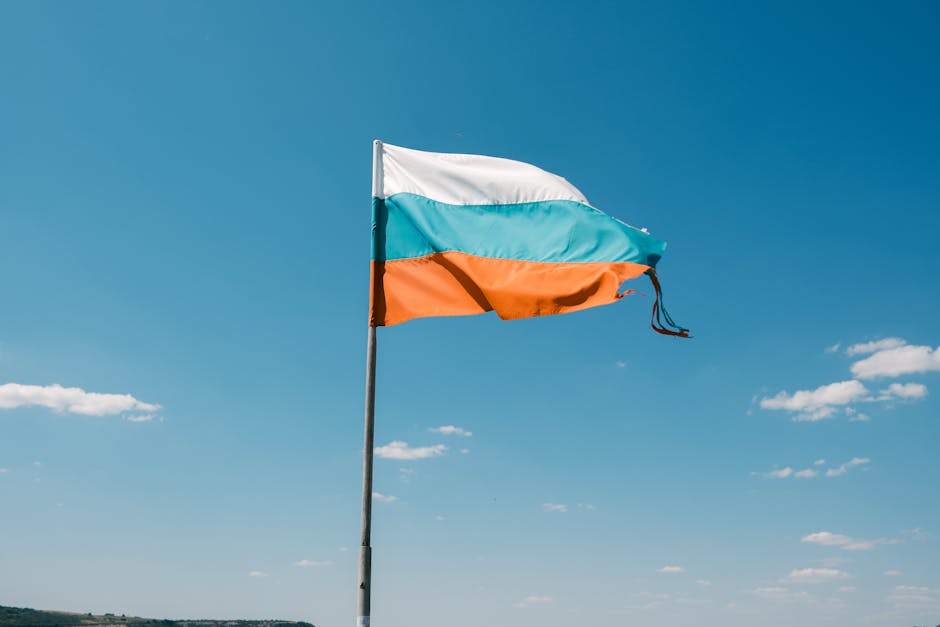
- Bulgaria has secured its first Eurovision victory with pop sensation Dara, marking a significant shift in the contest’s voting patterns.
- The win marks a symbolic recognition of Eastern Europe’s cultural influence on the continent’s mainstream stage.
- Dara’s performance featured a fusion of Balkan folk motifs and contemporary electropop, redefining modern Eurovision success.
- The victory was broadcast to an estimated 160 million viewers across 40 countries, showcasing the contest’s global reach.
- Bulgaria’s win challenges the contest’s historically Western-leaning voting patterns, highlighting the need for more diverse representation.
Bulgaria has clinched its first-ever Eurovision Song Contest victory, shattering decades of musical underdog status with a commanding performance by pop powerhouse Dara. In a night of high-octane choreography and sweeping balladry, Dara earned 467 points—surpassing runners-up Sweden and Ukraine—to claim the 70th edition of the world’s largest live televised music event. Broadcast to an estimated 160 million viewers across 40 countries, the win marks a tectonic shift in the contest’s historically Western-leaning voting patterns. For a nation that has often struggled to advance past semi-finals, the triumph is more than artistic—it’s symbolic, resonating across the Balkans as a long-overdue recognition of Eastern Europe’s cultural influence on the continent’s mainstream stage.\n
\n
The Cultural Weight of a First-Time Win

\n
The significance of Bulgaria’s victory extends far beyond the glittering stage in Malmö. For years, Eurovision has been seen as a soft power battleground, where national identity, geopolitical alliances, and cultural visibility converge under the spotlight. Bulgaria’s prior best finish—a sixth-place result in 2017 with Kristian Kostov’s ‘Beautiful Mess’—had long been the ceiling of its ambitions. Now, with Dara’s bold fusion of Balkan folk motifs and contemporary electropop, the country has not only broken through but redefined what modern Eurovision success can sound like. Analysts at BBC Culture note that the win reflects a broader appetite among European audiences for authenticity and regional diversity, especially as younger voters increasingly shape the contest’s outcome through public televotes.\n
\n
Dara’s Journey to the Grand Final

\n
Dara, born Dara Dzhebbarova in Plovdiv, rose to fame in Bulgaria’s domestic music scene with her 2022 debut album ‘Znam Si Imeto’ (I Know My Name), blending urban pop with Romani vocal inflections and traditional Bulgarian harmonies. Selected through Bulgaria’s national final ‘BG Song 2025,’ her entry ‘Zarya’—meaning ‘dawn’—combined pulsating synth lines with a choral refrain sung in archaic Thracian dialect, a nod to the region’s ancient roots. In the grand final, her performance featured a rotating stage, fire effects, and a troupe of dancers in costumes inspired by medieval Bulgarian warrior attire. Among 25 finalists, she led the jury vote and finished second in the public tally, demonstrating rare cross-appeal. Her victory marks only the third time a Balkan nation has won Eurovision, following Serbia in 2007 and Yugoslavia in 1989.\n
\n
Behind the Music: Politics, Perception, and Voting Trends

\n
Eurovision’s voting system—split between national juries and public televotes—has long been scrutinized for regional bloc voting and political undertones. Yet Dara’s win suggests a pivot: while she swept Eastern and Southeastern Europe, she also earned strong support from Nordic and Benelux countries, traditionally skeptical of Balkan entries. According to data compiled by Eurovision World, Bulgaria received maximum 12-point scores from seven nations, including neutral voters like Ireland and Portugal. This broad coalition indicates a shift away from entrenched voting patterns, possibly influenced by greater cultural exposure through streaming platforms and social media. Experts argue that Dara’s polished production, multilingual lyrics, and inclusive staging minimized perceptions of ‘otherness’ that have historically marginalized Eastern European acts.\n
\n
Impact on Bulgaria and the Balkans

\n
The victory has ignited celebrations across Bulgaria, where the government declared a national holiday on May 19—the day after the final. Prime Minister Nikolai Denkov hailed the win as “a moment of unity and pride” for a country often defined by emigration and economic challenges. Tourism officials anticipate a ‘Eurovision effect,’ similar to those seen in past host nations, with projections suggesting a 15% rise in cultural tourism over the next year. In neighboring countries like North Macedonia and Serbia, Dara’s success has sparked conversations about shared musical heritage and the potential for greater regional collaboration. For Bulgaria’s Romani and Turkish minorities, her visibility as a woman of mixed heritage is seen as a step toward broader societal inclusion in mainstream media.\n
\n
Expert Perspectives
\n
Cultural historian Dr. Elena Petrova of Sofia University describes Dara’s win as “a reclamation of narrative power,” arguing that Eastern Europe has long contributed to European pop culture while being excluded from its rewards. Conversely, media analyst Lars Madsen of Copenhagen notes that the victory may prompt Western broadcasters to rethink their Eurovision strategies, emphasizing authenticity over spectacle. While some critics warn against over-politicizing the contest, most agree that Dara’s triumph reflects deeper demographic and cultural shifts across Europe, where younger, more diverse audiences are demanding representation on all stages—literal and metaphorical.\n
\n
Looking ahead, Bulgaria is expected to host the 71st Eurovision Song Contest in 2026, a logistical and financial challenge for a nation with limited large-scale event infrastructure. Questions remain about venue selection—likely Sofia or Varna—and how the country will leverage its newfound global attention. Yet one thing is certain: Dara’s victory has not only elevated Bulgaria’s cultural profile but also signaled a new era in which Europe’s musical center of gravity may be shifting eastward. The dawn, as her song proclaims, has indeed arrived.\n
Source: Euronews