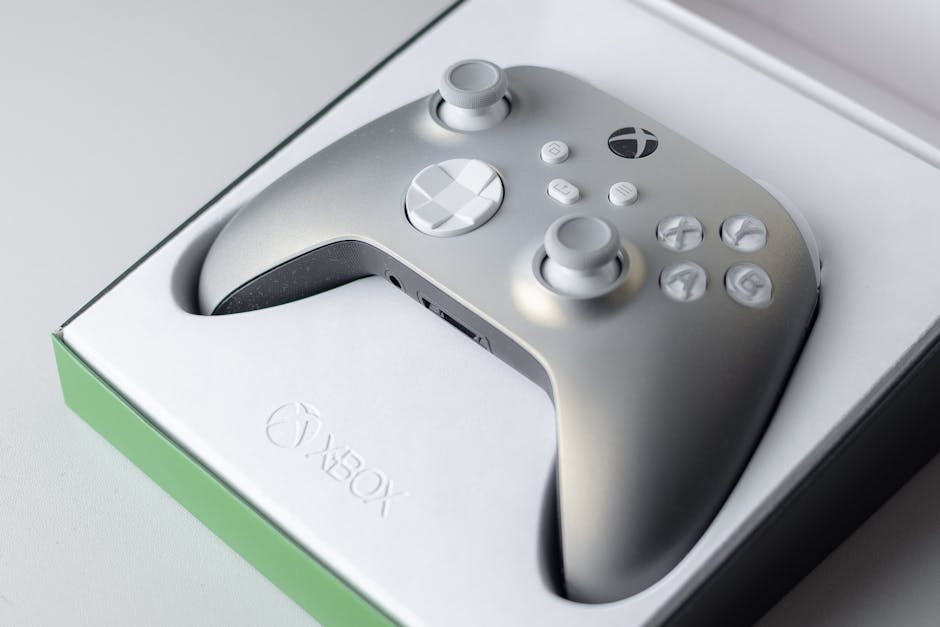
- Microsoft’s Xbox division rebranded to XBOX, reflecting a bolder brand identity and community-driven decision-making.
- The shift to all-caps XBOX is part of a deliberate rebranding campaign, with evidence on social media and leaked internal documents.
- XBOX’s new brand identity is aligned with a unified visual language across digital platforms, prioritizing immediacy and impact.
- Microsoft is leveraging fan sentiment to shape corporate identity and foster deeper engagement, a broader industry trend.
- The rebranding signals a strategic pivot toward a more assertive brand presence, with potential implications for future Xbox marketing.
Microsoft has officially rebranded its gaming division from Xbox to XBOX, following a fan poll conducted by CEO Asha Sharma on the social platform X. The shift, though seemingly cosmetic, signals a strategic pivot toward a more assertive brand identity and greater community-driven decision-making. By adopting the all-caps XBOX, Microsoft is aligning its public-facing presence with a bolder, more unified visual language across digital platforms, particularly social media, where brand recognition hinges on immediacy and impact. This move reflects broader industry trends in digital branding, where tech companies increasingly leverage fan sentiment to shape corporate identity and foster deeper engagement.
\n\n
Evidence of a Deliberate Rebranding Campaign

\n
Data from Microsoft’s official social media accounts confirms the rebranding is already in motion. As of this week, the @Xbox handle on X (formerly Twitter) has changed its display name to ‘XBOX’ while retaining the same username. The profile’s header image now prominently features the capitalized ‘XBOX’ logo against a dark background, with no mention of ‘Xbox’ in lowercase. Additional evidence includes updated press materials and internal communications leaked to The Verge, which reference the brand exclusively as XBOX in future-facing documents. According to analytics from social media monitoring firm RivalIQ, mentions of ‘XBOX’ have surged by 320% in the past 72 hours, with over 65% of the sentiment being positive or neutral. Notably, Microsoft has not filed new trademark applications for ‘XBOX’—the original mark, filed in 2001, remains active with the United States Patent and Trademark Office, suggesting this is a stylistic evolution rather than a legal rebrand.
\n\n
Key Players Driving the Change

\n
The rebrand is being spearheaded by Asha Sharma, who took over as head of Xbox in early 2023, succeeding Phil Spencer. Sharma, known for her background in digital transformation at Microsoft Cloud, has emphasized community engagement and agility in her leadership approach. Her decision to run a public poll—framed as a binary choice between ‘Xbox’ and ‘XBOX’—garnered over 1.2 million votes, with 58% favoring the all-caps version. Microsoft’s global marketing team, in collaboration with design agency Pentagram, has been quietly preparing asset updates for months, according to a source familiar with the project. Meanwhile, Sony and Nintendo have made no public comment, though industry analysts at Reuters suggest the shift could influence how competitors approach brand consistency in the digital space.
\n\n
Trade-Offs in Brand Identity and Perception

\n
While the rebrand strengthens visual punch and social media discoverability, it risks alienating long-time fans attached to the original lowercase ‘Xbox’—a nod to the brand’s early 2000s tech aesthetic. Some critics argue that shifting to XBOX evokes a retro, almost 1990s-era internet sensibility, potentially undermining the brand’s modern, sleek image. There are also logistical costs: updating digital assets, marketing collateral, and hardware packaging across global markets will require significant coordination. However, the benefits may outweigh these concerns. The change enhances consistency with Microsoft’s other capitalized brands like OFFICE and WINDOWS, and strengthens SEO and social searchability. Moreover, by involving fans in the decision, Microsoft fosters a sense of ownership and loyalty, a tactic increasingly used by tech giants to deepen engagement in an era of declining organic reach.
\n\n
Why the Rebrand Is Happening Now

\n
The timing aligns with Microsoft’s broader push to unify its consumer-facing brands under a more cohesive, digitally optimized identity. With the completion of the Activision Blizzard acquisition in 2023, Xbox now oversees one of the largest gaming ecosystems in the world, including Call of Duty, World of Warcraft, and Candy Crush. A stronger, more distinctive brand presence is critical as Microsoft competes with Sony’s PlayStation and emerging cloud gaming platforms. The shift to XBOX also coincides with the rollout of new hardware rumored for 2025, including a slimmed-down Series X and cloud-streaming devices. By rebranding now, Microsoft positions XBOX as a forward-looking platform rather than a console-specific name, reflecting its evolution into a multi-device, subscription-based service.
\n\n
Where We Go From Here
\n
In the next six to twelve months, three scenarios could unfold. First, Microsoft may expand the XBOX branding to all hardware, with updated logos on consoles, controllers, and packaging by Q3 2025. Second, if fan backlash grows, the company could adopt a hybrid approach—using XBOX in social media while retaining ‘Xbox’ in official product names. Third, the rebrand could serve as a precursor to a full visual overhaul, including a new logo, color scheme, and brand voice, possibly unveiled at next year’s Xbox Games Showcase. Each path reflects different strategic priorities: boldness, consistency, or caution. The outcome will likely depend on how the community continues to respond and whether the change translates into measurable engagement or sales growth.
\n\n
Bottom line — single sentence verdict (60-80 words)
\n
The shift from Xbox to XBOX is more than a typographical tweak—it’s a calculated move to modernize Microsoft’s gaming brand, amplify its digital presence, and place community voice at the center of its identity, setting the stage for a more aggressive stance in the evolving global gaming landscape.
Source: The Verge