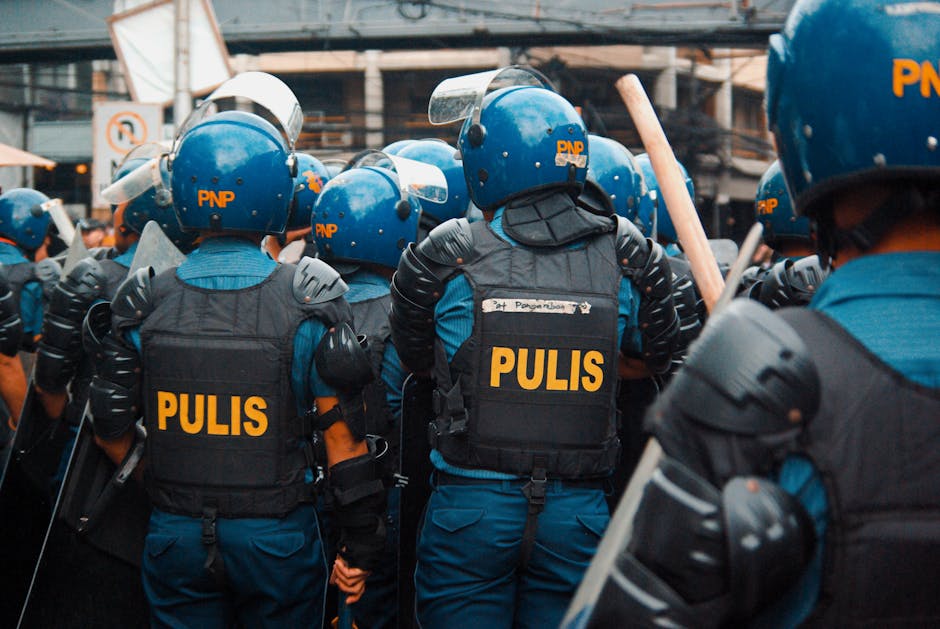
- A Phoenix Police Sergeant was caught carrying a gun to a protest against ICE policies, fracturing trust between the police and the community.
- The sergeant, David Fimbres, was identified by fellow officers and asked to leave the demonstration after his appearance sparked backlash.
- Internal affairs launched an investigation within 24 hours, and Fimbres was terminated by the end of the week.
- The Phoenix Police Department cited departmental policies on off-duty conduct, use of authority, and engagement in political activities as reasons for Fimbres’ termination.
- Police Chief Diana Stancy emphasized that officers are expected to maintain public trust at all times.
On a blistering Saturday afternoon in downtown Phoenix, as sunlight glinted off the glass façade of the federal courthouse, hundreds gathered to denounce U.S. Immigration and Customs Enforcement policies. Chants echoed between buildings—”No hate, no fear, refugees are welcome here!”—while signs waved overhead, decrying family separations and calling for abolition. In the crowd’s periphery, unnoticed at first, stood a man in plain clothes, a concealed firearm strapped to his waist, badge clipped to his belt. He wasn’t there as a protester. He was Sergeant David Fimbres, a 22-year veteran of the Phoenix Police Department, and his presence—armed and uninvited—would soon fracture trust between the department and the community it serves.
Immediate Fallout from the Protest

After being identified by fellow officers in the crowd, Fimbres was approached and asked to leave the demonstration. Though he did not engage with protesters or brandish his weapon, his appearance—especially while armed—sparked immediate backlash. Internal affairs launched an investigation within 24 hours, and by the end of the week, the Phoenix Police Department announced his termination. Police Chief Diana Stancy stated that Fimbres violated departmental policies on off-duty conduct, use of authority, and engagement in political activities. “Officers are expected to maintain public trust at all times,” Stancy said in a press briefing, “and Sergeant Fimbres’ decision to attend a volatile protest, armed and in a manner that could be perceived as representing the department, undermined that trust.” The incident occurred amid heightened scrutiny of law enforcement interactions with immigrant communities, particularly in border states like Arizona.
Roots of the Controversy

The protest where Fimbres appeared was organized by a coalition of immigrant advocacy groups, including Puente Arizona and the ACLU of Arizona, in response to renewed ICE raids and detention policies under recent federal directives. Demonstrations against ICE have intensified across the Southwest in recent months, often drawing counter-protesters and creating tense standoffs. Phoenix, with its history of contentious immigration enforcement—from the controversial SB 1070 law to Maricopa County Sheriff Joe Arpaio’s raids—remains a flashpoint. The police department has worked deliberately in recent years to rebuild relationships with Latino and immigrant communities, launching outreach programs and bias training. Fimbres’ actions threatened to unravel that progress, reviving fears of surveillance and militarized policing. Department protocols explicitly prohibit officers from carrying weapons at political events unless on official duty, a rule designed to prevent the appearance of state intimidation.
Who Was Behind the Decision?

Sergeant David Fimbres, 48, had served in the Phoenix Police Department since 2002, primarily in patrol and supervisory roles. Colleagues described him as quiet, by-the-book, but deeply conservative in personal politics. According to internal sources, Fimbres had previously expressed skepticism about immigration reform and had shared pro-enforcement posts on social media. He attended the protest not as a provocateur, sources say, but as a concerned citizen who believed the demonstrators were disrespecting federal law enforcement. “He saw it as a defense of order,” one officer said anonymously. “But he grossly misjudged the optics.” While Fimbres maintains he had no intention of interfering, his decision to carry a firearm—legally permitted under Arizona’s open carry laws—transformed his presence into a symbol of intimidation. The union representing rank-and-file officers declined to defend him, stating that his actions were personal, not professional.
Consequences for Community and Force

The firing has drawn mixed reactions. Advocacy groups like Puente Arizona hailed the termination as a necessary step toward accountability, but warned it was insufficient without broader reforms. “One officer was fired, but what about the culture that allowed this to happen?” asked Diana Valles, a lead organizer. Meanwhile, some conservative community members expressed support for Fimbres, calling the punishment excessive. Within the department, morale is strained; some officers worry about being penalized for off-duty expression, while others recognize the need to preserve institutional neutrality. The incident has also prompted a review of social media policies and off-duty conduct guidelines, with the city council requesting a full report on enforcement practices at public assemblies.
The Bigger Picture
This case reflects a national tension over the boundaries of law enforcement presence in civic life. As political polarization deepens, officers—like all citizens—hold strong beliefs, but their affiliation with state power demands heightened restraint. The image of an armed police sergeant at a protest criticizing federal immigration policy cuts to the core of democratic norms: when state actors insert themselves into political demonstrations, even passively, they risk chilling free speech and eroding public confidence. Similar incidents have occurred in cities from Portland to El Paso, where off-duty officers have appeared at rallies, sometimes in uniform, sometimes armed. Courts have upheld the right of officers to engage in political speech, but with limits when it compromises impartiality.
What happens next may set a precedent. The Phoenix case could influence how departments nationwide handle off-duty participation in protests, particularly those involving federal agencies. Fimbres has indicated he may appeal his termination through arbitration, and legal experts are watching closely. For now, the department is left to repair trust—not just with immigrant communities, but with its own ranks. The balance between personal freedom and professional duty remains delicate, and in an era of viral accountability, one decision in plain sight can alter a career and a community’s perception of justice.
Source: Abc15