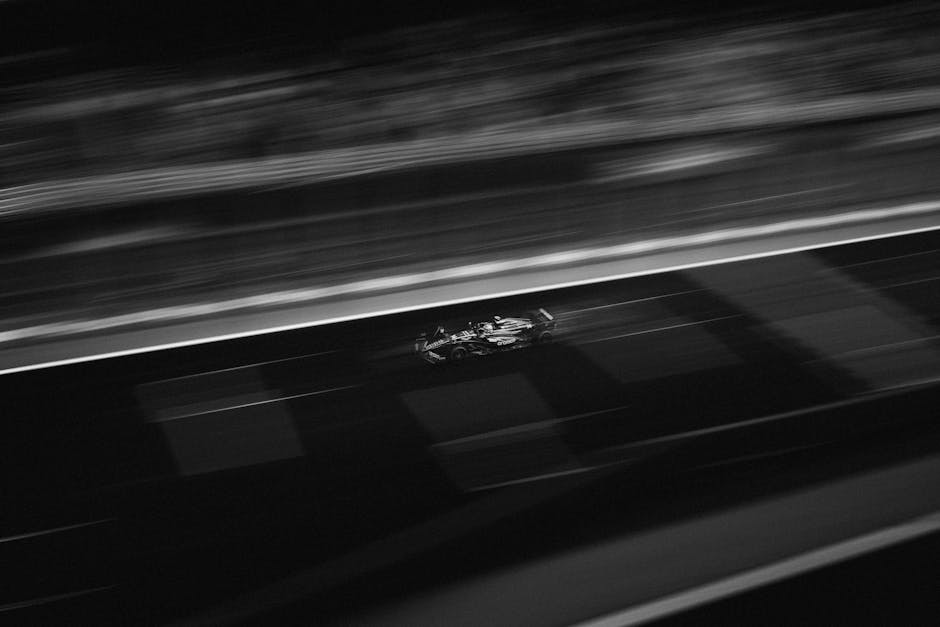
- Max Verstappen will participate in the 2024 Nürburgring 24 Hours, a rare endurance appearance for the Formula 1 driver.
- The event marks a departure from Verstappen’s exclusive focus on Formula 1 since his 2015 debut.
- The Nürburgring 24 Hours demands raw endurance, with drivers rotating through stints in near-constant darkness and unpredictable weather.
- A special exemption allows F1 drivers to participate in select endurance events during the season.
- Verstappen will drive a BMW M4 GT3 entered by Attempto Racing, a team based in Austria.
Midnight on the Nürburgring’s Nordschleife is a place where legends are made and careers undone. Rain slicks the ancient tarmac, reflecting the dim glow of headlights probing through fog-draped forest. Trees loom like sentinels over blind crests and plunging dips. It’s here, on this 25.4-kilometer ribbon of asphalt carved into the Eifel Mountains, that Max Verstappen—a man accustomed to the precision-controlled chaos of Formula 1—will soon wrestle a 500-horsepower GT3 machine through the longest and most punishing race of his career. The ADAC TotalEnergies 24 Hours of Nürburgring isn’t just another race; it’s a trial by fire, where weather, fatigue, and the track itself conspire against even the most gifted drivers. And for the first time, the sport’s most dominant contemporary figure is stepping into its crucible.
Verstappen Joins the Endurance Challenge

Max Verstappen will take the wheel of a BMW M4 GT3 entered by the Austrian team Attempto Racing in the 2024 Nürburgring 24 Hours, competing under a special exemption that allows F1 drivers to participate in select endurance events during the season. The entry, confirmed in late May, marks a rare off-season detour for the Red Bull Racing champion, who has so far focused exclusively on Formula 1 since his debut in 2015. Unlike F1’s tightly choreographed weekends, the Nürburgring 24 Hours demands raw endurance: drivers rotate through stints in near-constant darkness and unpredictable weather, often battling fog and rain that can reduce visibility to meters. The Nordschleife’s infamous bumps, elevation changes, and unforgiving barriers leave no margin for error. Verstappen will share the car with three professional GT racers—Mirko Bortolotti, Rolf Ineichen, and Kelvin van der Linde—forming a balanced lineup designed to navigate both speed and survival.
The Roots of the Nürburgring 24 Hours

The Nürburgring 24 Hours began in 1970 as a test of automotive durability, born from the German tradition of endurance engineering and public road racing on the original Nordschleife. For decades, the track was part of the Formula 1 calendar, infamous for its danger—Graham Hill called it the “Green Hell” after surviving multiple crashes in the 1960s. After F1 abandoned the full Nordschleife in 1976 following Niki Lauda’s near-fatal crash, the circuit was repurposed for touring cars and endurance racing. The modern 24-hour race, run on a combined layout of the old Nordschleife and the modern GP circuit, blends high-speed straights with treacherous backwoods sections like Pflanzgarten and Kesselchen. Manufacturers like Porsche, BMW, and Mercedes-Benz treat it as a proving ground, pushing development mules disguised as customer race cars. For drivers, it’s a rite of passage—a race where reputation is earned not in podiums, but in hours survived.
The Drivers Behind the Wheel

Verstappen’s decision to race stems from personal curiosity and a lifelong fascination with the Nürburgring, a circuit he’s tested on but never raced at competitively. “It’s one of the few tracks I haven’t conquered,” he told Reuters in a recent interview. “Everyone talks about how brutal it is. I want to feel it myself.” His teammates, all seasoned GT3 campaigners, bring complementary strengths: Bortolotti, an Italian endurance specialist, adds strategic calm; Ineichen, a Swiss veteran of over ten Nürburgring 24s, knows the track’s secrets; van der Linde, a South African speedster, provides late-night resilience. The team’s dynamic hinges on Verstappen adapting not just to the car, but to a culture where teamwork outweighs individual brilliance—a shift from F1’s star-driven hierarchy.
Implications for Drivers and Teams

Verstappen’s presence electrifies the event, drawing global attention to what has traditionally been a niche race in the English-speaking world. For BMW, his involvement is a marketing coup, amplifying visibility for their M division during a critical phase of electric vehicle transition. For other drivers, it raises the competitive bar—few can match Verstappen’s reflexes or racecraft, even in an unfamiliar car. Yet endurance racing rewards consistency over raw pace, and his inexperience with night driving on the Nordschleife could become a liability. A single mistake in Karussell or Bergwerk could end the team’s hopes. Beyond performance, the race may influence F1’s culture: if Verstappen succeeds, it could inspire other top-tier drivers to explore endurance events, blurring the lines between disciplines in an increasingly siloed motorsport world.
The Bigger Picture
This moment transcends Verstappen’s personal challenge. It reflects a quiet renaissance in motorsport, where drivers seek authenticity beyond the polished circuits of F1. The Nürburgring 24 Hours represents raw, unfiltered racing—unscripted, dangerous, and deeply human. In an era where simulators and data dominate, the race endures as a test of instinct and courage. Verstappen’s participation signals that even at the peak of technological racing, the allure of the unknown still pulls at the world’s best.
As the checkered flag looms after 24 hours of relentless motion, Verstappen’s legacy won’t hinge on whether he wins—few do, even with decades of experience. It will rest on how he confronts the unknown: the fog, the fatigue, the fear. And when dawn breaks over the Eifel Mountains, one thing will be certain—Formula 1’s most dominant force has ventured into the Green Hell, and nothing he faces on a grand prix grid will ever seem quite as wild again.
Source: Sky Sports