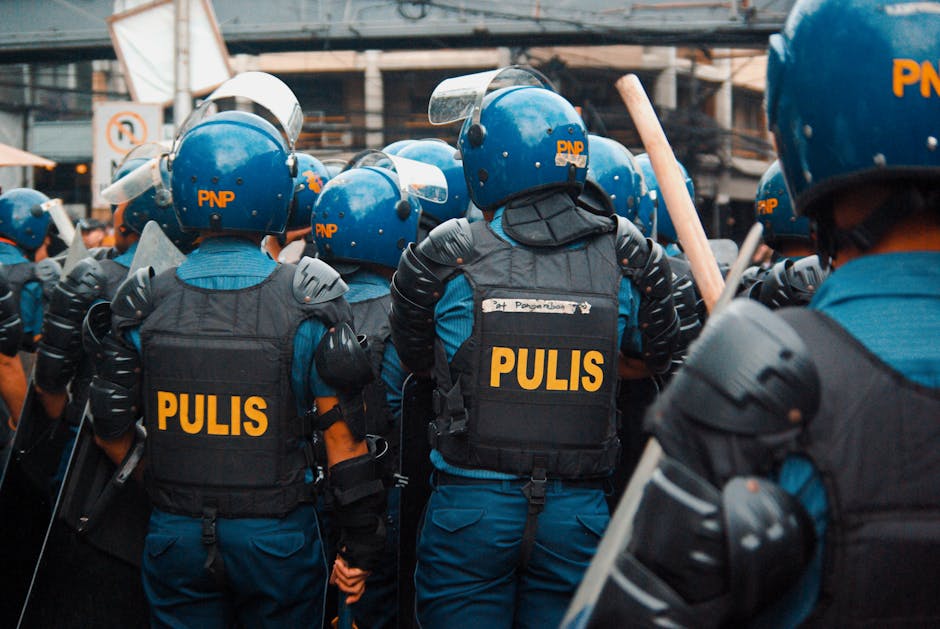
- London witnessed a massive police presence with 4,000 officers to maintain order during opposing rallies.
- Tens of thousands of protesters gathered for two major rallies, highlighting deepening societal fractures in London.
- Police successfully prevented violent confrontations by meticulously planning routes and deploying a robust force.
- The dual marches underscored concerns over immigration, free speech, and foreign policy in one of Europe’s most diverse capitals.
- The Metropolitan Police deployed one of its largest peacetime operations to ensure public safety and order.
London faced a day of heightened tension as tens of thousands of demonstrators converged for two major, opposing rallies—one in support of far-right activist Tommy Robinson and the other advocating for Palestinian rights. Despite the polarized nature of the gatherings, a robust police presence of 4,000 officers and meticulously planned routes prevented violent confrontations, though the atmosphere remained charged throughout the day. The dual marches underscored deepening societal fractures over immigration, free speech, and foreign policy, with authorities walking a fine line between protecting the right to protest and maintaining public order in one of Europe’s most diverse capitals.
Scale and Security of the Demonstrations

Official estimates indicate that over 30,000 people participated in the pro-Palestinian march, which began at Hyde Park and proceeded toward the US Embassy in Nine Elms, demanding an end to the war in Gaza and criticizing Western support for Israel. Simultaneously, approximately 25,000 supporters of Tommy Robinson—real name Stephen Yaxley-Lennon—gathered near Marble Arch, rallying under slogans defending free speech and opposing what they describe as systemic Islamization. Metropolitan Police deployed one of its largest peacetime operations, with officers forming human barriers and using sealed-off zones to ensure the two groups remained miles apart. Helicopter surveillance and real-time intelligence coordination were employed, modeled on tactics used during previous high-risk events such as G20 summits. According to BBC News, the force spent weeks liaising with community leaders and protest organizers to minimize escalation risks.
Key Actors and Their Mobilization Strategies

Tommy Robinson, a controversial figure with a long history of far-right activism and criminal convictions, did not attend the rally but has used social media platforms to galvanize his base, framing his legal troubles as persecution for speaking out on immigration and radicalization. His supporters, many affiliated with anti-Islam and nationalist groups such as Britain First and Patriotic Alternative, organized through encrypted messaging apps and crowdfunding platforms to finance travel and logistics. On the opposing side, the Palestine Solidarity Campaign (PSC), a longstanding advocacy group, coordinated the pro-Palestinian march in alliance with trade unions, student organizations, and faith-based coalitions. High-profile figures including MP Bell Ribeiro-Addy and activist Linda Sarsour voiced support online, amplifying turnout. Both movements leveraged real-time digital mobilization, reflecting a broader trend in which grassroots political energy is channeled through decentralized, tech-savvy networks rather than traditional party structures.
Trade-offs Between Free Speech and Public Order

The dual rallies highlighted the UK’s ongoing struggle to balance civil liberties with national security. While both events were legally permitted under the right to peaceful assembly, critics argue that allowing Robinson’s supporters to gather legitimizes extremist ideologies. Conversely, restricting such protests could set a precedent for state suppression of dissent. The Metropolitan Police emphasized a neutral stance, stating their duty was to facilitate lawful protest while preventing violence. However, community leaders expressed concern over the psychological impact of normalizing far-right narratives in public spaces. Meanwhile, pro-Palestinian activists noted that similar levels of security are rarely deployed for their events unless linked to counterterrorism assessments, suggesting unequal treatment. The financial cost of the operation—estimated at over £5 million—also sparked debate about resource allocation amid ongoing police funding shortfalls and rising violent crime rates.
Why This Moment Triggered Mass Mobilization

The timing of the marches reflects a confluence of global and domestic pressures. Robinson’s recent legal appeals and media appearances have reignited his public profile, particularly among online communities disillusioned with mainstream politics. At the same time, the ongoing war in Gaza, now entering its eighth month, has fueled sustained international protest, with the UK seeing some of the largest demonstrations in Europe. The scheduling of both rallies on the same weekend was not coincidental; organizers on both sides recognized the symbolic power of visibility amid a saturated news cycle. Furthermore, rising living costs and political instability under the current government have created fertile ground for populist agitation, with each movement capitalizing on broader anxieties about identity, sovereignty, and justice.
Where We Go From Here
In the coming months, three scenarios could unfold. First, authorities may face increasing pressure to impose stricter conditions on demonstrations deemed high-risk, potentially leading to legal challenges over freedom of expression. Second, the success of decentralized mobilization could inspire more frequent, overlapping rallies in major cities, testing police capacity and urban infrastructure. Third, community-led dialogue initiatives—such as interfaith coalitions or cross-civic forums—may gain traction as cities seek long-term strategies to address polarization. How London manages these competing forces will serve as a bellwether for other multicultural democracies grappling with similar tensions.
Bottom line — The peaceful outcome of London’s rival marches was a triumph of planning and restraint, but the underlying societal divisions they revealed will require more than policing to resolve.
Source: Euronews