- England’s batting lineup crumbled under New Zealand’s precise bowling attack.
- Rain halted play at Headingley, freezing the final ODI in a state of suspense.
- England needed 291 for a series-equaling victory, but faltered in their chase.
- New Zealand’s balanced top-order performance led by Devon Conway’s 83 was a key factor.
- Rain has influenced the outcome of 17% of completed ODI matches in England over the past decade.
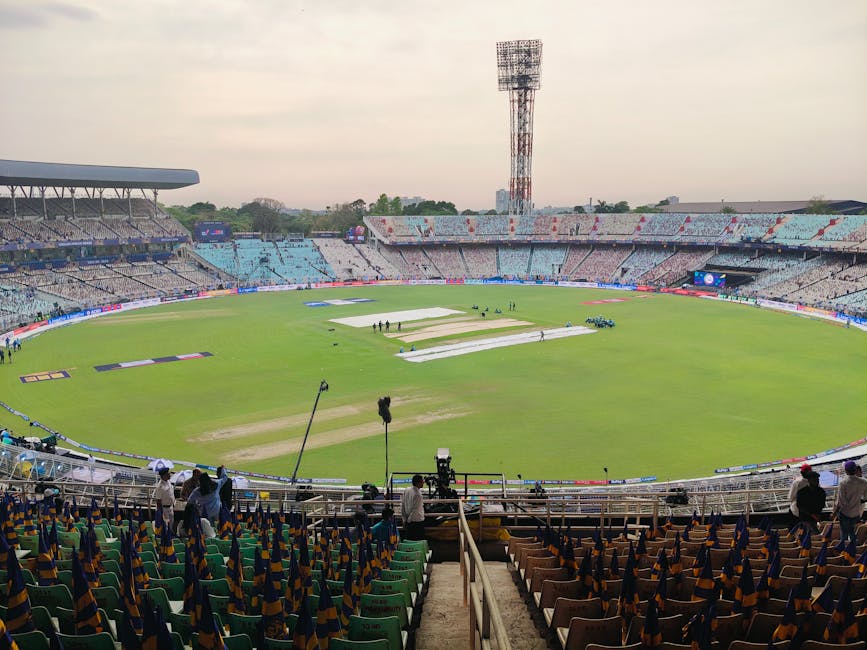
With just 77 runs on the board and three key wickets lost, England’s batting lineup crumbled under New Zealand’s precise bowling attack before the clouds opened and rain halted play at Headingley—an abrupt pause that froze the final ODI in a state of suspense. The visitors, having posted 290 for 8 in their 50 overs, had already applied pressure through a balanced top-order performance, led by Devon Conway’s 83 and a late surge from Daryl Mitchell. England’s chase, needing 291 for a series-equaling victory, began with promise but quickly faltered, leaving fans and players alike staring at an uncertain conclusion shaped as much by meteorology as by match dynamics. In the past decade, rain has influenced the outcome of 17% of completed ODI matches in England, per Reuters analysis, and today’s interruption risks another result defined by the skies rather than the scoreboard.
Series Stakes and Weather Wildcard

The three-match ODI series stood locked at 1-1, amplifying the importance of this final encounter as both teams prepare for the upcoming World Cup cycle. For England, still adjusting to life post-Joe Root’s ODI retirement and under the leadership of Jos Buttler, a win would have signaled continuity and depth in their rebuilding phase. New Zealand, meanwhile, sought to assert their consistency in overseas conditions, aiming to build momentum after a tight Test series defeat. But beyond tactics and player form, the British summer once again inserted itself into the narrative. Persistent showers delayed the start by 45 minutes, reducing the match to a full 50 overs per side, and now threaten to truncate or even abandon the contest entirely. The Duckworth-Lewis-Stern method looms as a potential decider—an unsatisfying arbiter in a format that thrives on full performances.
Breakdown of the Batting Collapse

England’s innings began with Dawid Malan and Phil Salt attempting to steady the ship, but the latter’s aggressive 22 off 18 balls ended when he top-edged a Matt Henry bouncer to deep square leg. Malan, looking composed on 34, was dismissed shortly after through a sharp caught-and-bowled by Lockie Ferguson, who extracted extra bounce with a fuller delivery. Captain Jos Buttler, under pressure to deliver with the bat, fell for just 12, chopping on to his stumps off a Trent Boult inswinger that nipped back off the seam—a dismissal reminiscent of his struggles earlier in the summer. At 77-3, with Jonny Bairstow and Sam Curran at the crease, England still harbored hopes of a recovery, but the rain arrived before the partnership could consolidate, freezing the scorecard and the tension in equal measure.
Analysis: New Zealand’s Tactical Discipline

New Zealand’s bowling strategy reflected a deep understanding of English conditions and England’s structural vulnerabilities. Rather than relying on pace or swing alone, the Kiwi attack used a mix of cross-seam deliveries, cutters, and controlled aggression to disrupt timing. Matt Henry, in particular, operated with nagging accuracy, while Mitchell Santner’s left-arm spin was held back for the middle overs, preserving his economy for crucial phases. Conway’s earlier half-century wasn’t just a statistical contribution but a tactical one—he anchored the innings after early wickets, allowing Mitchell and Glenn Phillips to accelerate in the final 15 overs. Their 78-run partnership off 69 balls shifted the momentum, demonstrating the value of adaptability in modern ODI cricket. England’s bowlers, by contrast, lacked a similar spark, with Jofra Archer’s return to the side yielding 1-61 without the cutting edge seen in his peak performances.
Implications for Both Teams’ World Cup Outlook

The interrupted match carries deeper implications than just the series result. For England, another failed chase—especially one halted by weather—raises questions about their ability to handle pressure in high-stakes, variable conditions. Their middle-order fragility, exposed again in this game, remains a concern as the 2027 ODI World Cup cycle begins. New Zealand, on the other hand, can take confidence from their balanced performance, proving they can post competitive totals and dismantle strong lineups abroad. However, an inconclusive result denies them the psychological edge of a series win, and with a packed international calendar ahead, momentum matters. The interruption also highlights the ongoing challenge of scheduling in northern summers, where weather disruptions disproportionately affect bilateral series compared to franchise leagues played in controlled environments.
Expert Perspectives
“England are still searching for a formula post-Root,” said former England all-rounder Ebony Rainford-Brent on BBC Sport, noting the lack of a clear succession plan in the middle order. “They need someone who can absorb pressure and rebuild, not just accelerate.” In contrast, ex-New Zealand captain Daniel Vettori praised the visitors’ “clinical patience,” adding, “They didn’t chase wickets recklessly. They let the conditions work for them—a hallmark of mature cricket.” These contrasting views underscore the strategic divide: England’s aggressive ethos clashing with New Zealand’s methodical pragmatism.
With the rain expected to persist into the evening, a resumption appears unlikely, potentially leading to a no-result and a shared series. Cricket authorities may revisit scheduling norms, considering day-night games with covered pitches or later summer slots. But for now, fans are left with a frozen frame: 77-3, clouds overhead, and a game suspended not by defeat, but by the uncontrollable forces of nature.
Source: Sky Sports