- The Nintendo 64’s use of additive blending allowed for complex 3D graphics despite hardware limitations.
- Additive blending enabled effects like glowing textures, transparent explosions, and ambient lighting in early 3D games.
- The N64’s Reality Coprocessor efficiently layered translucent textures through software ingenuity.
- The Nintendo 64’s 3D rendering capabilities surpassed competitors like the Sony PlayStation in 1996.
- Additive blending provided a unique approach to visual realism in console gaming before modern GPUs.
In an era when 3D graphics were in their infancy, the Nintendo 64 achieved visual complexity that far exceeded its hardware specifications, largely through the clever use of additive blending. This rendering technique—where pixel colors are summed rather than overwritten—enabled glowing effects, transparent explosions, and ambient lighting long before modern GPUs made such effects routine. Games like Super Mario 64 and The Legend of Zelda: Ocarina of Time used additive blending to simulate fire, magic, and light sources in ways that immersed players in rich, dynamic worlds. Despite a limited color depth and modest fill rate, the N64’s Reality Coprocessor (RCP) was programmed to layer translucent textures efficiently, demonstrating that software ingenuity could overcome hardware constraints in early 3D gaming.
The Rise of 3D Rendering in Console Gaming

When the Nintendo 64 launched in 1996, it entered a market transitioning from 2D sprites to true 3D environments. Competitors like the Sony PlayStation used polygon-based rendering with texture mapping, but struggled with aliasing and limited transparency effects. The N64, equipped with a 64-bit processor and a custom graphics architecture co-developed with Silicon Graphics, introduced a unique approach to visual realism through its Reality Display Processor. Unlike standard alpha blending, which could produce incorrect results when layering multiple transparencies, additive blending allowed developers to accumulate brightness values—ideal for light sources and glowing effects. This technique became essential in creating the illusion of depth and atmosphere, particularly in games that relied on exploration and environmental storytelling.
Technical Implementation in the Reality Coprocessor
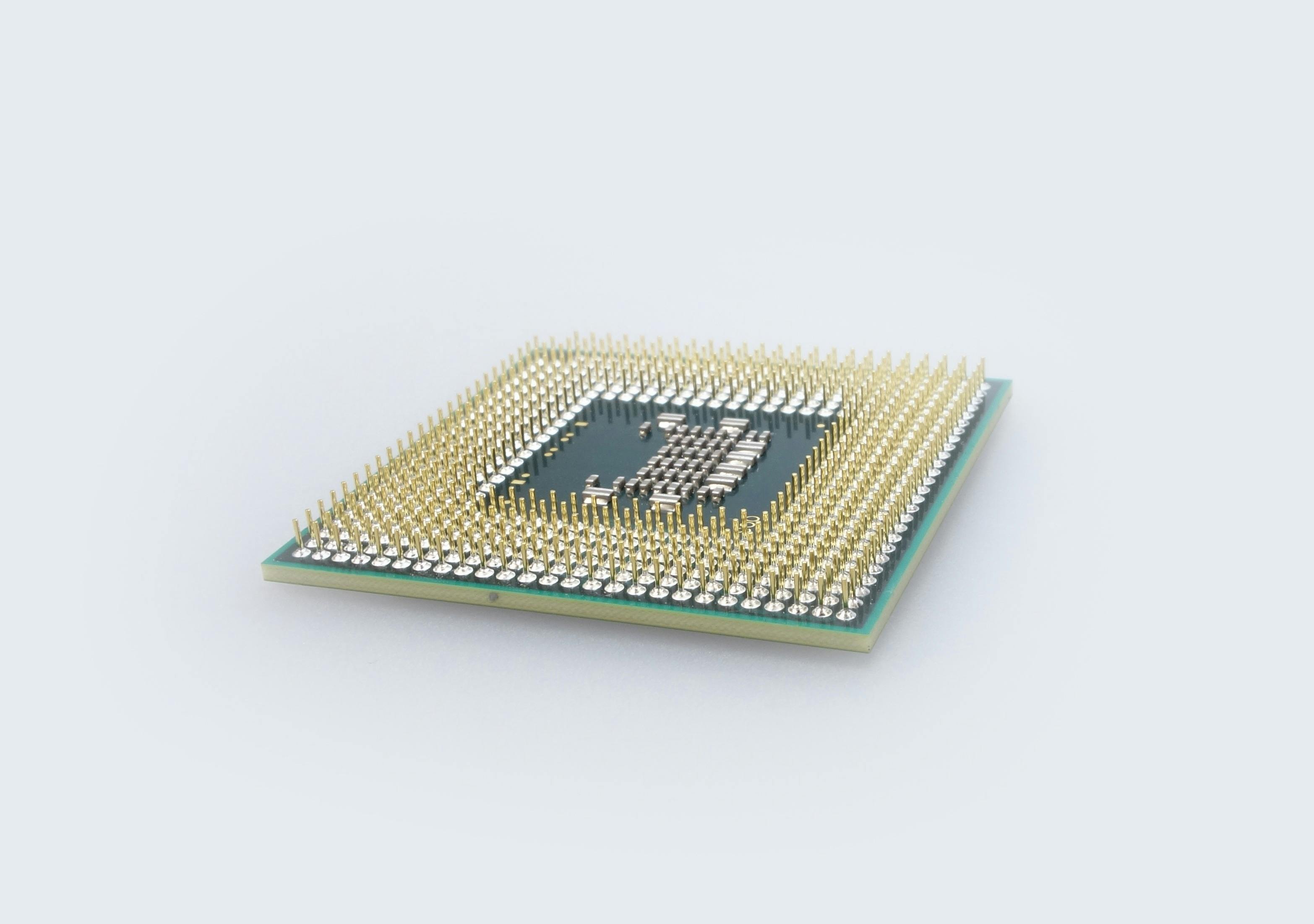
The Nintendo 64’s graphics pipeline was built around the Reality Coprocessor, which handled both geometry transformation and rasterization. Additive blending was implemented at the microcode level, allowing game developers to directly control how fragments were combined in the frame buffer. By setting the blend mode to GL_ONE/GL_ONE (in OpenGL terms), each new pixel’s RGB values were added to the existing buffer without modulation, preserving luminance. This was particularly effective for rendering particle systems—such as the sparkles in Super Mario 64’s Wing Cap or the magical glow of Zelda’s Light Arrows. Due to the absence of a z-buffer in early N64 titles, careful draw-order management was required, but additive blending minimized visual artifacts by ensuring overlapping effects brightened rather than obscured.
Developer Innovation and Game-Specific Applications

First-party studios like Nintendo EAD leveraged additive blending to push the console’s visual boundaries. In Super Mario 64, additive blending created the illusion of motion and energy, such as the shimmering trail behind flying Mario or the pulsating glow of invisible blocks. The Legend of Zelda: Ocarina of Time used the technique for spell effects, lens flares, and dungeon ambiance, enhancing immersion without taxing the CPU. Even third-party titles like Tony Hawk’s Pro Skater used additive blending for sun glare and speed lines. These effects were not merely cosmetic—they communicated gameplay information, such as highlighting interactive objects or signaling danger. The technique’s efficiency allowed it to run smoothly at 30 frames per second, a significant achievement for real-time 3D rendering in the mid-1990s.
Limitations and Trade-offs in Practice

Despite its advantages, additive blending on the N64 had notable limitations. Because it increased pixel brightness cumulatively, overuse could lead to blown-out, oversaturated visuals—especially on CRT televisions common at the time. Developers had to carefully balance the number of overlapping layers to avoid visual noise. Additionally, the lack of full scene anti-aliasing and reliance on 320×240 resolution meant that blended edges often appeared jagged. Memory bandwidth constraints also limited the number of simultaneous effects, requiring precise resource management. These trade-offs underscored the importance of disciplined engine design; while additive blending enhanced realism, it could not compensate for the console’s limited texture cache and absence of deferred rendering techniques available in later systems.
Expert Perspectives
Graphics engineers who worked on N64 titles have noted that additive blending was both a necessity and a creative enabler. According to Chris Hecker, a veteran game developer and graphics programmer, “The N64 didn’t have the raw power of later consoles, but its programmable microcode gave developers fine-grained control over effects like blending.” Conversely, some critics argue that the overuse of glow effects led to a “visual fatigue” in certain games, where important details were lost in the luminance. Still, academic analyses, such as those published in IEEE Transactions on Visualization and Computer Graphics, recognize the N64’s blending techniques as foundational to real-time rendering education.
Today, additive blending remains a core technique in modern game engines, though implemented with greater precision using shaders and high-dynamic-range rendering. The N64’s legacy lies in demonstrating how constrained systems could achieve expressive visuals through algorithmic insight rather than brute-force computation. As emulation and hardware preservation efforts continue, researchers and developers look to the N64’s rendering pipeline as a case study in optimization under pressure. The question now is how these early innovations inform the design of lightweight graphics systems for emerging platforms like AR glasses and mobile VR, where efficiency remains paramount.
Source: Phoboslab