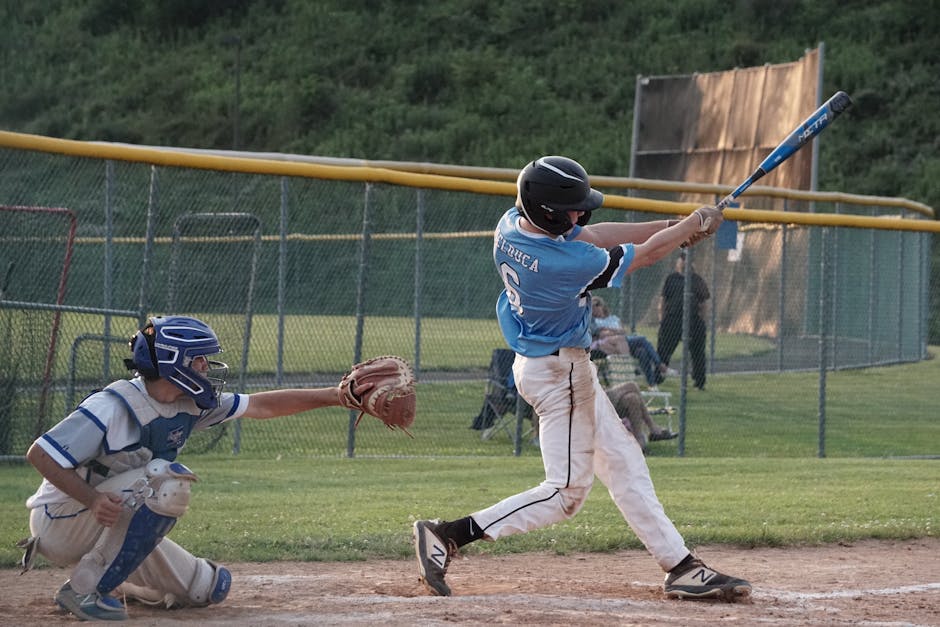
- Jung Hoo Lee hit an inside-the-park home run in the 9th inning, tying the game and sending it to extra innings.
- This was the first inside-the-park home run for the Giants since Andres Torres in 2011, and only the 9th in MLB since 2020.
- Lee’s home run came in the bottom of the 9th with two outs, giving the Giants new life in the game.
- The play showcased Lee’s unexpected speed, going 14.8 seconds around the bases.
- The inside-the-park home run was a symbol of resilience for the Giants, who entered the game struggling with a 24-28 record.
In the bottom of the ninth inning at Oracle Park, with two outs and the San Francisco Giants trailing by one, Jung Hoo Lee launched a deep fly ball to right-center that ricocheted off the padding above the wall and caromed wildly toward the gap. As Los Angeles Dodgers center fielder James Outman hesitated, Lee—known more for his plate discipline than raw speed—never stopped running, circling the bases in 14.8 seconds to tie the game with one of baseball’s most elusive plays: an inside-the-park home run. The last Giants player to accomplish the feat in a regular-season game was Andres Torres in 2011, and only nine such home runs have been recorded across MLB since 2020, according to Baseball-Reference. The crowd erupted in disbelief, transforming a potential loss into a dramatic extra-innings showdown.
A Moment of Brilliance in a Stalled Season

The Giants entered the matchup with a middling 24-28 record, languishing in the lower half of the National League West, while the Dodgers—despite injuries to key players like Mookie Betts and Clayton Kershaw—maintained their divisional dominance. In this context, Lee’s home run transcended mere spectacle; it became a symbol of resilience for a franchise searching for identity. Acquired from the KBO League in 2023 for $11.3 million, Lee was expected to bring elite contact skills and on-base consistency, not highlight-reel speed. Yet, his hustle and instincts shone through at the game’s most critical juncture, underscoring how even the most statistically driven era of baseball still leaves room for the unpredictable. As analytics increasingly shape defensive alignments and pitch selection, moments like Lee’s dash around the diamond remind fans why baseball remains a game of inches—and split-second decisions.
The Play That Defied the Odds

With reliever Ben Casparius on the mound for Los Angeles, Lee stepped in as the potential tying run. On a 2-2 count, he drove a 94-mph sinker to the deepest part of Oracle Park—just beyond the reach of Outman, who crashed into the wall attempting the catch. The ball skipped past him and rolled toward the 408-foot marker in right-center. Outman retrieved it quickly but fired inaccurately to second base, where shortstop Miguel Rojas was covering in a prevent-the-extra-base-hit alignment. By then, Lee was already rounding third, his head down and arms pumping. Third base coach Omar Vizquel, a defensive maestro in his playing days, waved him home without hesitation. The throw from Rojas arrived late, and Lee slid in just under the tag, sparking a bench-clearing celebration. The Giants would go on to win the game in the 10th inning on a walk-off single by Jorge Soler, but it was Lee’s run that shifted momentum irreversibly.
Why Inside-the-Park Home Runs Are Vanishing

Inside-the-park home runs have become baseball’s endangered species. In 2023, MLB saw only six such plays across 2,430 regular-season games—a frequency not seen since the dead-ball era. The decline is rooted in multiple factors: faster outfielders, improved stadiums with consistent wall padding, and the rise of the shift, which positions defenders to cut off extra-base hits. Moreover, modern players prioritize power over speed, with home runs over the fence now averaging more than 3,000 per season. Lee’s feat was especially improbable given his lack of stolen bases—just four in 450 plate appearances entering the game. However, his 27.8 ft/sec sprint speed, per Statcast, places him in the 77th percentile, proving that elite acceleration can still disrupt even the best defenses. As The New York Times noted in a 2023 feature, “The inside-the-park homer is no longer a product of pure speed but of chaos, error, and nerve.”
Impact on the Giants’ Season and Korean Baseball

For the Giants, Lee’s heroics offered more than a single win—it injected credibility into a rebuilding effort that has struggled to resonate with fans. Oracle Park, once a fortress during the Bonds and Posey eras, has seen attendance dip to 21st in MLB. A player like Lee, who draws attention from Korea’s media and fanbase, could help broaden the team’s global footprint. In South Korea, where Lee was a three-time KBO batting champion with the Kiwoom Heroes, the play was broadcast live during morning hours, with Korean sports networks like SPOTV replaying the run in endless loops. His success also strengthens the case for more KBO stars to transition to MLB, challenging the long-held skepticism about the league’s competitive level. For Lee personally, the moment may define his early MLB tenure—not for a towering blast, but for a heads-down sprint born of instinct and urgency.
Expert Perspectives
“Most inside-the-park homers today come from miscommunication or poor angles,” said former MLB outfielder and ESPN analyst Doug Glanville. “But Lee read it perfectly, never slowed, and took advantage of a slight lapse.” Conversely, Dodgers manager Dave Roberts called it “a perfect storm of positioning and bounce,” defending his outfielders while acknowledging the rarity of the play. Baseball historian John Thorn added, “In an age of optimization, this was pure, unscripted drama—the kind that keeps fans coming back.”
As the Giants look ahead, the question remains whether Lee can sustain his on-base prowess while adding unexpected dimensions to his game. With the trade deadline approaching, his performance could influence front-office decisions. More broadly, will this moment inspire teams to value speed and baserunning IQ in an era dominated by launch angles and exit velocities? One thing is certain: in a sport increasingly defined by predictability, Jung Hoo Lee reminded everyone that magic still lives on the warning track.
Source: Reddit