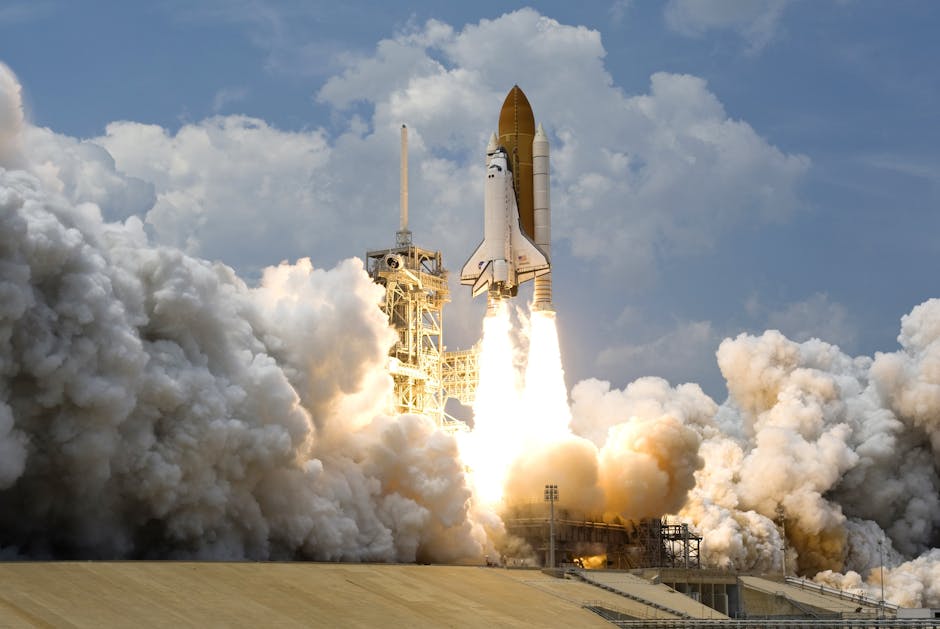
- Jeremy Hansen will be the first non-American astronaut to journey around the Moon on NASA’s Artemis II mission.
- The mission marks the first crewed lunar flyby since Apollo 17 and will test critical systems needed for future lunar landings.
- Hansen’s presence symbolizes a shift in space exploration from a U.S.-Soviet race to a global endeavor.
- The Artemis II mission is a crucial step towards establishing a sustainable human presence on the Moon by the late 2020s.
- Hansen’s journey could inspire a new generation of scientists and explorers from around the world to pursue careers in space exploration.
In 1972, the last human to walk on the Moon, Gene Cernan, left behind footprints and a promise: that we would return. Fifty-two years later, that promise inches closer to fulfillment—this time with an international footprint. Jeremy Hansen, a Royal Canadian Air Force pilot turned astronaut, is poised to become the first non-American to leave Earth’s orbit and journey around the Moon aboard NASA’s Artemis II mission. Scheduled for a 10-day flight in late 2025, this mission marks the first crewed lunar flyby since Apollo 17. Unlike the Apollo astronauts, Hansen won’t land; instead, he and his crewmates will test critical systems needed for future lunar landings. Yet his presence symbolizes a profound shift: space exploration is no longer a U.S.-Soviet race, but a global endeavor. His journey could inspire a generation across continents to look skyward with renewed wonder and scientific ambition.
The Long Road to Lunar Orbit

Humanity’s return to deep space has been decades in the making. After the Apollo program ended, NASA shifted focus to low-Earth orbit with the Space Shuttle and International Space Station (ISS), while lunar ambitions languished. But with growing geopolitical competition and technological advances, the Moon has re-emerged as a strategic frontier. Artemis II is the cornerstone of NASA’s plan to establish a sustainable human presence on the Moon by the late 2020s. Jeremy Hansen’s inclusion is more than symbolic—it reflects a deepening partnership between NASA and the Canadian Space Agency (CSA), which contributed the Canadarm3 robotic system for the planned Lunar Gateway station. As climate change, resource scarcity, and technological innovation converge on Earth, space exploration offers both scientific discovery and a unifying vision. Hansen’s mission arrives at a moment when global cooperation in science is more vital than ever.
Meet the Crew of Artemis II

Artemis II will carry four astronauts: NASA’s Reid Wiseman, Victor Glover, and Christina Koch, alongside CSA’s Jeremy Hansen. Wiseman serves as mission commander, Glover as pilot—the first Black astronaut on a lunar mission—and Koch as mission specialist, who previously set a record for longest single spaceflight by a woman. Hansen, selected as a mission specialist, brings expertise in robotics, aviation, and space systems integration. Selected by the CSA in 2009, he has trained extensively in emergency procedures, life support systems, and deep-space navigation. The crew has spent years undergoing simulations, survival training, and joint exercises with NASA and international partners. Their 10-day journey will follow a free-return trajectory around the far side of the Moon, reaching a distance of about 4,500 kilometers beyond the lunar surface—the farthest humans have ever traveled from Earth. No docking or landing is planned, but every system will be stress-tested for Artemis III, which aims to land astronauts near the Moon’s south pole.
Why This Mission Changes the Game

Artemis II is not just a technical rehearsal—it’s a psychological and diplomatic milestone. For the first time, a non-American will travel to deep space, signaling that lunar exploration is now a multinational enterprise. Canada’s involvement dates back to the Space Shuttle era with the Canadarm, a robotic arm critical to ISS construction. The upcoming Canadarm3, set to operate on the Lunar Gateway, will be autonomous and AI-assisted, capable of maintaining the station without human intervention. Hansen’s role underscores Canada’s strategic investment in space robotics and science. From a scientific perspective, the mission will collect data on radiation exposure, spacecraft performance, and human physiology in deep space—critical for future Mars missions. According to NASA, astronauts on Artemis II will face radiation levels 200 times higher than on Earth’s surface, raising concerns about long-term health. Data from this flight will inform protective measures for future explorers.
Global Impacts of a Lunar Flyby

The success of Artemis II will reverberate far beyond the spacecraft. For Canada, it affirms the nation’s role as a high-tech space contributor despite its modest budget. Schools across the country are integrating Hansen’s journey into STEM curricula, hoping to spark interest in science and engineering. Indigenous communities, historically excluded from mainstream space narratives, are engaging with the mission through culturally relevant outreach programs led by the CSA. Internationally, the mission strengthens the Artemis Accords—a U.S.-led framework for peaceful space exploration signed by over 30 nations. However, geopolitical tensions persist: China and Russia are developing their own lunar base, the International Lunar Research Station, outside the Accords. Hansen’s mission thus unfolds against a backdrop of collaboration and competition, where space is both a unifier and a new arena for influence.
Expert Perspectives
“Jeremy Hansen’s inclusion is a testament to the power of international partnerships,” says Dr. Sara Seager, planetary scientist at MIT, in an interview with Nature. “It shows that space isn’t just about flags and footprints, but shared human progress.” Conversely, some experts caution against over-optimism. Dr. Laura Grego of the Union of Concerned Scientists notes that while Artemis II is a milestone, “true sustainability requires consistent funding and political will, both of which remain fragile.” Public engagement, she adds, must be balanced with transparency about risks, from radiation to mission costs exceeding $93 billion through 2025.
Looking ahead, the Artemis II crew will not only pave the way for lunar landings but also test communication systems for Mars missions. One open question remains: who will walk on the Moon next—and what rules will govern extraterrestrial activity? With private companies like SpaceX involved and nations racing to exploit lunar resources, the legal and ethical framework is still evolving. Hansen has said his ultimate hope is that the mission reminds humanity of its fragility and unity. As he stated in a recent briefing: “When you look back at Earth from that distance, borders disappear. What you see is one shared home.”
Source: BBC