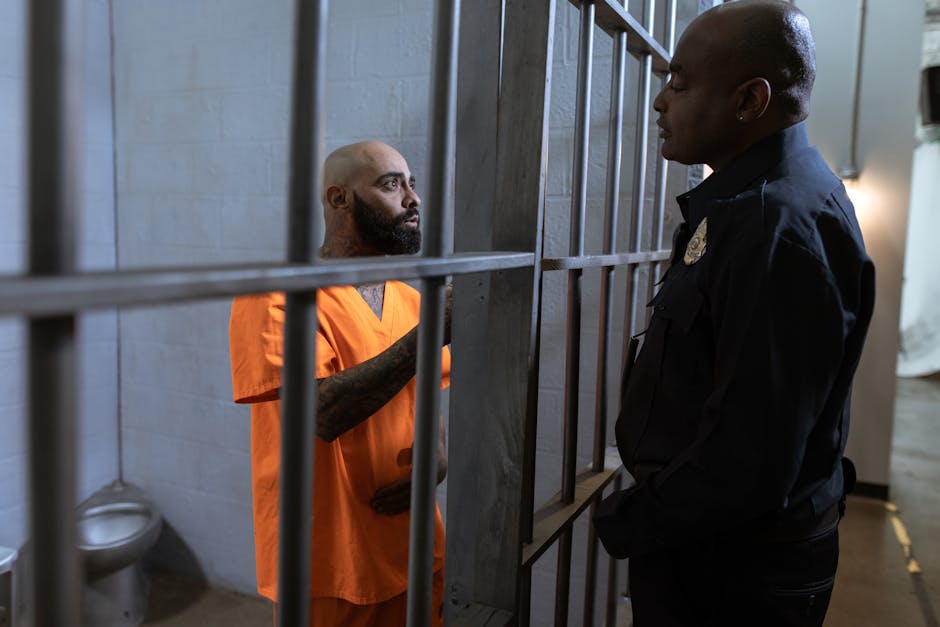
- Jimmy Lai, a Hong Kong media magnate and pro-democracy activist, is serving a 20-year sentence in China.
- Lai’s imprisonment is tied to Beijing’s assertion of control over Hong Kong under the national security law.
- U.S.-China relations are strained, limiting diplomatic efforts to secure Lai’s release.
- Lai’s case has become a global symbol of the erosion of civil liberties in Hong Kong.
- Freeing Lai raises urgent questions about the limits of international pressure on human rights advocacy.
Can Jimmy Lai, the Hong Kong media magnate and pro-democracy activist serving a 20-year prison sentence in China, ever be freed? The question has gained renewed attention after former U.S. President Donald Trump publicly acknowledged the difficulty of securing his release, calling it \”tough.\” Lai, the founder of the now-shuttered Apple Daily newspaper, was convicted under China’s sweeping national security law, which Beijing imposed on Hong Kong in 2020. His case has become a global symbol of the erosion of civil liberties in the semi-autonomous region and a flashpoint in U.S.-China relations. With diplomatic channels strained and Beijing showing no sign of leniency, the prospect of Lai’s release raises urgent questions about the limits of international pressure and the future of human rights advocacy in an era of geopolitical rivalry.
\n\n
Why Is Freeing Jimmy Lai So Difficult?

\n
The challenge in freeing Jimmy Lai stems from the highly sensitive political nature of his case and the broader context of U.S.-China relations. Lai was arrested in 2020 and later sentenced to 20 years in prison for charges including fraud and collusion with foreign forces—allegations widely viewed by human rights groups as politically motivated. The national security law, under which he was prosecuted, has been used to silence dissent in Hong Kong, effectively dismantling its once-thriving free press. Because Lai’s imprisonment is tied to Beijing’s assertion of control over Hong Kong, any attempt to secure his release is seen as a direct challenge to China’s sovereignty. As Donald Trump noted in a recent interview, \”it’s tough\” to negotiate such cases, especially without leverage. Unlike prisoner swaps involving espionage or dual nationals, Lai is a Hong Kong citizen, and China insists his case is an internal matter, limiting the diplomatic tools available to foreign governments.
\n\n
What Evidence Supports International Concern Over Lai’s Case?

\n
Multiple human rights organizations and foreign governments have condemned Lai’s imprisonment as a violation of fundamental freedoms. Human Rights Watch described his sentencing as a \”blow to press freedom\” and a sign of Hong Kong’s transformation into a surveillance state. The U.S. State Department, the European Union, and the United Nations have all issued statements calling for his release, citing the arbitrary nature of his detention. Legal experts point out that the national security law lacks transparency and due process, with trials often held behind closed doors. Furthermore, Lai’s health has reportedly deteriorated in custody, raising alarms about his treatment. In 2023, the U.S. Congress passed a resolution urging China to free Lai and other political prisoners, underscoring bipartisan concern. Despite these efforts, Beijing has dismissed foreign criticism as interference, reinforcing the perception that Lai’s fate is sealed unless geopolitical dynamics shift dramatically.
\n\n
Are There Alternative Views on Lai’s Prosecution?

\n
While much of the international community views Jimmy Lai as a political prisoner, Chinese state media and officials maintain that he was fairly prosecuted under the law. According to Reuters, Chinese authorities argue that Lai’s actions—such as advocating for sanctions against China and meeting with foreign politicians—constitute collusion with external forces, a crime under the national security law. From Beijing’s perspective, the law was necessary to restore order after the 2019 pro-democracy protests and prevent foreign interference. Some legal scholars in China assert that the judiciary in Hong Kong remains independent, though critics counter that the national security law overrides local autonomy by allowing Beijing to intervene in sensitive cases. Additionally, a small number of analysts suggest that diplomatic overreach by Western nations may have hardened China’s stance, making prisoner releases less likely as a matter of principle. This view implies that high-profile appeals, while morally justified, may inadvertently worsen outcomes for detainees.
\n\n
What Are the Real-World Implications of Lai’s Imprisonment?

\n
Jimmy Lai’s 20-year sentence sends a chilling message to journalists, activists, and opposition figures across Hong Kong and beyond. Since the implementation of the national security law, over 200 people have been arrested, and major pro-democracy organizations have disbanded. Independent media outlets like Apple Daily and Stand News have been shut down, marking a stark reversal from Hong Kong’s historical role as a hub of free expression in China. The case has also affected foreign businesses and diplomatic missions, many of which now operate under heightened scrutiny. In the U.S., Lai’s imprisonment has fueled bipartisan support for tougher China policies, including sanctions on Chinese officials and expanded asylum pathways for Hong Kong residents. Meanwhile, younger activists in exile continue to advocate for Lai’s release, though their influence within Hong Kong has diminished. The long-term impact may be a further bifurcation between China’s controlled information environment and the global discourse on human rights.
\n\n
What This Means For You
\n
Jimmy Lai’s case is not just a legal or diplomatic issue—it reflects broader trends in how authoritarian governments respond to dissent and how democracies choose to respond. For global citizens, it underscores the fragility of press freedom and the importance of defending institutional checks on power. While individual actions may seem small, public pressure, legislative measures, and sustained media attention can keep such cases visible on the international stage. The outcome of Lai’s imprisonment may influence how future human rights crises are addressed, particularly in regions where geopolitical interests complicate moral advocacy.
\n\n
As diplomatic efforts stall and Jimmy Lai remains behind bars, a critical question lingers: In an era of deepening great-power competition, can human rights advocacy succeed without escalating conflict? And if traditional diplomacy fails, what alternative pathways exist to secure justice for political prisoners like Lai? The answer may reshape the future of global human rights engagement.
Source: News