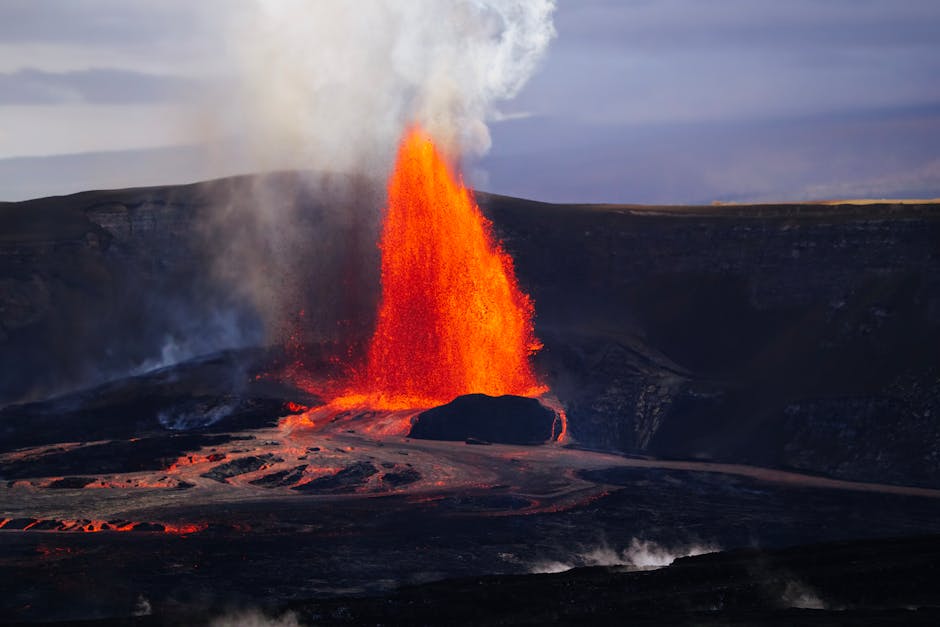
- A recent study discovered the first known alpine fire in Central Africa’s high-elevation zones in over 12,000 years, challenging assumptions about ecosystem stability.
- The fire’s unprecedented elevation and timing raise concerns about the impact of climate change, land use, and ecological tipping points.
- The Central African mountain ecosystem, previously considered too moist for fire, has experienced a sudden combustion event.
- Scientists analyzed sediment cores from high-altitude bogs to uncover layers of charcoal pointing to a fire event in the early 2000s.
- This historic fire event has significant implications for understanding the dynamics of Afromontane environments and their vulnerability to human activities.
What happens when fire reaches mountain ecosystems that haven’t seen flames in over 12,000 years? In the high-elevation zones of the Central African mountains, this question is no longer hypothetical. A recent study published in Nature documents the first known alpine fire in this region in more than a dozen millennia—a startling event that challenges long-held assumptions about the stability of Afromontane environments. Scientists analyzing sediment cores from high-altitude bogs have uncovered layers of charcoal that point to a fire event in the early 21st century, unprecedented in both location and implication. Given that these ecosystems evolved in near-total absence of fire, the arrival of combustion at such elevations raises urgent questions about the combined pressures of climate change, land use, and ecological tipping points.
What Made This Fire Historically Unique?

This fire is unique not because of its size or intensity, but because of its elevation and timing. For the first time in 12,000 years, fire has breached the alpine zone of the Central African mountains—a region previously considered too moist and climatically stable to support combustion. The study, based on paleoecological data from peat bogs above 3,000 meters, found a distinct charcoal layer dating to the early 2000s, absent in all prior sediment strata spanning the Holocene. Unlike lower-elevation fires, which have occurred intermittently and often correlate with human activity, this high-altitude burn marks a radical departure from natural fire regimes. Researchers attribute the shift to a confluence of warming temperatures, prolonged dry spells, and possibly increased human ignitions at expanding land-use margins. The alpine ecosystem, composed of ancient Afroalpine flora like giant lobelias and heathers, has no evolutionary adaptation to fire, making recovery uncertain and ecological transformation likely.
What Evidence Supports This Unprecedented Fire Event?

The primary evidence comes from sediment cores extracted from high-elevation wetlands in the Rwenzori and Virunga mountain ranges. These cores provide a continuous record of environmental change, with layers accumulating over thousands of years. Within the topmost layer—corresponding to the early 21st century—scientists identified a sharp spike in microscopic charcoal particles, indicative of local burning. Radiocarbon dating confirmed the absence of similar signals in the preceding 12,000 years, despite detailed analysis. Supporting data from satellite imagery and climate models show a 1.8°C increase in regional temperatures since 1950 and a 22% reduction in dry-season humidity over the past three decades. As noted by lead researcher Dr. Elena Mwamba, “The combination of warmer air, lower moisture, and more frequent lightning strikes creates conditions where fire can now reach zones that were once effectively fireproof.” This synthesis of paleo-data and modern observations underscores a pivotal shift in ecosystem vulnerability.
Could Natural Climate Cycles Alone Explain This Fire?

While some scientists caution against attributing this single event solely to anthropogenic climate change, the broader context suggests human influence is central. Natural climate variability during the Holocene—including periods of aridity—did not produce high-elevation fires in the region, implying that today’s conditions exceed historical thresholds. However, skeptics argue that localized land management practices, such as intentional burning at mid-elevations for agriculture, may have escalated fire risk through ember transport or altered wind patterns. Additionally, the lack of long-term fire monitoring in Central Africa means that isolated high-altitude ignitions could have gone undetected before the satellite era. Yet, the paleo-record’s clarity—12,000 years without fire—makes coincidence unlikely. As one commentator in ScienceDaily noted, “Absence of evidence is not evidence of absence, but when the evidence spans 120 centuries, the signal becomes hard to dismiss.”
What Are the Real-World Ecological Consequences?

The real-world impact of this fire extends beyond the charred patch it left behind. The Afromontane alpine zone hosts numerous endemic species found nowhere else on Earth, including rare mosses, amphibians, and insects adapted to cool, wet conditions. With no evolutionary memory of fire, these organisms lack mechanisms like seed banks or resprouting ability that aid recovery in fire-prone ecosystems. Early field surveys post-fire show stalled regeneration and increased erosion, threatening watershed integrity for communities downstream. Moreover, the loss of peat-rich soils could release stored carbon, creating a feedback loop that accelerates regional warming. Conservationists warn that if high-elevation fires become recurrent, entire plant communities could collapse, replaced by fire-tolerant grasses from lower zones. This ecological cascade would not only diminish biodiversity but also compromise water regulation for millions in Uganda, Rwanda, and the Democratic Republic of the Congo.
What This Means For You
While distant from daily life for most, this event is a sentinel of planetary change. Ecosystems once thought stable are now responding to pressures that cross invisible thresholds. For those concerned with climate resilience, biodiversity, or water security, the Central African alpine fire is a warning that high-altitude environments are not immune to disruption. It underscores the need for global climate action and localized conservation strategies, especially in understudied tropical mountains. As temperatures rise, what was once rare may become routine.
Could this be the first of many such fires across Africa’s highlands, and what might that mean for the continent’s ecological future? As monitoring improves and climate stressors intensify, scientists will be watching closely for repeat events—each one another data point in an unfolding transformation.
Source: Nature