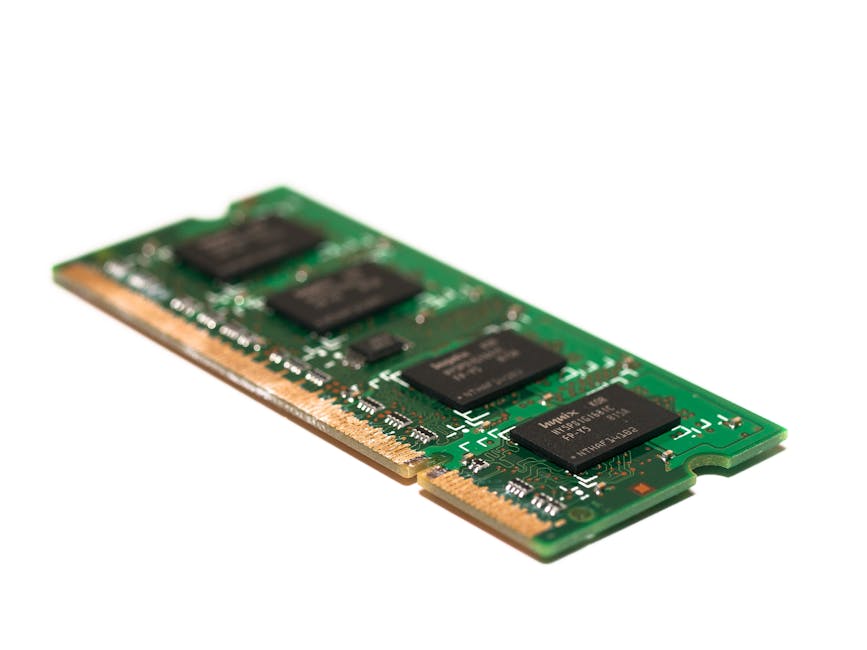
- The Roundhill Memory ETF (DRAM) has reached $10 billion in assets under management, driven by AI memory demands.
- Unprecedented demand for DRAM in AI infrastructure has created a strategic bottleneck in the global AI arms race.
- High-bandwidth memory (HBM) and DDR5 DRAM demand outpaces supply by 25% in 2024, with prices rising 40% YoY.
- AI training clusters require memory systems that can handle terabytes of data in parallel, far beyond traditional DDR4 capabilities.
- Over 70% of new data center builds now prioritize memory capacity alongside GPU procurement.
The Roundhill Memory ETF (DRAM) has surged to $10 billion in assets under management—the fastest such milestone in ETF history—driven by unprecedented demand for dynamic random-access memory (DRAM) in artificial intelligence infrastructure. As AI models grow more complex, they require exponentially greater memory bandwidth, turning DRAM into a strategic bottleneck in the global AI arms race. This capital influx signals a structural shift in tech investment, where underlying hardware, not just software, now dictates competitive advantage and scalability.
Soaring Demand for High-Bandwidth Memory

Recent data from TrendForce reveals that demand for high-bandwidth memory (HBM) and DDR5 DRAM has outpaced supply by 25% in 2024, with server-grade memory module prices rising nearly 40% year-over-year. AI training clusters, particularly those running large language models like GPT-4 and Gemini, require memory systems capable of handling terabytes of data in parallel—far beyond what traditional DDR4 can support. According to a Reuters report, over 70% of new data center builds in North America and Asia now prioritize memory capacity alongside GPU procurement. Samsung, SK Hynix, and Micron have collectively increased capital expenditures by $18 billion since Q1 2023 to expand HBM and DDR5 production, yet lead times for memory modules remain above 26 weeks, signaling sustained supply constraints.
Key Players in the Memory Race

The DRAM supply chain is dominated by three manufacturers: Samsung Electronics, SK Hynix, and Micron Technology, which together control over 90% of the global market. SK Hynix has emerged as the leading supplier of HBM3E, the latest generation of high-bandwidth memory used in NVIDIA’s H100 and upcoming B100 GPUs, having secured 80% of NVIDIA’s HBM orders in 2024. Samsung, meanwhile, is aggressively scaling its 12-layer HBM3E production amid delays in EUV lithography tool deliveries. Micron has committed $15 billion to expand its Virginia and Idaho fabs, aiming to capture 30% of the AI-optimized DRAM market by 2026. On the financial side, Roundhill Investments, the firm behind the DRAM ETF, has structured the fund to track the Solactive Memory Index, providing investors direct exposure to these core memory manufacturers and their foundry partners.
Trade-Offs in Memory Investment and Innovation

Investing in DRAM infrastructure presents significant trade-offs between performance, cost, and scalability. While HBM offers up to 1.2 terabytes per second of memory bandwidth—critical for AI workloads—it costs nearly three times as much per gigabyte as standard GDDR6 memory. This has forced cloud providers like Microsoft Azure and Google Cloud to optimize memory allocation across workloads, sometimes sacrificing model throughput for cost efficiency. Moreover, the environmental footprint of memory manufacturing is rising: producing one wafer of HBM3E consumes nearly 2,500 gallons of ultra-pure water and emits 1.8 tons of CO₂ equivalent, according to a study published in Nature. However, the upside is equally steep: analysts at Bernstein Research project the AI memory market will grow from $18 billion in 2023 to $65 billion by 2027, creating massive value for early infrastructure investors.
Why the Memory Crunch Is Happening Now

The DRAM bottleneck has emerged at this specific moment due to a confluence of technological and market forces. Until 2023, AI compute scaling was primarily limited by GPU availability, but as NVIDIA’s data center revenue surpassed $12 billion per quarter, the industry hit a new constraint: memory bandwidth. Transformers and diffusion models now require parameter counts exceeding 1 trillion, necessitating memory systems that can feed data to GPUs without idle cycles. Simultaneously, geopolitical tensions have disrupted supply chains, with U.S. export controls limiting Chinese access to advanced memory tech, redirecting global capacity toward allied markets. These factors, combined with a three-year lag in semiconductor fab construction, have created a perfect storm where demand far outpaces responsive supply growth.
Where We Go From Here
Over the next 12 months, three scenarios could unfold. In the base case, memory supply gradually tightens as new Micron and Samsung fabs come online, stabilizing prices but maintaining high margins for manufacturers. In an upside scenario, breakthroughs in 3D-stacked memory or hybrid bonding technology accelerate HBM4 development, enabling a 50% bandwidth increase and reigniting AI model scaling. Conversely, a downside risk looms if AI adoption slows or if alternative architectures—such as in-memory computing or optical interconnects—undermine the need for traditional DRAM expansion, potentially devaluing current infrastructure investments. Each path hinges on both technical progress and macroeconomic conditions, particularly interest rates and data center spending trends.
Bottom line — the DRAM ETF’s record growth reflects a fundamental rebalancing in tech investment, where memory hardware is no longer a commodity but a decisive enabler of AI dominance, and its scarcity will shape the next phase of the digital economy.
Source: CNBC