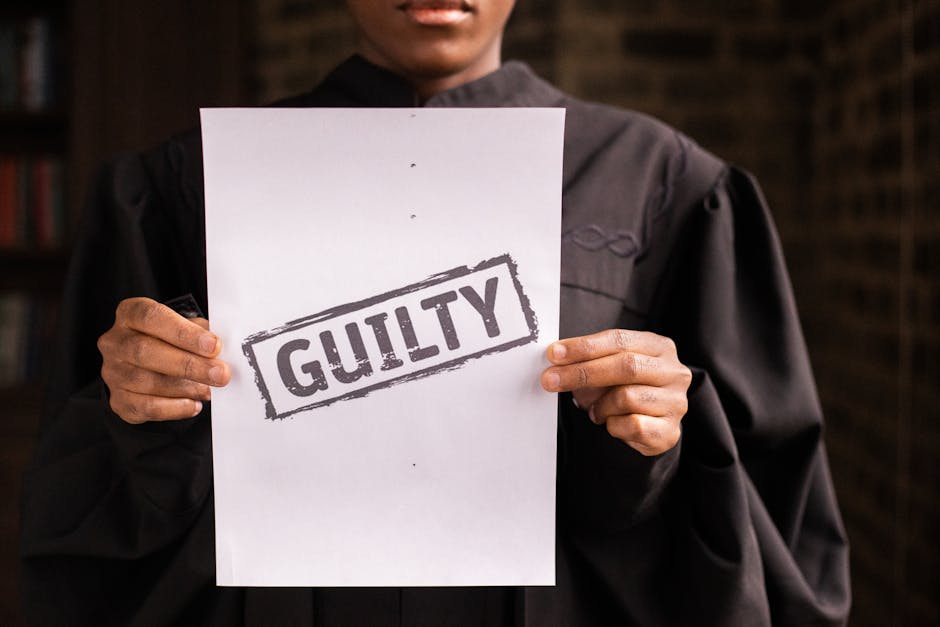
- A nine-juror panel will decide the fate of OpenAI’s governance next week.
- The lawsuit centers around Elon Musk’s claims that OpenAI broke its founding agreement.
- OpenAI, originally a nonprofit, formed a for-profit arm and partnered with Microsoft, sparking controversy.
- The trial exposed deep philosophical rifts within the AI community, threatening Silicon Valley boardrooms.
- The verdict could impact the future of artificial intelligence governance and democratized intelligence.
In a hushed San Francisco courtroom bathed in the pale glow of overhead fluorescents, the future of artificial intelligence governance hung in the balance. Lawyers on both sides delivered impassioned final statements, their voices echoing off marble walls as they urged nine ordinary citizens to make an extraordinary decision. Outside, protesters held signs reading “AI Belongs to Humanity” and “Don’t Let Billionaires Own the Mind,” while inside, the tension was thick enough to fracture the silence between sentences. This was not merely a dispute over contracts and corporate bylaws—it was a reckoning over promises made in the early days of a technological revolution, when dreams of democratized intelligence seemed possible. Now, years later, those dreams are on trial, and the jury’s verdict could reverberate through every boardroom in Silicon Valley.
Closing Arguments Draw Battle Lines

On Thursday, federal prosecutors and legal teams for Elon Musk and OpenAI delivered their closing arguments in the high-profile lawsuit Musk v. Altman et al., marking the end of a three-week trial that exposed deep philosophical rifts within the AI community. Musk’s legal team argued that OpenAI, originally founded in 2015 as a nonprofit with the mission to ensure artificial general intelligence (AGI) benefited all of humanity, had fundamentally broken its founding agreement by forming a for-profit arm and entering a $13 billion partnership with Microsoft. In contrast, OpenAI’s defense, led by attorney Sarah Liu, contended that the evolution into a capped-profit entity was necessary to secure the massive computational resources required to advance safely. The jury, composed of nine Bay Area residents ranging from teachers to software engineers, will begin deliberations next week. U.S. District Judge William Orrick instructed them to focus on whether OpenAI’s shift in structure violated fiduciary duties or explicit commitments made in its original charter.
From Garage Vision to Global Powerhouse

The roots of this legal battle trace back to December 2015, when Elon Musk, Sam Altman, Ilya Sutskever, and others co-founded OpenAI with a bold mission: to counteract the monopolistic control of AI by tech giants like Google and Facebook. In its early blog posts and public statements, OpenAI pledged to remain “non-profit-first,” prioritizing safety and open access over profit. For several years, it lived up to that promise, releasing foundational research and models like GPT-2 with minimal restrictions. But in 2019, everything changed. OpenAI restructured into a “capped-profit” model, allowing investors to recoup limited returns while still nominally serving the public good. Critics, including Musk, saw this as a betrayal. Internal emails presented during the trial revealed Musk warning Altman that the move would “inevitably lead to privatization of AGI.” Despite Musk’s objections—and his eventual departure from the board in 2018—OpenAI surged ahead, culminating in the 2023 release of ChatGPT, which brought AI into millions of homes and classrooms worldwide.
The Minds Behind the Machine

At the heart of the trial are two towering figures in tech: Elon Musk, the mercurial billionaire behind Tesla and SpaceX, and Sam Altman, the soft-spoken but fiercely ambitious CEO of OpenAI. Musk, who claims he contributed $100 million to OpenAI’s early efforts and helped shape its ethical framework, now argues he was sidelined as the organization pivoted toward commercialization. Altman, meanwhile, portrays himself as a steward of progress, insisting that without private investment and corporate partnerships, OpenAI could never have developed safe, scalable AI systems. Testimonies from former employees painted a complex picture—some described Musk as increasingly erratic and difficult to work with, while others acknowledged his early influence on the organization’s ethics. The jury must now decide not just who owns the truth, but who owns the future of AI’s moral compass.
Stakes Extend Beyond the Courtroom

The implications of the jury’s decision are vast. If Musk prevails, OpenAI could be forced to restructure, open-source key models, or even dissolve its partnership with Microsoft. Such a ruling might embolden other challengers to question the legitimacy of AI governance models across the industry. Conversely, a win for OpenAI would affirm the current paradigm: that cutting-edge AI development requires private capital and controlled access to prevent misuse. Researchers, policymakers, and civil society groups are watching closely. As Reuters noted, the case touches on fundamental questions about who controls transformative technologies and whether altruistic missions can survive in a profit-driven ecosystem. For startups and tech giants alike, the verdict could set a legal precedent on how far a company can stray from its founding ideals.
The Bigger Picture
This trial is not just about contracts or money—it’s about the soul of technological progress. In an era where AI systems influence elections, healthcare, and warfare, the question of accountability has never been more urgent. The OpenAI case forces society to confront a paradox: can a technology powerful enough to reshape civilization be trusted to evolve under the stewardship of unelected corporate leaders? As AI becomes more embedded in daily life, the legal and ethical frameworks guiding it must evolve too. This case may be the first major test of whether the promises made in the early days of AI can be legally enforced—or whether they were always destined to be overwritten by ambition and scale.
Whatever the jury decides, the conversation is unlikely to end in the courtroom. Legal appeals, regulatory scrutiny, and public debate will persist long after the verdict is read. But one thing is certain: the path forward for AI will be shaped not only by code and compute, but by the choices of nine citizens now tasked with weighing a billionaire’s ideals against a company’s evolution. The age of artificial intelligence has entered its first great moral trial.
Source: The New York Times