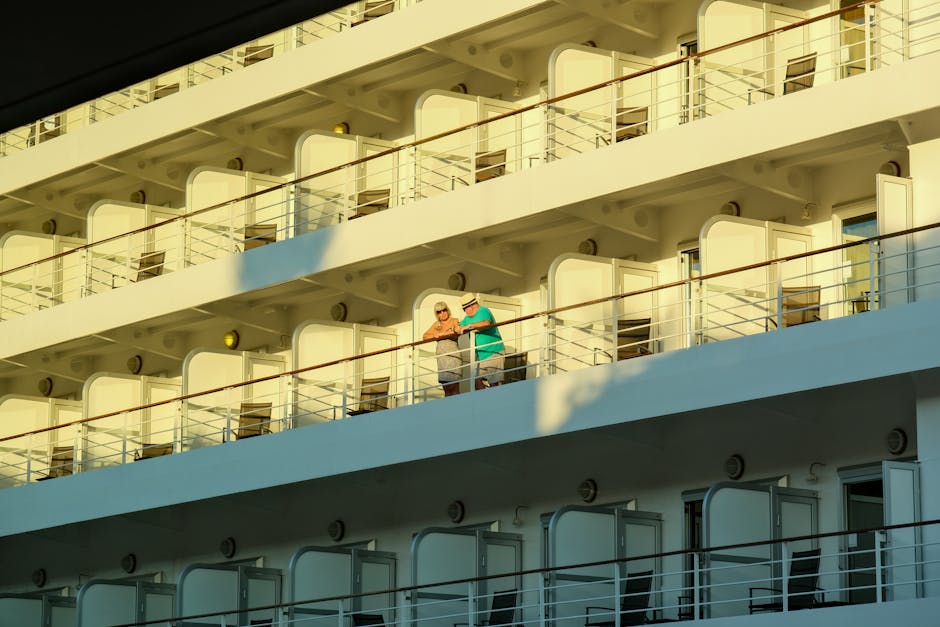
- Pacific Serenade cruise ship has been quarantined in San Diego with over 150 passengers and crew reporting flu-like symptoms within 72 hours.
- 187 cases of a novel respiratory pathogen have been confirmed among passengers and crew, with 12 hospitalized and two in critical condition.
- Symptoms of the illness include high fever, dry cough, fatigue, and in severe cases, shortness of breath.
- The virus spreads efficiently through aerosolized particles in confined spaces, such as dining rooms and theaters.
- Testing is ongoing to determine transmission routes, with global health experts monitoring the situation closely.
It began with a cough in the dining hall, then a fever in cabin 412. By the third day, the ship’s infirmary was overflowing—passengers lay on stretchers in the hallway, nurses moved briskly with masks and clipboards, and the once-luxurious decks of the Pacific Serenade fell eerily silent. What had started as a dream vacation off the coast of Mexico transformed into a floating epicenter of an unknown illness. The ship, operated by Oceanic Global Cruises, was rerouted to San Diego under quarantine protocols after more than 150 passengers and crew reported flu-like symptoms within 72 hours. As medical teams in hazmat suits boarded from the U.S. Coast Guard, global health experts watched closely, aware that in an age of rapid travel, a pathogen can cross continents faster than it can be named.
Outbreak Confirmed Aboard Pacific Serenade

As of this week, 187 cases have been confirmed among passengers and crew aboard the Pacific Serenade, with 12 hospitalized and two in critical condition. The Centers for Disease Control and Prevention (CDC) confirmed the illness involves a novel respiratory pathogen, genetically distinct from known strains of influenza, SARS-CoV-2, and adenoviruses. Symptoms include high fever, dry cough, fatigue, and in severe cases, shortness of breath. Testing is ongoing to determine transmission routes, though preliminary data suggests the virus spreads efficiently through aerosolized particles in confined spaces such as dining rooms and theaters. The ship had departed from Miami with 2,842 passengers and 1,167 crew members, making multiple stops in the Caribbean before the outbreak emerged. Authorities have traced early cases to a group of travelers who boarded in Fort Lauderdale, though no single index patient has been identified. The World Health Organization (WHO) has classified the event as a ‘public health incident of international concern’ and is coordinating with health agencies in over a dozen countries to track secondary infections.
The Legacy of Maritime Disease Outbreaks

Cruise ships have long been vulnerable to rapid disease transmission due to close quarters and shared ventilation systems. The most infamous precedent was the 2020 outbreak of COVID-19 aboard the Diamond Princess, where over 700 people were infected and 14 died after the ship was quarantined off the coast of Japan. That incident exposed critical flaws in international maritime health protocols, including delayed testing, inconsistent isolation procedures, and unclear jurisdiction between flag states and port authorities. In the years since, the CDC updated its Vessel Sanitation Program and strengthened surveillance requirements, but enforcement remains fragmented. Experts at the CDC’s Division of Global Migration and Quarantine note that while rapid response teams are now standard, the lack of real-time genomic sequencing at sea hampers early detection. The current outbreak underscores how even improved systems can be overwhelmed when a novel pathogen emerges during active voyages.
Scientists and Health Officials in the Spotlight

Leading the investigation is Dr. Elena Ramirez, an epidemiologist with the CDC’s Emergency Response Team, who was deployed to San Diego within hours of the ship’s docking. Her team is working around the clock to sequence the virus’s genome and identify potential animal reservoirs or prior spillover events. Meanwhile, Dr. Kenji Tanaka of the WHO’s Global Outbreak Alert and Response Network is coordinating international data sharing, urging labs in Europe and Asia to monitor for similar cases. These scientists are not only battling the pathogen but also public fear and misinformation. Cruise industry representatives, including the Cruise Lines International Association, have called for balanced communication, emphasizing that the vast majority of voyages occur without incident. Yet the stakes are high: one misstep in communication or containment could trigger widespread panic or economic fallout for the $50 billion global cruise sector.
Implications for Public Health and Travel

The immediate concern is whether the pathogen has already spread beyond the ship. Contact tracing teams are monitoring 97% of disembarked passengers, with alerts issued to health departments in 23 U.S. states and seven countries. Airlines have been notified to watch for symptomatic travelers with recent cruise exposure. If the virus proves capable of sustained community transmission, it could strain healthcare systems already managing seasonal respiratory illnesses. For the cruise industry, the financial impact could be severe—share prices for major operators dropped 8–12% in the past week. More broadly, the incident reignites debate over whether current international health regulations, last updated in 2005, are sufficient for modern travel patterns. Legal scholars argue that maritime health governance remains a patchwork of voluntary guidelines, leaving gaps in accountability during global emergencies.
The Bigger Picture
This outbreak is more than a maritime anomaly—it’s a stress test for global health resilience. In a world where millions cross borders weekly, the ability to detect, contain, and communicate about emerging pathogens is no longer optional but essential. The Pacific Serenade incident echoes larger challenges: climate change expanding vector habitats, wildlife trade increasing spillover risks, and misinformation undermining public trust. As research published in Nature recently warned, the frequency of zoonotic outbreaks is rising, and our response systems must evolve with them. A ship may be contained, but the next outbreak could begin in a market, an airport, or a city with no warning.
The Pacific Serenade now sits in quarantine, its decks patrolled by biohazard teams and its future uncertain. Scientists are closing in on the virus’s genetic code, and answers may come within days. But the deeper question lingers: are we truly prepared for the next outbreak, wherever it emerges? The answer may depend not on technology alone, but on cooperation, transparency, and the courage to learn from ships in still water.
Source: BBC